How to Choose a Crypto Off-Ramp Provider: Buyer’s Guide for Platforms

- Net received is the only metric that captures all-in cost across fees and spread. Advertised fee percentages hide margin in spread, and a lower stated fee can still deliver less crypto on a buy or less fiat on a sell if the spread is wider.
- Licensing footprint determines whether the integration is viable for your user geography. Vague “global coverage” claims without jurisdiction exclusions create regulatory risk.
- Integration speed and lock-in risk are engineering decisions, not procurement afterthoughts. Compare quoted net-received rates before signing any contract.
- Paybis’s internal benchmark compares net received across 20+ competitors at $100, $1,000, and $5,000 transaction sizes. It is not a public or industry study. The strongest advantage in that benchmark is on SEPA sells.
Crypto assets can increase or decrease in value. Paybis is a payment gateway, not an investment service. This content is for informational purposes only and does not constitute financial advice.
Quick Answer: Choosing a crypto off-ramp provider requires measuring net received per transaction, not advertised fees. This guide covers net-received benchmarks, settlement speeds by payout rail, and the registrations and authorizations Paybis holds. It also covers excluded jurisdictions and integration timelines for URL redirect, hosted widget, and custom API. Data return clause questions address vendor lock-in. Paybis B2B publishes net-received rates at the quote stage and supports 35 payment methods. Paybis holds FinCEN, FINTRAC, and VASP registrations, plus MiCA CASP authorisation and a PSD2 Payment Institution licence. Contact the Paybis business team to start KYB onboarding and compare quoted net received at your own transaction sizes.
A provider advertising a 1% fee can still deliver less fiat on a sell (or less crypto on a buy) than one charging 2%. The difference is in the spread. Most vendor evaluation frameworks fail because they measure the wrong things. They compare advertised fees instead of net received, and they trust marketing claims instead of jurisdiction exclusions. This guide provides a technical evaluation framework for a Head of Product or CTO actively evaluating off-ramp providers. It teaches how to measure net received, test integration speed, verify compliance paper trails, and ask disqualifying questions before signing.
For a crypto-native platform evaluating crypto on/off-ramp solutions, this guide offers selection criteria and disqualifying questions to use before committing to a provider.
What Does Success Look Like in an Off-Ramp Vendor Search?
Success in an off-ramp vendor search means measuring net received per transaction instead of advertised fees. It also means checking payout rail coverage, licensing footprint, integration time, and lock-in risk.
Why Do Rigid Vendor Benchmarks Fail?
Benchmarks built on advertised fees mislead because they ignore net received. A provider quoting a 1% fee can have a much higher effective rate once spread is included. The advertised fee is not a reliable comparator because platforms bundle costs differently. Some charge explicit fees, others embed margin in the spread, and many combine both. A platform advertising a lower fee can still deliver less fiat on a sell, or less crypto on a buy, if the spread is wider. For a crypto off-ramp vendor evaluation, the only reliable metric is net received. For a buy, net received is the crypto a user receives for a fixed fiat input. For a sell, it is the fiat returned for a fixed crypto input. Both include all fees and spread.
What Does Off-Ramp Vendor Evaluation Actually Measure?
Vendor evaluation comes down to five measures: net received per transaction, payout rail coverage, licensing footprint, integration time, and lock-in risk. Net received covers fees and spread together. Payout rail coverage determines settlement speed for your users. Licensing footprint determines whether the integration is viable for your user geography. Integration time determines how fast you can go live. Lock-in risk determines whether you can swap providers in 18 months without rebuilding the integration. For off-ramp provider criteria, these five criteria are the ones that matter.
What Are the Red Flags in Vendor Due Diligence?
Four warning signs can end a vendor evaluation early: paywalled documentation, missing performance and support SLAs, exclusivity agreements, and certification gaps. Paywalled documentation means you cannot evaluate integration complexity before signing. Missing SLAs means no written performance guarantees for uptime, latency, or support response times. Exclusivity agreements can function as non-competes that trap you in a single provider. A certification gap matters when a provider stores, processes, or transmits cardholder data without PCI DSS compliance. For providers that handle no card data, PCI DSS may not apply, so check which certifications fit the payment methods in scope. For crypto off-ramp due diligence, the other red flags are disqualifying.
What Due Diligence Does Vendor Evaluation Require?
Every off-ramp vendor should pass checks on net-received benchmarks, payout rail coverage, licensing footprint, integration options, and lock-in terms before a contract is signed.
How Are Net-Received Benchmarks Validated by Asset and Method?
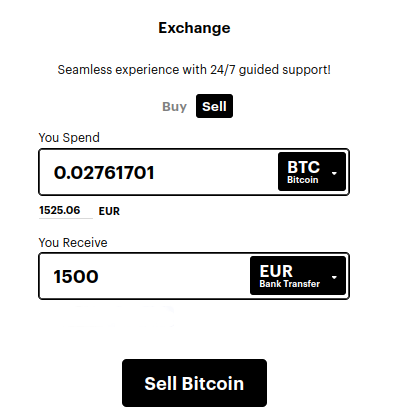
Test net received for each transaction size and payout method, not as a single average. Paybis’s internal benchmark compares net received across 20+ competitors at $100, $1,000, and $5,000 transaction sizes. It is an unpublished Paybis comparison, not a public or industry study. The strongest advantage in that benchmark is on SEPA sells. On a single 0.05 BTC sell, the net received advantage over a comparable provider is €449.
How Does Payout Rail Coverage Affect Settlement Speed?
The payout rail sets how quickly your users receive their money. SEPA Instant (SCT Inst) was launched by the European Payments Council in November 2017 for single immediate payments and settles in near-real time. Per Nacha and Federal Reserve ACH guidance, standard ACH credits settle in 1–3 business days. Same-day ACH entries submitted by the 4:45 PM ET deadline settle at 6:00 PM ET. UK Faster Payments settle in near-real time. For a crypto off-ramp provider, SEPA Instant and UK Faster Payments are the fastest rails. ACH is the standard US rail but slower. SWIFT follows standard interbank timelines.
Why Do Licensing Footprint and Jurisdiction Exclusions Matter?
A provider is viable only if its licenses and registrations cover the jurisdictions where your users live. FinCEN and FINTRAC are registrations, not licenses. A regulated exchange holds a licence or authorisation from a financial regulator, which is a higher bar than a simple registration.
Paybis holds FinCEN MSB registration (#31000272911973), FINTRAC registrations (C100000646 for Paybis Canada and C100000816 for Paybis Poland), and Polish VASP registration (RDWW-805). Paybis also holds an EU MiCA CASP authorisation (27-55/2026/6) and a PSD2 Payment Institution licence (27-55/2026/7).
Paybis remains the regulated entity. Partners keep responsibility for their own licensing and AML obligations in their markets. Excluded jurisdictions include NY and Louisiana.
What Are the Integration Options and Time to Production?
Three integration paths exist: URL redirect, hosted widget, and custom API. Integration time can decide the vendor choice. Ask “how fast can we go live?” in the first conversation, and ask each vendor for documented timelines for the same integration path. Paybis offers a no-backend widget option that lets you go live without a backend change.
What Is Vendor Lock-In and How Do Migration Paths Work?
Vendor lock-in happens when your integration logic, user data, and transaction records are trapped inside a third-party runtime that you do not control. For off-ramp integrations, the relevant lock-in vectors are data portability, schema portability, and dependence on vendor-specific APIs, webhooks, or SDKs. OAuth token ownership matters only if the integration connects to user accounts through OAuth, so confirm whether it applies before weighting it. Some SaaS contracts do not guarantee data export in open formats (CSV/JSON) at no cost, creating contractual lock-in at exit. Ask for a data return clause. The clause must state how, when, and in what format the vendor returns your data if the relationship ends. Paybis offers modular integration options (URL redirect, hosted widget, native SDK) that reduce lock-in anxiety.
How Do You Benchmark Net Received Rates per Transaction?
Benchmark net received rates by fixing the input amount and comparing each provider at $100, $1,000, and $5,000.
How Do You Validate Realized Rates per Transaction?
Compare net received across providers at $100, $1,000, and $5,000 to see what users actually get. Advertised fee percentages are not a reliable comparator because platforms bundle costs differently. Paybis publishes net-received rates at the quote stage, before the user commits to a transaction. Most competitors display fees only at checkout, after the user has already entered payment details.
How Do You Run a Tiered Fee Analysis for Crypto Off-Ramps?
Paybis pricing is custom-quoted. Final pricing depends on volume, payment methods, and markets served. Contact the Paybis business team for a quote. Paybis shows net received at the quote stage, before the user confirms. Compare that figure against other providers at the same input amount.
How Do You Analyze Vendor Rates per Payment Type?
Compare net received across the payout methods your users rely on, such as SEPA, ACH, and UK Faster Payments. The gap between providers changes by payout method. Paybis shows the strongest advantage on SEPA sells. For a single 0.05 BTC sell, the net received advantage over a comparable provider is €449.
How Do You Identify Vendor Margin Traps?
Margin traps hide in spread, undisclosed fees, and exchange rate markups. The effective rate can sit well above the quoted fee once spread is included. Paybis shows net received at the quote stage, before the user commits to a transaction. Several providers (including Binance Connect, Swapped.com, TransFi, and Unlimit) do not publish fees publicly at all, pricing on a proposal or onboarding basis.
How Do You Benchmark Provider Latency and Uptime?
Check that the provider supports the payment methods your users already use, then ask for written SLAs that cover uptime, latency, and support response times.
How Do You Assess Local Fiat Rail Coverage?
Good local rail coverage means the provider supports the payment methods your users already use. Paybis supports 35 payment methods and 180+ countries. Per Paybis’s support article on available payment methods and their limits, payment methods include PIX (Brazil), M-Pesa (Kenya), SPEI (Mexico), online banking ACH (US), PayPal, Revolut Pay, and Astropay. Local payment method coverage is critical for conversion. Users in LATAM and SEA abandon when their preferred payment method is missing. Paybis has 150+ PSP integrations on demand, so partners do not wait months for a new payment method.
What Vendor SLA and Settlement Requirements Should You Expect?
Expect written uptime guarantees, latency percentiles, and support response times in every vendor SLA. Ask each vendor to state the uptime target for its APIs and to tier support response targets by severity, with the fastest response times for critical incidents. Paybis reports ~99.4% platform uptime. Ask any vendor, including Paybis, for the measurement period and source behind an uptime figure. Procurement reviews at larger partners will flag the absence of published SLAs with financial penalties.
How Do You Map Regulatory Exposure and KYC Requirements?
Match the provider’s registrations and authorizations to the jurisdictions where your users live, and confirm which AML duties stay with your platform.
What Jurisdiction-Specific Registrations Are Needed?
Required registrations and authorizations depend on the platform’s activities and the jurisdictions where its users live. A provider that exchanges or transmits crypto for US users typically needs FinCEN MSB registration, and one serving Canadian users typically needs FINTRAC MSB registration. EU activity may require MiCA CASP authorisation, and Poland may require VASP registration. Confirm the exact requirements for your model with legal counsel. FinCEN and FINTRAC are registrations, not licenses. A regulated exchange holds a licence or authorisation from a financial regulator, which is a higher bar than a simple registration.
What Are the Tradeoffs Between White-Label and Direct Licensing?
The choice affects regulatory exposure, time to market, and engineering overhead. Direct licensing gives more control but requires years of regulatory groundwork and legal costs. White-label infrastructure reduces regulatory exposure but does not eliminate it for excluded jurisdictions (NY, Louisiana). Paybis offers white-label infrastructure and remains the regulated entity. Partners keep responsibility for their own licensing and AML obligations in their markets. This avoids years of regulatory groundwork and the legal costs of building equivalent coverage independently. White-label is the fastest path to production.
How Do You Verify Restricted Jurisdiction Lists?
Read the provider’s exclusion list line by line to see which jurisdictions are explicitly excluded from coverage. Paybis excludes NY and Louisiana. Vague “global coverage” claims without jurisdiction exclusions create regulatory risk. Ask for a jurisdiction coverage map that shows supported and excluded regions. Paybis remains the regulated entity. Partners keep responsibility for their own licensing and AML obligations in their markets. This materially reduces exposure but does not eliminate it for jurisdictions not covered.
What Vendor Criteria Apply to AML Oversight?
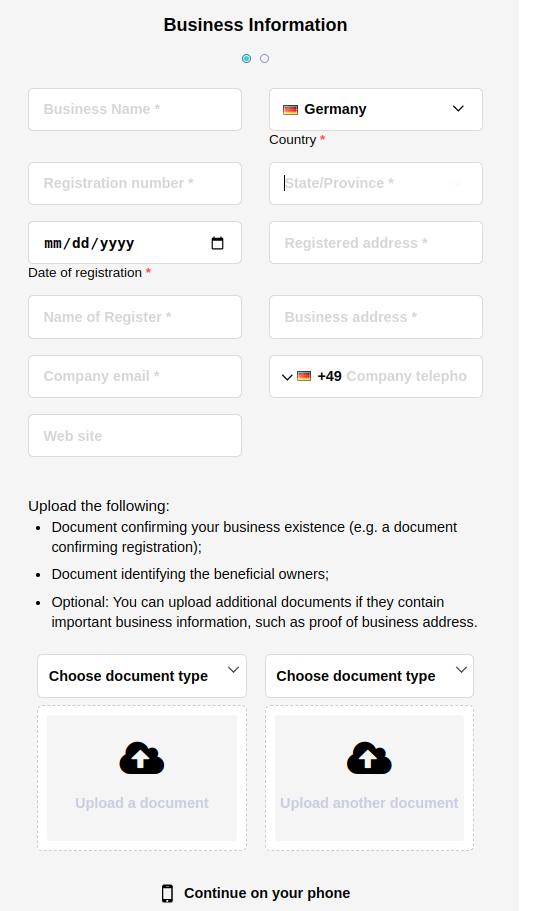
Strong AML oversight covers KYC/AML operations, compliance checks, and reporting obligations. Paybis provides the Compliance Engine partners operate for KYC, AML, and fraud prevention. The Compliance Engine covers AML monitoring, reporting, and onboarding tiers including the no-KYC threshold up to $1,000/user/year. Partners retain their own regulatory duties. Paybis runs background compliance checks that let 90% of first-time users transact without uploading a document. Beyond $1,000/year, standard KYC applies and completes in approximately 2 minutes for individual users.
How Do You Evaluate Developer Experience and SDK Depth?
Compare each integration path against your engineering resources, then audit the documentation and go-live timelines behind it.
When Should You Use Hosted Widgets or APIs?
The right choice depends on your engineering resources and customization needs. Hosted widgets (iframe or redirect) require no backend change. Full SDK offers more customization. Custom API offers full control. Paybis offers URL redirect, hosted widget, and native SDK integration options. Integration time is a gating criterion. Ask “how fast can we go live?” in the first conversation, and compare documented timelines for the same integration path across vendors.
What Are Realistic Go-Live Timelines?
Realistic go-live timelines include URL redirect in minutes and full SDK in hours.
Some integrations go live in under 48 hours. Paybis documents a standalone widget integration option that requires no interaction with the Paybis API, which suits lightweight or frontend-centric apps. To compare vendors fairly, ask each one for written go-live timelines for the same integration path and team size. Integration speed is a pass-or-fail test. Compare quoted net-received rates before signing.
How Do You Audit Provider Documentation?
Audit documentation for paywalls, missing API references, and incomplete integration guides. Paywalled documentation means you cannot evaluate integration complexity before signing. Missing API references means you cannot assess integration speed before committing. Incomplete integration guides mean you cannot estimate time to production. Documentation quality is a proxy for integration quality.
How Do You Verify Integration Speed Claims?
Ask each vendor for documented go-live timelines and compare them against the integration path you plan to use. Written timelines make integration speed claims verifiable. Paybis offers a no-backend widget option.
What Red Flags Appear in Vendor Demos and Contracts?
The main red flags in vendor demos and contracts are paywalled fees, missing SLAs, exclusivity agreements, and certification gaps.
How Do You Spot Paywalled Data and Fees?
Check whether the provider publishes fees publicly or prices on a proposal basis. Several providers (including Binance Connect, Swapped.com, TransFi, and Unlimit) do not publish fees publicly at all. Paybis shows net received at the quote stage, before the user commits to a transaction. Fee transparency is a trust signal. Users who see the full cost upfront are less likely to abandon at checkout.
What Happens When Performance and Support SLAs Are Missing?
A vendor with no written guarantees for uptime, latency, or support response times has no real SLA. Ask each vendor to state its uptime target in writing and to tier support response targets by severity, with the fastest response times for critical incidents. Paybis offers 24/7 support, average response time ~15 seconds. Larger partners will raise the absence of published SLAs with financial penalties during procurement reviews.
What Are the Red Flags in Exclusivity Agreements?
Watch for provisions that effectively function as non-competes or exclusive arrangements. Avoid restrictions beyond what is necessary to protect confidential information. Exclusivity agreements can trap you in a single provider. Ask for a data return clause. The clause must state how, when, and in what format the vendor returns your data if the relationship ends. Paybis offers modular integration options (URL redirect, hosted widget, native SDK) that reduce lock-in anxiety.
What Certification Gaps Show Up in Vendor Audits?
PCI DSS applies to providers that store, process, or transmit cardholder data, so the requirement depends on the payment methods in scope. Paybis is PCI DSS Level 1 certified. This is a certification, separate from any license or registration. Paybis has had no security breaches since 2014.
How Do You Validate Provider Performance Claims?
Verifiable facts, third-party sources, and regulatory registrations are what back up a performance claim. Verifiable facts beat promotional claims when comparing providers.
What Are the Critical Deal-Breakers for Vendor Vetting?
A vendor should be disqualified if it cannot show net received per transaction, disclose its jurisdiction exclusions, support future provider swaps, and state who owns user data.
How Do You Calculate Actual Fiat-to-Crypto Yield?
Measure net received per transaction to find the actual yield. Advertised fee percentages are not a reliable comparator. Paybis’s internal benchmark compares net received across 20+ competitors at $100, $1,000, and $5,000 transaction sizes.
Which Jurisdictions Are Explicitly Excluded?
Any provider should disclose its jurisdiction exclusions upfront. Paybis excludes NY and Louisiana. Watch for vague “global coverage” claims without jurisdiction exclusions, because they create regulatory risk. Ask for a jurisdiction coverage map that shows supported and excluded regions.
How Flexible Is the Integration for Future Swaps?
Modular integration options and data portability determine how easily you can swap providers later. Paybis offers URL redirect, hosted widget, and native SDK integration options. Lock-in risk is a non-negotiable criterion. Ask for a data return clause. The clause must state how, when, and in what format the vendor returns your data if the relationship ends.
Who Owns User Data and Controls Vendor Data Access?
Check the contract for data ownership clauses and export restrictions. Some SaaS contracts do not guarantee data export in open formats (CSV/JSON) at no cost. Ask for a contract that explicitly states “Customer retains all right, title, and interest in Customer Data.” Paybis offers modular integration options that reduce lock-in anxiety.
Ready to Benchmark Net Received With Paybis?
Paybis B2B is a crypto payment gateway that provides white-label on-ramp and off-ramp infrastructure for platforms. Operating since 2014, Paybis has powered 624 businesses, with $4.13 billion in B2B transactions to date.
Contact the Paybis business team to start KYB onboarding, then compare quoted net received at your own transaction sizes. Explore crypto off-ramp solutions for platforms.
Key Terminology
- Off-ramp: A crypto off-ramp is a service that lets users sell crypto for government-issued currency. The term is used to describe the process of converting crypto to fiat.
- Net received: The amount a user actually gets after all fees and spread, measured for a fixed input. It is the metric that captures both costs in one number.
- Payout rail: A payout rail is a payment network that settles transactions, such as SEPA, ACH, or UK Faster Payments. Settlement speed varies by rail.
- White-label infrastructure: White-label infrastructure is a branded solution where the partner’s brand is shown to end users in place of the provider’s. How far the provider’s name is hidden depends on branding settings, regulatory disclosure requirements, and the integration arrangement. It can include custom UI, email templates, email sender, and user journey.
- Anti-Money Laundering (AML): AML refers to the laws, procedures, and monitoring rules that financial businesses follow to stop illegally obtained funds from passing through their systems. Off-ramp providers operate under AML frameworks, which shape onboarding and reporting requirements.
- MiCA: MiCA is the European Union’s legal framework governing crypto-assets and the businesses providing crypto-related services across all 27 EU member states. A MiCA CASP authorisation permits regulated crypto services in the EU.
FAQ
How Long Does Crypto Off-Ramp Integration Typically Take?
Go-live time depends on the integration path. Paybis offers a no-backend widget option, and some integrations go live in under 48 hours. Ask each vendor for written go-live timelines for the same integration path to compare them.
What's the Difference Between White-Label and Direct Licensing?
White-label infrastructure lets partners offer the provider’s service while the provider remains the regulated entity. Partners keep responsibility for their own licensing and AML obligations in their markets. Direct licensing gives more control but requires years of regulatory groundwork and legal costs.
How Do I Compare Net-Received Rates Across Providers?
Fix the input amount, then measure net received, which is what the user actually gets after all fees and spread. Advertised fee percentages are not a reliable comparator.
What Compliance Licenses Does an Off-Ramp Provider Need?
Requirements depend on the provider’s activities and the markets served. Depending on those factors, they can include FinCEN MSB registration in the US, FINTRAC MSB registration in Canada, MiCA CASP authorisation in the EU, and VASP registration in Poland. FinCEN and FINTRAC are registrations, not licenses. Confirm the exact requirements for your model with legal counsel.
Can I Use Multiple Off-Ramp Providers Simultaneously?
Yes, you can use multiple off-ramp providers simultaneously, but each integration requires separate engineering work and ongoing partnership management. Modular integration options (URL redirect, hosted widget, native SDK) reduce lock-in anxiety.
Disclaimer: Don’t invest unless you’re prepared to lose all the money you invest. This is a high‑risk investment and you should not expect to be protected if something goes wrong. Take 2 mins to learn more at: https://go.payb.is/FCA-Info