Bulk Crypto Payouts Checklist: What Platform Teams Need Before Going Live

- Platform payout readiness breaks into five domains: wallet security, accounting controls, tax reporting, regulatory status, and sandbox stress testing. Miss one and you ship an incident, not a product.
- The fastest way to compress a bulk crypto payouts checklist is to work with a provider that runs its own compliance engine and gives you sandbox evidence before contract signature. Partners keep their own licensing and AML obligations.
- Registrations: Paybis holds FinCEN MSB registrations in the US, FINTRAC MSB registrations in Canada, and a VASP registration in Poland (RDWW-805).
- Licenses and authorizations: MiCA CASP and Payment Institution (PI) licence, Latvia, secured May 2026.
- Paybis remains the regulated entity for payouts.
Crypto assets can increase or decrease in value. Paybis is a payment gateway, not an investment service. This content is for informational purposes only and does not constitute financial advice.
Quick Answer: A production-ready crypto payout go-live checklist covers five domains: wallet security (multi-signature custody, key recovery), accounting controls (reconciliation, balance monitoring, audit trails), tax reporting (1099-NEC, 1099-MISC, 1099-DA, and 1042-S logic, data exports), regulatory status (MSB and CASP coverage, sanctions screening), and sandbox validation (webhooks, throttles, failure states).
What Are the Platform Requirements for Live Payout Deployment?
Live payout deployment requires a written inventory of what the platform must produce versus what the provider supplies. Complete it before any engineering sprint starts.
Platform Prerequisites for Launch
Three items generally need to be in place before integration work begins: a completed KYB package naming the corporate entity that will fund payouts, a named corporate IBAN holding pre-funded balances, and a jurisdictional user map showing where recipients sit, because that map drives compliance scope later. Paybis documents this flow in its Mass Crypto Payouts product overview, where the partner funds a company-named IBAN and executes payouts without holding crypto.
Checklist for Payout Infrastructure Setup
- Funding rail confirmed: SEPA, SWIFT, or FPS transfer path into the corporate IBAN tested with a small amount.
- Payout currency list frozen: the exact asset set at launch, not the full catalog.
- Recipient wallet policy written: which wallet types (custodial, self-hosted) are permitted per jurisdiction.
- Dashboard access provisioned: finance and ops roles given separate permissions.
- Webhook endpoints registered: the URL that receives payout status updates.
- Escalation contacts exchanged: named people on both sides for incident response.
Checklist for Crypto Payout Launch
The launch checklist itself is the auditable document the rest of this article builds. Each of the five domains below produces named artifacts: a multi-sig policy, a reconciliation export spec, a tax form decision tree, a registration coverage matrix, and a sandbox test log. What do you need to launch crypto payouts? Exactly those five artifacts, signed off by engineering, finance, and compliance, plus one sandbox run proving the integration behaves under failure conditions.
How Do You Operationalize Wallet Security and Custody?
Operationalizing wallet security means setting thresholds, signing rules, key recovery, network support, and address validation before launch. This is the domain where production incidents hurt most and fastest.
Setting Wallet Security Thresholds
Define the maximum value a single payout batch can carry before requiring additional approval. Many institutional custody programs treat multi-signature key management, cold storage for the majority of assets, and geographic distribution of keys as baseline controls. With Paybis’s Mass Crypto Payouts, partners fund a fiat IBAN and execute payouts without holding crypto directly, so the custody threshold question shifts from “how do we secure keys” to “what limits do we set per batch.”
Configuring Multi-Sig Signing Rules
Multi-signature custody (a wallet requiring more than one private key to authorize a transaction) removes single points of failure. Common production configurations, per SEAL’s multisig guidance, are 2-of-3 for operational redundancy and 3-of-5 for role-based, geographically separated approvals. The Security Alliance (SEAL) multisig guidance covers threshold selection, signer distribution, and hardware wallet requirements for production multisig deployments. For a self-managed treasury, the multisig decision walkthrough from The Bitcoin Way covers when multi-sig is worth the operational cost. Teams using a provider model should confirm which signing rules the provider enforces on their behalf.
Private Key Security and Recovery
The recovery question has two parts: who can reconstitute signing power if a key holder leaves, and how long recovery takes. Write the answers into an internal runbook with named roles. In the provider model, key management sits with Paybis under its MPC-based custody, and the partner’s recovery concern is account-level: who can authorize changes to the corporate IBAN and payout permissions. The corporate crypto withdrawal guide documents the operational steps on the Paybis side.
Supported Blockchain Networks and Tokens
Freeze the launch asset list early. Mass Crypto Payouts executes in 100+ cryptocurrencies, and the sandbox environment supports testnet payouts on Tron, Ethereum, and Bitcoin networks (Paybis sandbox testing reference). Test every asset on the launch list, not a representative sample, because address formats and confirmation times differ by chain.
Wallet Address Validation Testing
Bad addresses are one of the most common causes of failed payouts. Validate wallet addresses for correct format before submission. The checklist item is to run a meaningful sample of addresses per asset through validation in sandbox, including deliberately malformed ones, and confirm the integration rejects them before funds move. Address format rules vary by coin, and the coins, tokens, and address formats reference covers the expected patterns.
What Accounting Controls Keep Crypto Payouts Stable?
Stable payouts need a reconciliation loop that closes daily without manual spreadsheet work. Finance owns this domain.
Syncing Transaction Logs for Audit
Every payout needs a traceable identifier from submission to blockchain confirmation. Paybis signs every webhook with an NIST P-256 ECDSA key (SHA256withECDSA), verified against the raw request body (Mass Crypto Payouts webhooks documentation), which gives engineering a tamper-evident event log. Requests the platform sends to Paybis are signed separately with a 4096-bit RSA key using RSASSA-PSS with SHA-512 (request signing documentation). The checklist item: confirm webhook signature verification passes on 100% of sandbox events, and store the raw payloads for the retention period finance requires. Transaction hashes for completed payouts are retrievable per the receipt and transaction hash guide.
Configuring Real-Time Balance Monitoring
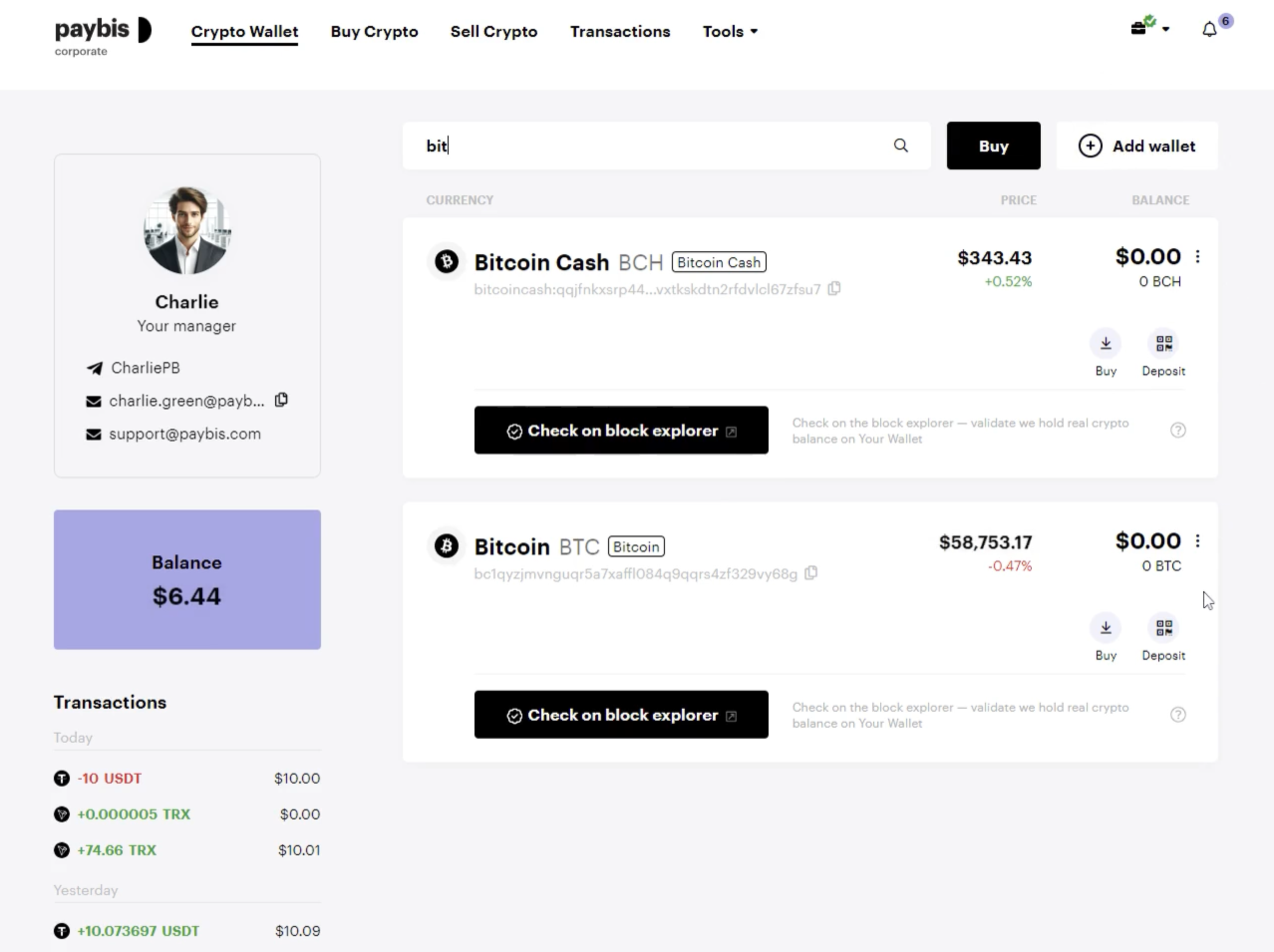
The checklist item: set a low-balance alert threshold that triggers before the next scheduled batch, not after it fails. Treasury auto-rebalance rules belong here too, so the funding account refills on a schedule rather than on a panic.
Handling Failed Crypto Payout Attempts
Define a failure taxonomy before launch, for example by distinguishing compliance rejections, network or address failures, and recipient-side returns. Each category needs a different operational response and a different accounting entry. Test each category in sandbox with testnet assets and small amounts (the crypto pay-ins integration guide describes the general testing approach), and confirm the accounting system records each state correctly.
Settlement Delay Reconciliation Guide
Settlement lag (the gap between payout submission and blockchain confirmation) varies by network congestion. The checklist item: for each launch asset, record the observed confirmation time range across a meaningful sample of sandbox transactions, then set the finance team’s expected reconciliation window toward the top of that range, using a high percentile such as the 95th rather than the average. Where recipients need guidance on transfer behavior, the Paybis wallet transfer warnings page sets expectations on timing and irreversibility.
Audit Trails for Fiat-Crypto Conversion
Because partners fund in fiat and pay out in crypto, the conversion rate applied to each batch must be auditable. Require the provider to expose, per payout: the fiat amount debited, the exchange rate applied, the crypto amount sent, and the fee charged. Paybis discloses net received (the crypto delivered after all fees and spread) at the quote stage, before commitment, giving finance a pre-transaction record to reconcile against.
What Tax Reporting Requirements Apply to Bulk Payout Operations?
Bulk payout programs need correct tax form logic and data exports in place before the first payment. Tax is where launches most often discover gaps in month two.
Automating 1099 and 1042-S Compliance
The core rule: US persons are generally reported on Form 1099-NEC or 1099-MISC, depending on the type of payment. Beginning with tax year 2025, the IRS also issues Form 1099-DA for digital-asset sale and exchange transactions. Nonresident aliens receiving US-source income are reported on Form 1042-S instead (IRS Form 1042 overview). Forms 1042, 1042-S, and 1042-T are due by March 15 of the year following payment. The checklist item: confirm the payout system captures the recipient data each form requires at onboarding, not at year-end. For EU-facing operations, the DAC8 crypto tax reporting explainer covers the incoming EU reporting regime.
Validating Recipient Tax Documentation
A recipient’s status determines the form. The IRS instructions for Form 1042-S describe residency tests, including the green card test and the substantial presence test, that determine whether an individual is treated as a nonresident alien (IRS 1042-S instructions). The checklist item: collect W-9 or W-8BEN equivalents during recipient onboarding, and block payouts above reporting thresholds until documentation is on file.
Managing Non-Resident Withholding Tax
US-source income paid to foreign persons is generally reported on Form 1042-S, “Foreign Person’s U.S. Source Income Subject to Withholding” (1042-S vs 1099 differences). Withholding rates can vary by treaty status and income type. Assign this to tax counsel early. The operational checklist item is confirming whether the payout system can withhold at configurable rates per recipient.
Required Audit-Ready Data Export Formats
Finance and auditors need exports that reconcile fiat funding to crypto disbursement. Aim for CSV or API exports containing fields such as: payout ID, recipient identifier (pseudonymized where possible), fiat amount, rate applied, crypto amount, network, transaction hash, timestamp, and fee. Where possible, confirm the export covers a full reporting period without pagination gaps.
Managing Audit Log Retention Cycles
Set retention to match the strictest jurisdiction the platform touches. For DAC8 compliance, consult applicable DAC8 guidance for retention requirements. Webhook payloads, export files, and reconciliation reports all fall under this policy. The checklist item: document where each record type lives, who owns it, and how it is retrieved under audit request.
How Do You Validate MSB and CASP Status for Market Entry?
Validation means confirming under whose regulatory coverage payouts execute and checking that this coverage matches the recipient map from the first section.
Mapping VASP and MSB Compliance Status
Build a coverage matrix mapping each jurisdiction to the registration or authorisation type and number. FinCEN and FINTRAC are registrations, not licenses, and a FinCEN MSB registration does not by itself authorize moving money. Paybis holds three FinCEN MSB registrations: 31000272911973 for Paybis USA LTD (Delaware), 31000224635628 for Paybis US state operations, and 31000277275964 for Paybis Poland. Paybis is available in most US states, excluding New York and Louisiana (Paybis permissions documentation), and holds FINTRAC MSB registrations in Canada (C100000646 for Paybis Canada and C100000816 for Paybis Poland). New York and Louisiana are a hard constraint for platforms with concentrated users in those states.
Paybis holds the MiCA CASP authorisation and PSD2 Payment Institution license, both issued by the Bank of Latvia (MiCA meaning for EU-serving platforms).
Assigning AML and KYC Compliance Tasks
FATF standards require VASPs to meet the same preventive measures as financial institutions: registration, customer due diligence, record-keeping, and suspicious transaction reporting (MONEYVAL’s summary of FATF standards). Paybis remains the regulated entity and handles AML monitoring and reporting for its own operations. Partners retain their own AML and licensing obligations, and they also handle recipient communication. For EU self-hosted wallet recipients, additional verification may apply. Paybis documents a MiCA Travel Rule verification process for such cases.
Managing High-Risk Jurisdiction Blocks
OFAC states that sanctions obligations apply the same way whether a transaction uses crypto or traditional currency (OFAC virtual currency FAQs). OFAC has designated specific wallet addresses on the SDN List, and companies must run risk-based compliance programs covering blocked digital assets. For general background on how sanctions apply to crypto, see this sanctions and crypto overview. The checklist item: confirm with the provider how recipients and wallet addresses are screened against applicable lists, whether before every payout or only at onboarding.
Integrating Real-Time Sanctions Checks
Sanctions screening generally covers customers and counterparty wallets before onboarding and on an ongoing basis, and a match can trigger an asset freeze and a reporting obligation. In the provider model, this screening runs inside the compliance engine. The partner’s checklist item is narrower: verify in sandbox that a flagged test address produces a rejection with a machine-readable reason code.
Passporting Status Verification Checklist
For EU operations, confirm the authorisation covers the specific service (payouts in crypto-assets) in each target member state, not just the issuing state. For the US, confirm state-level permissions match the recipient map. A platform with 20% of recipients in New York cannot launch on a registration that excludes New York. Paybis’s licenses and registrations do not transfer to partners. Every platform needs to confirm its own licensing and AML obligations, and teams with existing MSB or VASP registrations still need to validate the other four readiness domains.
What Sandbox Stress Tests Should Payout Infrastructure Pass?
Sandbox evidence, not contract signature, is the real go-live gate.
Configuring Sandbox Access Credentials
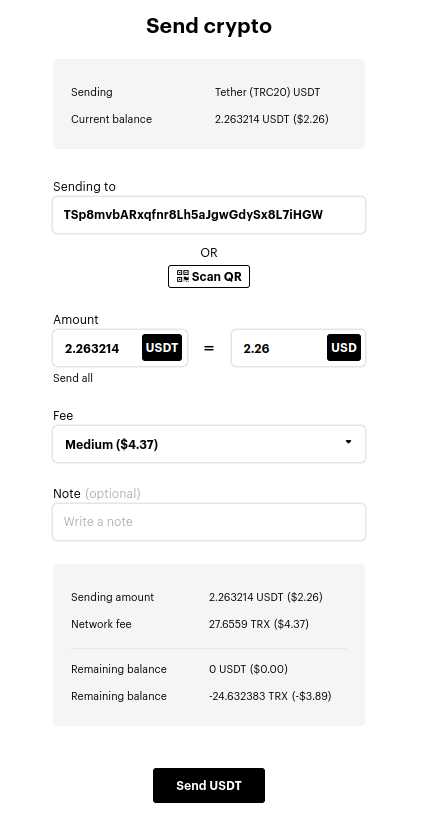
Paybis provides a sandbox environment for payout testing, described in its sandbox testing reference. The sandbox includes mock payment methods, test API keys, and simulated blockchain settlement (embedded exchange API overview). The checklist item: record time from credential receipt to first successful test payout. That number is the honest version of any “hours to launch” claim.
End-to-End Payout Simulation
Run the full production path in sandbox: fund, convert, submit batch, receive webhook, confirm settlement. Repeat for every asset on the launch list. Teams evaluating build-versus-buy decisions can see how this testing phase compares across integration models in the build or buy crypto ramp webinar. The checklist item: repeated clean end-to-end runs per asset before anyone discusses a launch date.
Handling Payout Failures and Exceptions
Pre-production testing of payment failure states, rejection handling, and conversion edge cases prevents production incidents, and teams should plan several days of dedicated QA regardless of integration method (Paybis vs Ramp vs custom build). Force each failure state deliberately: malformed address, insufficient balance, compliance rejection, network timeout. Each one must produce a documented, expected behavior in the platform’s own systems.
Confirming Webhook Endpoint Responses
Provide the webhook URL to Paybis to receive payout and pay-in updates (crypto pay-ins integration guide). Then test the unhappy paths: endpoint down, endpoint slow, duplicate delivery, out-of-order events. The checklist item: the platform’s webhook consumer must be idempotent (processing the same event twice produces no duplicate effect) before go-live.
Validating API Throttle and Timeout Limits
Submit batches at, above, and far above expected peak volume to find the throttle ceiling. Record the rate-limit response format and retry-after behavior. The checklist item: batch submission logic must respect documented throttle limits and queue overflow gracefully, because a payroll run that fails at 10,000 recipients in production is a support crisis, not a bug.
How Do You Manage Payout Outages and Technical Errors?
Outages are managed with defined severity levels, failover decisions, support protocols, and alert thresholds set before launch. Something eventually breaks after go-live, so this final domain covers the response.
Payout Support SLAs and Triage Rules
Define severity levels before launch: a stuck batch affecting all recipients is not the same class as one failed address. Paybis runs 24/7 support, and public status communication exists with identified and resolved timestamps for recent incidents (Paybis status page). The checklist item: exchange named escalation contacts and confirm the status page subscription works.
Failover Logic for Payout Delays
Single-provider dependency is the outage risk operations leads audit quarterly. Mitigation options are queue-and-retry logic on the platform side, a documented manual fallback process, or a secondary provider for critical corridors. At minimum, the checklist requires a written decision: how long does a batch sit in “pending” before the platform reroutes, refunds, or escalates?
Defining End-User Support Protocols
Recipients will contact the platform, not the infrastructure provider, when a payout is late. Support teams need a lookup tool that maps recipient complaint to payout ID to blockchain transaction hash. The Paybis wallet functionality documentation covers the recipient-side behaviors support teams will field. The checklist item: support can resolve “where is my payout” in under five minutes using dashboard data alone.
Defining Critical Alert Thresholds
Set alerts on four signals: balance below the next scheduled batch, a failure-rate spike within a short window, webhook delivery failures, and settlement lag beyond the 95th percentile window defined earlier. Route each alert to a named owner.
Ready to Launch Mass Crypto Payouts With Paybis?
Paybis is a crypto payment gateway for businesses, with 12+ years of crypto expertise, 24/7 technical support, and personal account management. Paybis remains the regulated entity for payouts.
Contact the Paybis business team to start KYB onboarding and request sandbox access plus the production readiness CSV checklist. Then pre-fund in USD, EUR, or GBP and execute mass crypto payouts from balance.
Key Terminology
- Hot wallet: A wallet connected to the internet for active transactions. Production payout systems keep only operational balances hot, with the majority of funds in cold storage.
- VASP registration: Registration as a Virtual Asset Service Provider with a national regulator, required before offering crypto services in that jurisdiction. Registration is not a license to move money in every market.
- Multi-signature custody: A wallet arrangement requiring more than one private key to authorize a transaction, such as 2-of-3 or 3-of-5 configurations. It removes single points of failure from treasury operations.
- Settlement lag: The gap between payout submission and final confirmation on the blockchain. It varies by network congestion and drives the reconciliation window finance should expect.
- Sanctions screening: Checking recipients and wallet addresses against designated party lists, such as the OFAC SDN List in the US, as part of onboarding and ongoing monitoring. A match can trigger an asset freeze and a reporting obligation.
- Confirmation time: The period between submitting a blockchain transaction and its inclusion in a block. It varies by network and affects payout processing expectations.
- Transaction fee: The cost of processing a cryptocurrency transfer on a blockchain network. Fees vary depending on the network and congestion levels and should be tracked for accurate reconciliation.
FAQ
How Long Does Sandbox Testing Typically Take Before Go-Live?
Plan several days of dedicated QA regardless of integration method, covering failure states and edge cases. Some integrations go live in under 48 hours, with sandbox evidence as the final gate.
What Happens if a Payout Fails After Submission?
Failures can be grouped into categories, for example compliance rejections, network or address failures, and recipient-side returns. Each should produce a machine-readable reason code via webhook, and the funds handling per category must be documented before launch.
Do We Need Separate Licenses to Offer Crypto Payouts?
Possibly, depending on the platform’s own activities. Paybis’s licenses and registrations do not transfer to partners. Paybis remains the regulated entity for payouts, and partners keep their own licensing and AML obligations. FinCEN and FINTRAC statuses are registrations, not licenses, and teams should confirm their own requirements with legal counsel.
How Do We Handle Tax Reporting for International Recipients?
Nonresident aliens receiving US-source income are reported on Form 1042-S, due March 15 of the following year. US persons are reported on Form 1099-NEC or 1099-MISC, and beginning with tax year 2025 Form 1099-DA applies to digital-asset sale and exchange transactions. Collect W-8 or W-9 equivalents at recipient onboarding, not at year-end.
What Reconciliation Data Should We Expect From the Platform?
Require per-payout records containing payout ID, fiat amount, exchange rate applied, crypto amount, network, transaction hash, timestamp, and fee. Paybis signs webhooks with an NIST P-256 ECDSA key (SHA256withECDSA), giving engineering a tamper-evident event log for audit.
Disclaimer: Don’t invest unless you’re prepared to lose all the money you invest. This is a high‑risk investment and you should not expect to be protected if something goes wrong. Take 2 mins to learn more at: https://go.payb.is/FCA-Info