What to Look for in an Auto-Conversion Service: Evaluation Checklist

- Evaluate providers on six operational criteria. Total cost and compliance come first. Settlement speed and audit trails follow. Support and integration simplicity complete the list.
- General crypto exchanges are not contractor payment tools. A provider built for contractor payments must offer bulk CSV upload and automated scheduling. It also needs tax reporting support.
- Wire transfers cost an estimated $50-$70 per payment before FX markups. Paybis pricing for payout infrastructure starts from 0.49% per transaction, custom-quoted, before network fees.
- Mass Crypto Payouts from Paybis meet the criteria on this checklist with FinCEN registration. Paybis also provides 24/7 technical support.
- Run a 30-day pilot with 3-5 contractors before full rollout to verify provider claims match real-world performance.
Crypto assets can increase or decrease in value. Paybis is a payment gateway, not an investment service. This content is for informational purposes only and does not constitute financial advice.
Quick Answer: Choosing an auto-conversion service for contractor payments requires evaluating six criteria. Total transaction costs and compliance registrations come first. Settlement speed and audit trail completeness follow. Support availability and integration simplicity complete the list. Providers built for contractor payments offer bulk CSV upload and automated scheduling that general exchanges lack. Mass Crypto Payouts from Paybis pay many recipients in crypto or local fiat through an API or a portal. The business funds the payouts in advance. Paybis holds FinCEN and FINTRAC registrations. It also holds a MiCA CASP and Payment Institution (PI) licence (Latvia, secured May 2026, operating across the EU). Paybis settlement is near-to-instant and depends on the blockchain. Paybis brings 12+ years of crypto expertise.
The wire costs in this guide are illustrative assumptions, not quotes from a specific bank. The assumed sending fee is $35-$50 and the assumed receiver fee is $15-$20. The assumed FX markup is 2-5%. On these assumptions, a $5,000 payment to a contractor in Poland costs an estimated $160-$310 in wire fees and FX markups. That is about $60 in sending and receiver fees plus a 2-5% FX markup ($100-$250). With 30 contractors, that adds up to an estimated $4,800-$9,300 a month (the full math is in the cost section below). You need a framework to evaluate auto-conversion providers objectively. This guide gives you a six-part checklist built for operations leaders, not crypto traders. Each criterion tests whether a provider can deliver reliable, low-cost payments to contractors in any country on schedule.
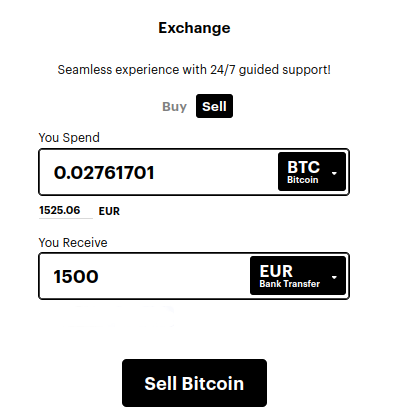
How Do You Evaluate Providers for Scalable Global Contractor Payments?
This section covers why the wrong payment tool puts contractor payments at risk and which mistakes to avoid when choosing a provider.
Why Subpar Tools Threaten Your Contractor Payments
Random holds and country restrictions disrupt contractor payments without warning, and so do security reviews.
Key Mistakes in Contractor Payments
- Treating all international payments as equivalent. Sending $500 to Lisbon carries different requirements than sending $5,000 to Buenos Aires. Currency controls and local banking infrastructure vary by jurisdiction. So do regulatory frameworks.
- Optimizing for the lowest advertised fee while ignoring total cost. A platform advertising “1% fees” that embeds a 3% FX spread costs more than a transparent provider charging 1.5% with zero markup.
- Assuming contractors want crypto. Contractors often prefer payment in their local currency, such as INR in India or VND in Vietnam, according to contractor payment guidance. If your provider cannot deliver local currency cash-out in the contractor’s country, you create a new problem instead of solving one.
How Do You Evaluate Crypto Contractor Payment Partners?
This checklist compares the criteria that matter when choosing a crypto contractor payment provider, from fees to features.
Comparing Total Costs and Hidden Fees
Traditional wire transfers stack several cost layers. This guide assumes an outgoing international wire fee of $35 to $50 per send, with a midpoint of about $45. Beyond the base fee, it assumes receiver fees of $15-20 and exchange rate markups of 2-5%.
| Cost Metric | Traditional Wire | Crypto Contractor Payments |
|---|---|---|
| Base sending fee | $35–$50 | from 0.49% per transaction, custom-quoted |
| Receiver fees | $15–$20 | Confirm in the provider quote |
| FX markup | 2–5% | Confirm in the provider quote |
| Total per transaction | $50–$70+ | Custom-quoted, plus network fees |
With 30 contractors receiving $5,000 each monthly, traditional wires cost an estimated $4,800-$9,300 per month once FX markups are included. That estimate adds $1,800 in sending and receiver fees ($60 per payment) to $3,000-$7,500 in FX markups (2-5% of each $5,000 payment). Sending and receiver fees alone range from $1,500 to $2,100, based on $35-50 sending fees plus $15-20 receiver fees per payment. Crypto contractor payments via Paybis start from $735 (0.49% per transaction on $150,000, custom-quoted, before network fees). As an illustrative calculation based only on these stated fee inputs (not a Paybis quote or guaranteed saving), the fees-only difference is $765-1,365 per month, or $9,180-16,380 per year, before network fees and FX markups.
Evaluating Your Crypto Contractor Payment Provider
General crypto exchanges prioritize merchant payments over contractor payment infrastructure. Platforms built for contractor payments offer bulk CSV upload through the dashboard with approval workflows and batch execution.
| Feature | General Crypto Exchange | Contractor Payment Platform |
|---|---|---|
| Bulk CSV upload (native UI) | Limited or API-only | Full support |
| Automated scheduling | Manual per-transaction | Recurring/scheduled batches |
| Tax reporting | General tax reporting, not payout-specific records | Automated CSV exports |
Paybis Mass Crypto Payouts deliver batch payouts through the portal or API. CSV transaction history exports support manual tax filing.
How Do You Avoid Compliance Risks During Contractor Payments?
This section outlines the registrations and checks a provider needs to keep contractor payments compliant.
Compliance Registrations and Licenses
The Bank Secrecy Act requires certain money services businesses (MSBs) to register with the Financial Crimes Enforcement Network (FinCEN) according to IRS MSB registration requirements. In Canada, money services businesses must register with FINTRAC before commencing operations according to FINTRAC.
European operations require different authorizations.
Registrations (FinCEN and FINTRAC)
| Jurisdiction | Registration Type | Registration Name |
|---|---|---|
| US (FinCEN) | Registration | FinCEN Form 107 (MSB) |
| Canada (FINTRAC) | Registration | FINTRAC MSB Registration |
Licenses and Authorizations (MiCA and PSD2)
| Jurisdiction | License or Authorization Type | License or Authorization Name |
|---|---|---|
| EU (MiCA) | Authorization | CASP Authorization |
| EU (PSD2) | License | Payment Institution License |
Paybis holds the following registrations.
- FinCEN MSB: 31000272911973 (Paybis USA LTD, Delaware)
- FinCEN MSB: 31000224635628 (Paybis US state operations)
- FinCEN MSB: 31000277275964 (Paybis Poland)
- FINTRAC: C100000646 (PAYBIS MONEY LTD., Calgary, Alberta)
- FINTRAC: C100000816 (Paybis Poland)
- VASP registration: RDWW-805 (Revenue Chamber in Katowice, Poland)
Paybis holds the following license and authorization.
- MiCA CASP and Payment Institution (PI) licence: Latvia, secured May 2026, operating across the EU
Paybis remains the regulated entity, and partners keep their own licensing and AML obligations.
KYC and KYB Verification Steps
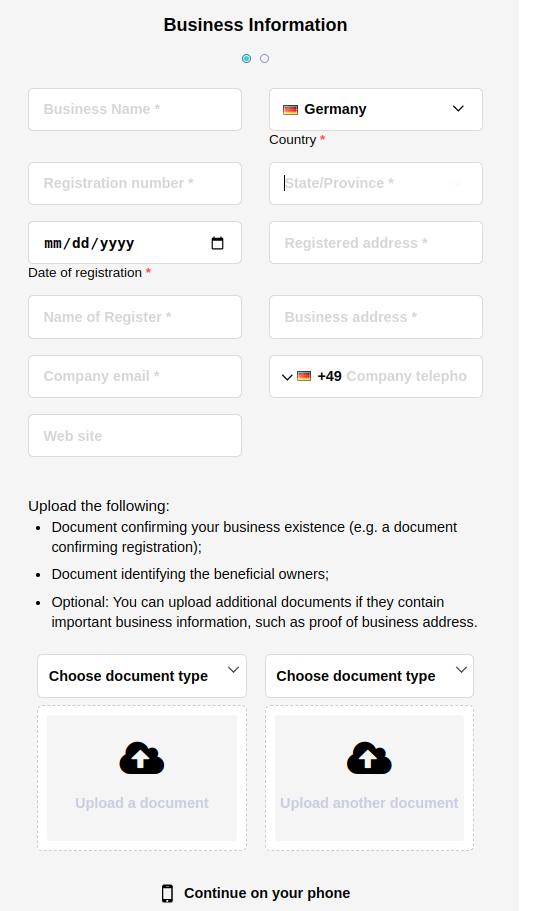
Know Your Customer (KYC) and Know Your Business (KYB) checks verify contractor identities and business legitimacy. For business accounts, KYB onboarding verifies company registration and beneficial ownership. It also checks business purpose.
Audit-Ready Tax Documentation Features
Your accountant needs transaction records that map to general ledger codes. Contractor payment teams track processing time and accuracy rate according to payroll metrics best practices. They also track error resolution time. Required data points include transaction ID and timestamp. Add the originating account and recipient details. Record the amount and currency, then the fee breakdown and approval chain. Crypto transactions add blockchain transaction hashes that connect to contractor invoice numbers.
Risks of Unverified Crypto Partners
An unregistered provider can create added risks for a business. Regulatory exposure may increase if the provider does not meet its obligations. Recovering funds may be harder if the provider stops operating. Banks may also flag payments to unregistered platforms, which can delay contractor payments.
How Do You Customize Rules for Global Contractor Pay?
This section shows how to set up bulk payments and schedules. It also covers currency options for contractors in different countries.
Automate Bulk Payments for Contractors
Manual entry of contractor payments takes hours per pay cycle. Businesses save 8+ hours per pay period after implementing payroll software, according to payroll ROI research. Bulk CSV upload replaces that repeated entry with one file upload and a single review step. Instead of issuing one transaction per payee, a business uploads a list and the platform executes the whole batch. The platform validates addresses and deducts fees. It then signs transfers and tracks confirmations.
Setting Up Recurring Pay Cycles
Contractors expect payment on the same date each month. Set the payment date once and the platform executes the batch automatically. Approval workflows add control without adding work: configure approval thresholds so that larger batches need extra sign-off and smaller payments process automatically.
Paying Contractors in Multiple Currencies
Contractors in different countries cash out in their local currency, so payment timing and delivery still depend on the provider’s coverage. Paybis handles payouts from a single funding source. The business funds the payouts in advance. The platform converts and sends crypto at the point of payment.
Manual CSV vs. Automated API Flows
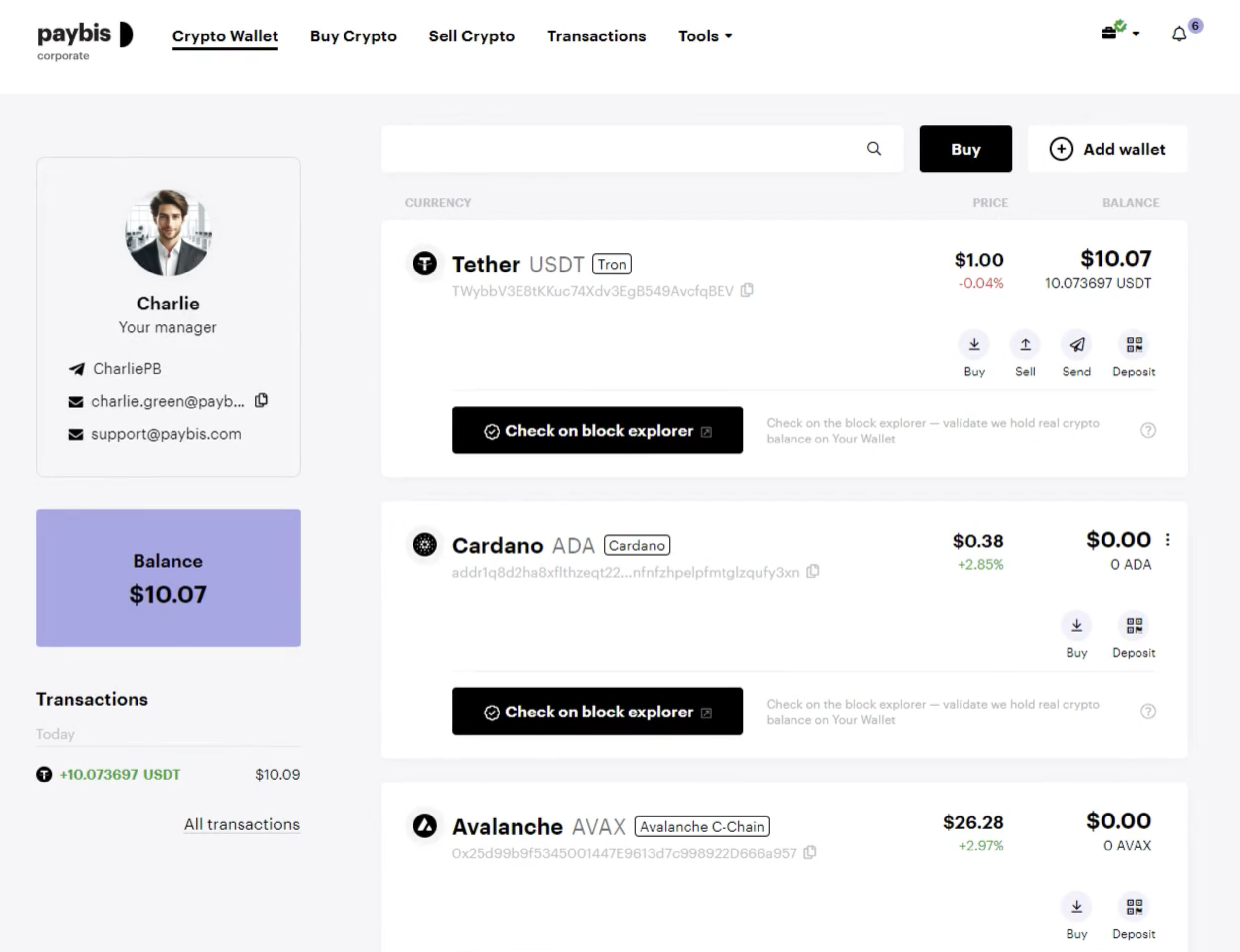
CSV upload requires no engineering resources. Your operations manager downloads a template and fills in contractor details and amounts. Next, the manager uploads the file and reviews the total. One click approves the batch. API integration makes sense when contractor payment data lives in another system. For smaller teams and teams without developer resources, CSV upload provides sufficient automation without developer time.
How Can You Ensure Timely International Payments?
This section covers transfer times and delivery benchmarks. It also covers uptime checks that show whether payments arrive on schedule.
Expected Transfer and Payout Times
Paybis settlement is near-to-instant and depends on the blockchain. International wire transfers typically take 1-5 business days to clear. Stablecoin transfers settle in minutes regardless of destination, whereas traditional contractor payments rely on bank wires that batch process during business hours.
Verifying Reliable Delivery Benchmarks
Transaction success rate measures how many payments complete without rejection or retry.
Verifying Funds Arrival
Real-time payment tracking shows each transaction’s status. Blockchain transaction hashes provide cryptographic proof of payment that contractors verify independently. No “trust me, I sent it” conversations.
Verifying Service Uptime
Uptime shows how often a provider is available to process payments. A provider with 95% uptime is unavailable 36 hours per month.
How Do You Uncover True Payment Processing Costs?
This section explains how to measure the real cost of international payments beyond advertised fees.
Detecting Hidden FX Margin Leakage
Compare the exchange rate your provider quotes to the mid-market rate on Google or XE.com at the same moment. The difference is the FX spread (a 1.5% spread on $5,000 is $75).
Auditing Your Contractor Payment Spend
Pull three months of payment data. Calculate total fees paid divided by total amount sent. This is your effective rate. A 1% advertised rate that delivers a 3.2% effective rate reveals 2.2% in hidden costs. On $50,000 in monthly contractor payments, that’s $1,100 per month or $13,200 annually.
How Do You Verify Transaction History and Accuracy?
This section covers the transaction records and exports that keep payments traceable and audit-ready.
Audit-Ready Transaction Logs
Every transaction needs a unique identifier connecting to your accounting system. The record holds the transaction ID and timestamp, plus the amount and currency. It also holds the recipient and blockchain hash. Pull any payment record instantly without searching through email confirmations or bank statements. The log must show who initiated and who approved the payment. It must also show when the payment processed and when the contractor received funds.
Exporting Data for Contractor Payment Compliance
CSV exports are the minimum requirement. Your accounting software needs to import this data without manual reformatting. Date format consistency prevents import errors: ISO 8601 format (YYYY-MM-DD) imports cleanly, while mixed formats create mapping errors.
Connecting Contractor Payments to Your Ledger
Direct automated posting to accounting software is not documented, so plan to import CSV exports into your ledger. Filter the transaction data and match each payment against your records, so a payment that left your account but never reached the contractor stands out and you investigate immediately.
What Dedicated Support and Account Management Should You Expect?
This section covers the support channels and service commitments to check before choosing a provider.
Payment SLA Benchmarks
Service Level Agreements commit providers to specific response and resolution times. A 24-hour response time means you email Monday at 9 AM and receive a reply Tuesday at 9 AM. For payment issues that arise outside business hours, that delay is unacceptable. Paybis provides 24/7 technical support.
Personalized Support for Contractor Payment Needs
Look for a dedicated account manager who understands contractor payment operations and is reachable when a payment run has issues. Paybis provides personal account management.
24/7 Assistance for Contractor Payment Runs
“24/7 support” sometimes means a chatbot with human escalation during business hours.
Verifying Support Access Levels
Before signing a contract, test support channels. Email a technical question and use live chat. Then call the support number if one exists. Ask for escalation procedures in writing, including how to reach a manager and their contact information.
What Integration Requirements Does Your Contractor Payment Flow Need?
This section outlines the technical setup a provider needs to fit into an existing contractor payment process.
Simple CSV Uploads for Contractor Payments
CSV upload requires zero engineering resources. Download the template and add contractor rows. Upload the file and review totals. Then approve.
Assessing API Documentation Quality
API documentation reveals engineering maturity. Clear documentation includes authentication examples and endpoint descriptions. It also covers request and response formats and error code definitions.
Settlement Times for Global Contractor Payments
Funding the account and processing payments are separate steps. When you execute payouts, the platform converts and sends crypto at the point of payment. Mass Crypto Payouts pay many recipients in crypto or local fiat through an API or a portal. The business funds the payouts in advance.
Zero-Code Implementation Requirements
CSV upload and manual entry require no code. Dashboard configuration needs none either. API integration is optional, not required.
How Do You Protect Your Records When Switching Providers?
This section covers contract terms and data handling to review before changing providers.
Assessing Exit and Cancellation Terms
Read the termination clause before signing. Confirm the cancellation notice period and auto-renewal terms in writing. Ask about the final data export window too, because these terms vary by provider.
Managing Contractor Payment Records
Your payment history belongs to you, not the provider. Money Services Businesses keep transaction records for regulatory audits, so ask the provider how long it retains them. Test the export process during the pilot: can you download all transaction history in a usable format with all required fields for tax reporting?
Evaluating Vendor Migration Support
The new provider helps you upload contractor data and configure settings. Plan the cutover for a low-stakes period after paying monthly contractors, not three days before the next contractor payment run.
How Do You Test Your Crypto Conversion Provider?
This section outlines a pilot plan to verify provider claims before full rollout.
Pilot the Service With 3 to 5 Hires
Select contractors in different countries with different payment requirements. Run the pilot for one full pay cycle while maintaining your existing system for other contractors. Track transaction success rate and time required to process contractor payments. Also track contractor satisfaction.
Metrics for Measuring Contractor Payment Success
Contractor payment accuracy should remain above 99% with processing time cut in half according to payroll KPI benchmarks. Many small businesses report saving 8+ hours per pay period after implementing payroll software, a 90% reduction in time spent according to payroll ROI research.
| Success Metric | Pilot Target |
|---|---|
| Transaction success rate | ≥90% (contractor receives funds on time) |
| Processing time reduction | Shorter than baseline manual hours (set the exact target from your own pre-pilot measurement) |
| Exception/error rate | <5% with minimal rejections or retries |
| Support tickets | 50%+ reduction in contractor inquiries |
| Compliance accuracy | ≥99% clean tax/regulatory reporting |
| Cost per payout | Lower than the wire baseline ($35–50 sending fee), based on the custom-quoted rate (from 0.49% per transaction) |
30-Day Pilot Setup Steps
- Week 1: Complete business verification and account setup. Upload contractor details for pilot participants. Fund the account with enough for one pay cycle plus a small buffer.
- Week 2: Process first pilot payment to 3-5 contractors. Monitor delivery times and contractor feedback. Document any issues with support response times.
- Week 3: Process second pilot payment if you pay bi-weekly, or review week 2 results if monthly. Test the export functionality and verify it imports into your accounting system.
- Week 4: Evaluate pilot results against success metrics. Calculate total cost per payment including all fees and compare to your baseline wire transfer costs.
Contact the Paybis business team to start KYB onboarding. The business funds the payouts in advance. A 30-day pilot with 3-5 contractors proves the system works before you commit to processing all payments through the platform.
Ready to Pay Global Contractors With Mass Crypto Payouts?
Mass Crypto Payouts pay many recipients in crypto or local fiat through an API or a portal. The business funds the payouts in advance. The service supports 100+ cryptocurrencies.
Contact the Paybis business team to start KYB onboarding, then run a 30-day pilot with 3-5 contractors.
Key Terminology
- Auto-conversion: The process of converting one currency to another automatically at the point of transaction, eliminating the need to hold multiple currencies.
- Settlement speed: The time between initiating a payment and the recipient receiving funds. Blockchain payments settle in minutes versus 1-5 business days for traditional wires.
- Audit trail: A chronological record of all transactions showing who initiated and approved each payment. It also shows when the payment processed and when funds were received.
- FX spread: The difference between the exchange rate a provider offers and the mid-market interbank rate. A 2% spread on a $5,000 payment costs $100 in hidden fees.
- AML: Anti-Money Laundering compliance checks that detect and prevent illegal fund transfers.
- KYC: Know Your Customer compliance checks that verify the identities of users before they send or receive payments.
FAQ
What's the most important criterion when choosing an auto conversion service?
Compliance registration is a core requirement because a provider without FinCEN or FINTRAC registration can increase regulatory exposure for your business. The same applies to a provider without EU MiCA authorization. Verify registrations independently through public databases before evaluating other criteria.
How long should vendor evaluation take?
A thorough evaluation takes 6-8 weeks. Research and shortlisting take 1-2 weeks, with demos in the same window. Technical assessment and reference checks take another 1-2 weeks. The 30-day pilot takes 4 weeks. Rushing to meet a contractor payment deadline creates pressure to accept unsuitable terms.
Should I test multiple providers simultaneously?
Test one provider at a time because running parallel pilots splits attention and makes comparison difficult. Complete a 30-day pilot with your first choice before moving to alternatives if needed.
What questions should I ask during a demo?
Request a live demonstration of CSV upload with your actual contractor data format. Also ask for the audit trail export and the contractor cash-out flow in a specific country where you operate. Verify support hours and response time commitments in writing.
How do I know if a crypto conversion provider is legitimate?
Verify FinCEN registration at fincen.gov and FINTRAC registration at fintrac-canafe.canada.ca. Verify EU MiCA authorization through national regulator databases. Request client references from companies similar to yours in size and contractor distribution.
Disclaimer: Don’t invest unless you’re prepared to lose all the money you invest. This is a high‑risk investment and you should not expect to be protected if something goes wrong. Take 2 mins to learn more at: https://go.payb.is/FCA-Info