10 Multi-Currency Account Mistakes PSPs and Crypto Platforms Make (and How to Avoid Them)
- Hidden FX spread costs more than any advertised fee: a 2% spread on $5 million in monthly cross-border volume drains $100,000 per month, or $1.2 million annually.
- Single-bank dependency is one of the most common causes of unplanned revenue outages for PSPs and crypto platforms.
- Compliance gaps in safeguarding and in required authorizations and registrations (MiCA CASP, PSD2 PI, FinCEN, FINTRAC, VASP) expose accounts to freezes and enforcement that stop fund flows entirely, and the fix starts with a multicurrency account provider whose licenses and registrations you can verify in public registries.
- Weak reconciliation lets breaks compound across currencies. Match reconciliation frequency to volume, from daily for high-volume primary currencies to monthly for low-volume accounts, and automate exception handling.
- Settlement time varies by rail. SEPA Instant settles in under 10 seconds, per the European Payments Council, while SWIFT correspondent chains can take longer. Verify that a quoted settlement time reflects actual rail capability.
Crypto assets can increase or decrease in value. Paybis is a payment gateway, not an investment service. This content is for informational purposes only and does not constitute financial advice.
Quick Answer: The eight most costly multi-currency account mistakes PSPs and crypto platforms make are: ignoring hidden FX spread, failing to segregate client funds, depending on a single correspondent bank, skipping reconciliation automation, overlooking jurisdictional compliance gaps, ignoring settlement lag, neglecting API validation, and failing to verify vendor redundancy.
Most multi-currency account failures compound silently in reconciliation gaps and hidden correspondent deductions until a bank exit or compliance freeze forces the board to notice.
Paybis multicurrency accounts address these failure modes by design through net received disclosure at quote stage. Regulatory coverage comes from MiCA CASP and PSD2 PI authorizations. The article that follows maps each mistake to its specific control.
What Do Multicurrency Account Mistakes Really Cost?
Multicurrency mistakes cost money through hidden FX spread and cost time through delayed launches.
Cost of Currency Account Bugs
A hidden FX spread on cross-border wires never shows up on any invoice. It appears as lower net received on every transaction. The gap is visible only when you compare what the sender paid against what the recipient received. For a platform processing $10 million annually, even a 1% gap costs $100,000.
Under MiCA, any business providing crypto-asset services to EU customers without CASP authorization operates illegally, and discovering this gap after launch brings forced offboarding and potential sanctions.
Opportunity Cost of Delayed Launches
Every week of delay turns directly into unrealized revenue.
Platforms opening multicurrency accounts commonly underestimate the time required for vendor due diligence and compliance verification. For example, if a platform processes $50,000 per month on a payment method, a 6-week delay means roughly $75,000 in unrealized volume, before counting the competitive cost of a rival shipping first.
Mistake #1: Why Does Ignoring Hidden FX Spread Hurt Pricing Models?
Hidden FX spread hurts pricing models because it never appears as a line item, only as lower net received on every transaction.
Identifying Hidden FX Spread Costs
Compare the quoted conversion rate with the mid-market rate (the rate banks use between themselves) to see the embedded spread.
The most widespread multi-currency account mistake is accepting a vendor’s advertised fee percentage without verifying the FX spread embedded in the conversion rate. Banks and providers can build markups into conversion rates, and the gap can be wider on less liquid currency pairs. Comparing each quote with the mid-market rate shows whether a markup applies.
Measure and Demand Net Received Disclosure
Net received is the only metric that captures both explicit fees and embedded spread.
Require every multi-currency account provider to disclose net received at quote stage, not in terms buried and discovered 60 days after launch. Paybis shows net received before the user confirms the transaction.
Mistake #2: How Does Poor Isolation of User Funds and Capital Create Risk?
Poor fund isolation creates risk because client money mixed with operating capital breaches safeguarding rules across accounts and jurisdictions.
Segregating Client Funds From Operating Capital
Safeguarding is a regulatory requirement under PSD2 and MiCA, enforceable by regulators. PSD2 safeguarding rules generally require payment institutions and electronic money institutions to hold client funds in safeguarding accounts with a licensed credit institution or central bank, segregated from working capital. Bird & Bird’s analysis of Belgian payment and e-money institution safeguarding rules describes these obligations: funds must be clearly identified in accounting and separated at all times.
Jurisdictional Limits on Client Assets
Per Regulation (EU) 2023/1114 (MiCA), Article 70(3), crypto-asset service providers that hold client funds (other than e-money tokens) must place those funds with a credit institution or central bank by the end of the business day following receipt. Providers that commingle client funds across jurisdictions or delay placement beyond this window create compliance exposure that the partner platform inherits.
When client funds are spread across multiple currencies and banking relationships, fragmented audit trails make safeguarding verification difficult. Any provider that handles client money should produce a unified audit log that maps every client balance to its safeguarding account in real time. Paybis multicurrency accounts are for a company’s own money and its own payouts. Paybis does not hold balances for a business’s customers, clients, or users.
Mistake #3: Why Is Neglecting Multi-Acquirer Fallback Strategies Risky?
Neglecting fallback acquirers ties revenue to a single bank, so one exit or failure can stop payment flows.
Bank Exits Can Cut Off Crypto Deposit Rails
Correspondent banks can end crypto-related relationships with limited notice, and a single bank exit or failure can cut off deposit rails overnight. Paybis mitigates this dependency through a broad network of PSP integrations that create fallback paths before a bank exit becomes a revenue outage.
Why Fallback Acquirers Protect Revenue
Backup acquirers keep payment flows running when a bank or acquirer exits or fails. Paybis maintains pre-built fallback paths across its PSP integrations, so one bank exit does not stop partner revenue.
Stress Testing Your Backup Acquirers
Backup acquirers listed in a contract mean nothing without tested failover. Run quarterly failover drills: route a sample of production transactions through each backup acquirer and measure the authorization rate and settlement time against your primary. Set a clear escalation threshold, for example when a backup acquirer’s approval rate drops more than 2 percentage points below the primary. Act on it before you need the backup in an emergency.
Mistake #4: Why Does Weak Multicurrency Reconciliation Cause Breaks?
Weak reconciliation lets breaks compound across currencies, and matching frequency to volume keeps balances accurate.
Reconciliation Frequency for Multicurrency Accounts
Primary operating currencies with high volume require daily reconciliation, while stable low-volume accounts need only monthly reconciliation. Paybis provides real-time balance visibility across 38 vIBAN currencies, reducing the reconciliation delay that creates breaks.
Consolidating Fragmented Balance Reporting
Use one automated view of every currency balance instead of separate spreadsheets.
Multicurrency errors compound when each currency requires separate reconciliation managed in spreadsheets instead of automated tooling. Paybis delivers unified balance reporting across fiat and crypto from a single dashboard with real-time visibility.
Automated Exception Handling Workflows
When reconciliation identifies a break (an unmatched transaction or a timing difference), the exception handling workflow determines how quickly it resolves. Manual exception handling at scale requires dedicated operations staff. Automated workflows flag exceptions, then escalate unresolved items to the responsible party after a defined threshold. Build this requirement into your vendor evaluation before signing.
Mistake #5: Why Do Regulatory Oversights Halt Fund Flows?
Regulatory oversights halt fund flows when a provider lacks the required authorization or registration in an active jurisdiction.
Regulatory compliance failures cause the most damaging account freezes because regulators discover them, not the platform. MiCA CASP authorization requires an EU legal entity and minimum capital of EUR 50,000 to EUR 150,000 depending on service class (Annex IV of Regulation (EU) 2023/1114). It also requires a documented governance framework and fit-and-proper management. An authorized CASP can provide crypto-asset services across the Union under MiCA’s authorization and cross-border provisions (Regulation (EU) 2023/1114, Articles 59 and 65).
The transitional window under MiCA (Regulation (EU) 2023/1114, Article 143(3)) closed on 1 July 2026. Providers operating without authorization after that date face enforcement action.
Avoiding False Positive Freeze Triggers
Complete originator data and enhanced due diligence on unhosted wallets reduce false positive freezes.
VASPs must file suspicious transaction reports when they know or suspect a transaction links to criminal activity. Sanctions screening matches trigger an asset freeze and reporting obligation immediately, as FATF’s guidance for virtual assets outlines. FATF guidance identifies incomplete originator data and unhosted-wallet transactions without enhanced due diligence as common compliance friction points for VASPs. Paybis performs background compliance checks for transactions up to $1,000 per user per year for low-risk countries, with full KYC required beyond that threshold. Paybis also collects the originator data required under the Travel Rule.
Tracking License Gaps and Registration Gaps Separately
Maintain a crypto license and registration register mapping every active jurisdiction to the specific authorization or registration your provider holds. Paybis holds a MiCA CASP and Payment Institution (PI) licence, Latvia, secured May 2026, and operates across the EU.
Paybis holds three FinCEN registrations as a Money Services Business: Paybis USA LTD (31000272911973), Paybis US state operations (31000224635628), and Paybis Poland (31000277275964), verifiable in FinCEN’s public MSB Registrant Search. Note that FinCEN registrations do not by themselves authorize moving money.
FINTRAC registrations cover Paybis Canada (C100000646) and Paybis Poland (C100000816), verifiable through FINTRAC’s MSB Registry. Paybis also holds VASP registration RDWW-805 with Poland’s Revenue Chamber, per Paybis’s security documentation.
Mistake #8: Why Do Settlement Delays in Cross-Border Flows Matter?
Settlement time depends on the rail, and cross-border flows slow down when a quoted time does not reflect actual rail capability.
Settlement Time by Currency and Rail
Settlement speed varies dramatically by rail. SEPA Instant, per the European Payments Council’s SEPA Instant Credit Transfer scheme, transfers funds in less than 10 seconds around the clock. The scheme sets no maximum amount, so PSPs set their own transaction limits. Standard SEPA credit transfers settle within one business day. Same-Day ACH settles within banking hours by end of day, per Nacha’s Same-Day ACH overview. SWIFT routes through correspondent banks, so settlement can take longer. Settlement speed also depends on regulatory reserve requirements, which vary by jurisdiction and license type. Paybis holds a MiCA CASP authorization and a PSD2 Payment Institution license covering all 27 EU states.
| Rail | Settlement Time | Coverage |
|---|---|---|
| SEPA Instant (SCT Inst) | Under 10 seconds, 24/7 (per the European Payments Council’s SCT Inst scheme rules) | EUR, 41 SEPA countries |
| Faster Payments (FPS) | Up to 2 hours, 24/7 (per Pay.UK’s Faster Payments overview) | GBP, UK domestic only |
| Standard SEPA | 1 business day | EUR, 41 SEPA countries |
| Same-Day ACH | Same business day (per Nacha’s Same-Day ACH overview) | USD, US domestic only |
| SWIFT | Can take longer, depending on the correspondent banks involved | Multi-currency, global |
Liquidity Depth and Emerging Currency Pairs
Emerging market currency pairs carry wider spreads and thinner liquidity than major pairs. When a multi-currency account provider quotes a settlement time for an exotic pair, verify whether the quote reflects actual settlement capability or a best-case assumption. Paybis provides on-demand liquidity for high-volume fiat/crypto and crypto/fiat trades, with minimal slippage on mass payouts and settlements, reducing the gap between quoted and actual settlement times.
A stablecoin (a cryptocurrency designed to hold a steady value, typically pegged to a fiat currency such as the US dollar) can also move value across currencies when bank rails are slow. Confirm which stablecoins a provider supports and how it settles them before relying on this route.
Mistake #9: Why Does Neglecting API Validation Break Multi-Currency Flows?
Neglecting API validation breaks multi-currency flows because untested payment and webhook errors reach production traffic.
Testing Webhooks and Duplicate Request Handling
API validation confirms that every payment and balance call returns correct data before real money moves. Test idempotency (a unique request ID that stops a retried request from creating a duplicate payment) on every payment endpoint.
Test webhook delivery (automatic status messages sent to your system) under retries and out-of-order events. A missed webhook leaves a payment marked pending in your ledger after it has already settled.
Currency Precision and Error Handling Checks
Currencies use different decimal places, so rounding errors appear when an API treats every currency the same. Test the smallest and largest amounts for each currency you plan to hold.
Confirm that error codes are documented and distinguishable. A generic failure message forces your team to guess whether to retry or escalate.
Sandbox Testing Before Go-Live
Require a sandbox (a test environment that uses no real funds) that mirrors production behavior. Ask the provider for its API versioning policy and the notice period it gives before changing or retiring an endpoint. Log every failed test and resolve it before launch.
Mistake #10: Why Does Failing to Verify Vendor Redundancy Create Hidden Risk?
Verified redundancy means every backup bank and acquirer is confirmed live in production.
Claimed Redundancy Versus Verified Redundancy
Redundancy claims in a sales deck do not prove that a backup is active. Ask for the number of live banking relationships and acquirers behind each currency and payment method, then confirm each one is in production.
A provider that cannot name its backups, or cannot show a recent failover test, has not verified its own redundancy.
Vendor Dependency Questions to Ask
Ask every provider these questions before signing:
- Banking: How many active banking relationships back each currency corridor?
- Acquirers: Which acquirers handle each payment method, and what triggers a switch to a backup?
- Liquidity: Which sources fill large orders if the primary source is unavailable?
- Failover testing: When was the last failover test, and what were the results?
Redundancy Built Into the Provider Stack
Paybis gives partners pre-built fallback paths across acquirers and payment methods. Compare any provider’s answers against that standard, and record the results in your vendor register for the next quarterly review.
How Do You Validate Your Multi-Currency Setup for Risks?
Validate a multi-currency setup with a vendor checklist before launch, then run quarterly audits and failover tests after launch.
Vendor Due Diligence Checklist Essentials
Before committing to any multi-currency account provider, complete this checklist:
- Net received verification: Request net received figures at $100, $1,000, and $5,000 across your top five payment methods. Compare against your current provider.
- Registration and license audit: Verify every claimed registration and authorization in the relevant public registry. FinCEN registrations are searchable at fincen.gov. FINTRAC registrations are searchable at fintrac-canafe.gc.ca. For MiCA CASP authorizations, request the authorization number and confirm scope.
- Acquirer redundancy count: Ask how many active acquirers back each payment method in your primary markets. One acquirer per method is a single point of failure.
- Safeguarding confirmation: Request written confirmation of safeguarding account arrangements, including the credit institution holding the accounts and the segregation methodology.
Detecting Currency Account Weaknesses
Run a quarterly audit of your existing multi-currency setup:
- Track net received by payment method and transaction size. Flag any method where net received drops more than 1% quarter-over-quarter without corresponding advertised fee changes.
- Monitor approval rates by region and payment method weekly. Escalate provider issues when approval rates drop more than 2 percentage points.
Validating Multi-Acquirer Redundancy
Request a live sandbox environment and document time-to-first-transaction from sandbox access. Test failover by routing transactions through each backup acquirer. With Paybis, the same pre-built fallback paths noted above exist before you need them. The Paybis build-vs-buy webinar covers the evaluation framework for teams weighing in-house development against provider integration.
Paybis operates in 180+ countries with 35 payment methods and 100+ cryptocurrencies.
Ready to Close Your Multi-Currency Account Gaps?
Paybis is a B2B cryptocurrency payment infrastructure company operating since 2014, offering on/off-ramp and multicurrency account infrastructure. Paybis remains the regulated entity, and partners keep their own licensing and AML obligations.
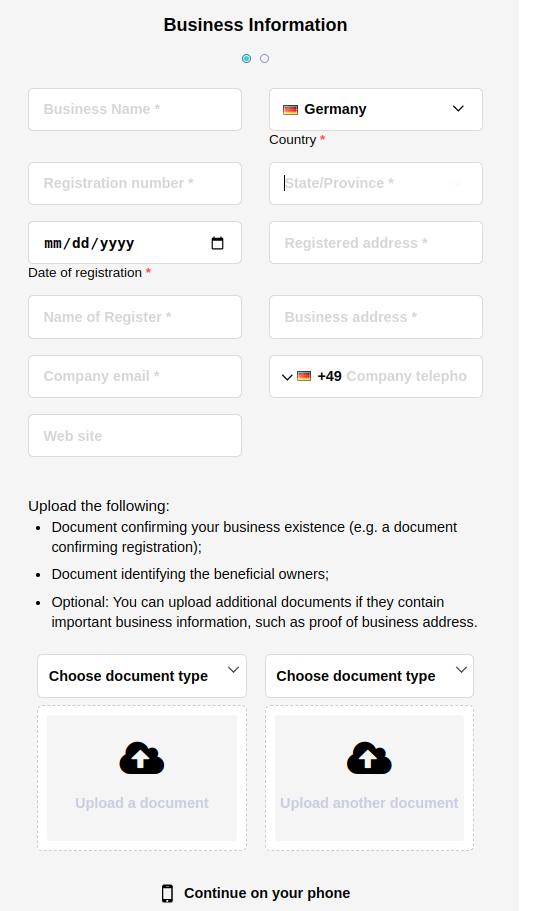
Contact the Paybis business team to start KYB onboarding and see how multicurrency accounts close these failure modes. Pre-funding in USD, EUR, or GBP secures settlement capacity before launch.
Key Terminology
- FX Spread: The difference between a provider’s quoted exchange rate and the mid-market rate. Traditional banks routinely embed markups in conversion rates that rarely appear as separate line items, making net received the only reliable cost metric.
- Safeguarding: The regulatory requirement under PSD2 and MiCA for payment institutions to segregate client funds from operating capital in dedicated accounts held with a licensed credit institution or central bank.
- Correspondent Bank: An intermediary bank that processes cross-border payments on behalf of the originating institution. Each correspondent in the chain may deduct fees, and any correspondent can exit the relationship with limited notice.
- Net Received: The actual amount delivered to the recipient after all fees and spread. Paybis discloses net received at the quote stage before the user confirms the transaction.
- VASP registration: A Virtual Asset Service Provider registration with a national regulator, such as Paybis’s RDWW-805 registration with the Revenue Chamber in Katowice, Poland. Registration requirements vary by jurisdiction.
- Authorization rate: The percentage of initiated transactions that receive approval from the issuing bank or payment processor.
- Crypto License: Regulatory authorization allowing businesses to provide specified cryptocurrency services in a given jurisdiction.
- Stablecoin: A cryptocurrency designed to maintain a stable value, typically pegged to a fiat currency such as the US dollar. Stablecoins can help businesses manage volatility when transferring funds across currencies.
FAQ
What Is the Biggest Multi-Currency Account Mistake PSPs Make?
Ignoring hidden FX spread embedded in conversion rates. Measure net received (the amount the recipient receives after all fees and FX spreads) across providers at your transaction sizes before signing. A 2% spread costs $100,000 monthly on $5 million in volume.
How Do I Calculate True Net Received on Cross-Border Transactions?
Calculate net received by subtracting all applicable fees, FX spread costs, and intermediary deductions from the amount sent, after converting amounts into the same currency. Compare this figure across providers at the same transaction size and payment method.
What Compliance Documentation Should I Demand From a Multi-Currency Provider?
Request the specific registration numbers and license types for every active jurisdiction: FinCEN MSB registration numbers, FINTRAC MSB registration numbers, MiCA CASP authorization number, PSD2 PI license number, and VASP registration details. Verify each in the relevant public registry.
How Many Correspondent Banks Should Back a Production Multi-Currency Account?
At minimum, two active banking relationships per currency corridor, with quarterly failover testing. A single correspondent bank creates a single point of failure that one phone call can trigger.
What Reconciliation Frequency Prevents Material Breaks at Scale?
Daily reconciliation for high-volume primary currencies and monthly for low-volume accounts. Risk and transaction volume determine frequency, not arbitrary schedules.
Disclaimer: Don’t invest unless you’re prepared to lose all the money you invest. This is a high‑risk investment and you should not expect to be protected if something goes wrong. Take 2 mins to learn more at: https://go.payb.is/FCA-Info