Multi-Currency Account Provider Evaluation Checklist
- License types and registration numbers are checkable facts, not marketing claims.
- Net received at representative transaction sizes for your payment mix and markets is the all-in cost metric that captures both fees and FX spread.
- Integration depth and incident response history predict go-live risk better than sales promises.
- Client fund segregation and banking partner reliability are not optional.
- Multi-acquirer fallback routing is worth verifying before you sign.
Crypto assets can increase or decrease in value. Paybis is a payment gateway, not an investment service. This content is for informational purposes only and does not constitute financial advice.
Quick Answer: Evaluate multi-currency account providers on six criteria: verifiable licensing and registration numbers, net received quotes at representative transaction sizes for your payment mix and markets, currency and payment method coverage mapped to your markets, sandbox-tested API reliability, documented client fund segregation, and incident response history with multi-acquirer fallback. Paybis holds a MiCA CASP authorization and a PSD2 PI license for EU operations, plus FinCEN, FINTRAC, and Polish VASP registrations, with verifiable registration numbers cited in this article.
Even a small gap in FX spread (the difference between the mid-market exchange rate and the rate the provider applies) on a large transaction adds up to meaningful cost across thousands of monthly transactions. Most providers will not show you this number before you sign.
The multi-currency account provider you choose will either compress your compliance build queue or add months to it. The difference is in the documents they can produce before the contract, not the promises they make during the sales call.
This checklist gives payments leaders a repeatable method to evaluate multi-currency account providers across six dimensions: licensing, true take rates, currency capabilities, integration depth, fund safety, and operational resilience. Paybis is used as the reference benchmark throughout, with registration numbers, net received data, and sandbox evidence cited directly. For platforms evaluating an embedded buy and sell flow, the Paybis on/off-ramp is the reference implementation this checklist tests against.
How Do You Assess Provider Licenses and Registrations?
License verification is the first filter in any multi-currency account evaluation. A provider either holds the required registrations in your operating regions or it does not.
FinCEN and FINTRAC are registrations, not licenses. MiCA CASP and PSD2 PI are authorizations and licenses respectively. VASP registration in Poland is a national registration under EU AML directives. Each type carries different legal weight and scope.
Registration Numbers and License Types
Request the provider’s registration numbers for each jurisdiction where you operate. Legitimate providers publish these numbers or produce them upon request. Vague answers like “we are fully compliant” without a registration number are a red flag.
Paybis registration numbers by region:
| Region | Regulator | Type (License, Authorization, or Registration) | Registration Number |
|---|---|---|---|
| US | FinCEN | MSB registration | 31000272911973 (Paybis USA LTD, Delaware), 31000224635628 (Paybis US state operations), 31000277275964 (Paybis Poland) |
| Canada | FINTRAC | MSB registration | C100000816 (Paybis Poland), C100000646 (Paybis Canada) |
| EU | Bank of Latvia | MiCA CASP | |
| and Payment Institution (PI) licence | Latvia, secured May 2026 | ||
| Poland | Revenue Chamber in Katowice | VASP registration | RDWW-805 |
Sources: Paybis regulated exchanges overview, Paybis payment gateway selection guide, Paybis embedded exchange API.
Regulatory Approval Status by Region
Verify the scope of each registration. A FinCEN MSB registration does not authorize moving money in every US state. Paybis operates in most US states, with New York and Louisiana excluded.
For the EU, the MiCA CASP authorization allows Paybis to operate across all 27 member states. The PSD2 PI license covers payment services under the Payment Services Directive 2 framework. Both were secured in May 2026.
Passporting and Local License Requirements
Passporting lets a provider hold one EU member state license and operate across the EU. Both the MiCA CASP authorization and PSD2 PI license support passporting, but some jurisdictions still require local registration.
Request a jurisdictional coverage matrix listing every country where the provider operates, the specific registration or license type held, and any local requirements. Paybis operates in 180+ countries, but its licenses and registrations cover only Paybis’s own operations and do not extend to its partners. For markets outside the provider’s coverage, you retain the obligation to secure your own licenses or partner with a locally registered entity.
Defining Your Residual Regulatory Duties
Even when operating under a provider’s licenses, you retain residual duties: transaction monitoring, record keeping (a minimum of five years under Article 40 of the Fourth Anti-Money Laundering Directive, extendable to ten), customer due diligence, and filing suspicious activity reports (SARs) in your jurisdiction.
Delegated KYC means the provider runs identity verification and AML monitoring as the regulated entity, reducing your operational build burden. You retain your own licensing, AML, and residual compliance duties in every market you serve.
How Do You Assess True Take Rates and Margin Impact?
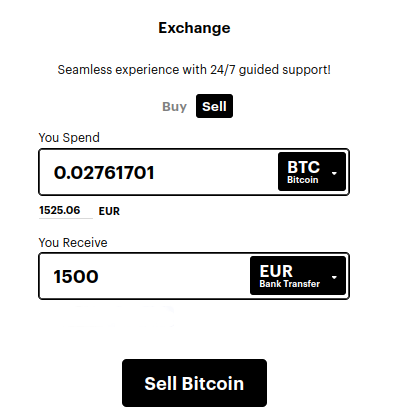
A net received quote at representative transaction sizes tells you more in five minutes than a pricing page tells you in an hour. Net received is the crypto a user actually receives for a fixed fiat input, or the fiat returned for a fixed crypto input, inclusive of all fees and spread.
Distinguishing Base Rates from FX Spreads
Providers quote fees as a percentage of transaction value (base rate), as a spread embedded in the exchange rate (FX spread), or both. A lower advertised base rate does not mean a lower total cost if the spread is wider. Paybis custom-quotes B2B relationships based on volume, asset mix, and payment methods, and partners set their own margin on top. Request the full fee schedule for the specific products you plan to use. Ask each provider to quote net received at your actual transaction sizes during the sales process. Paybis’s B2B pricing is custom-quoted through the business team, so comparison happens at the quote stage rather than on a public pricing page.
Calculating Real Costs per Transaction
Request a net received quote at representative transaction sizes for your payment mix and markets. Run the same transaction across multiple providers using the same payment method and asset, then compare the net received amounts.
Advertised fee percentages are not a reliable comparator, and a lower stated fee can still deliver less crypto if the spread is wider.
Evaluating FX Markups and Total Costs
FX markup is the difference between the mid-market exchange rate and the rate the provider applies. Request the exchange rate applied to a specific transaction and compare it to the mid-market rate at the same timestamp. Some providers disclose this, but most do not.
Paybis shows the total cost before the user confirms, including service fee, processing fee, and network fee (set by blockchain miners, Paybis does not control it). Partners set their own end-user fees by asset and payment method, so request the fee schedule for your payment mix. See the Paybis embedded exchange API article.
Hidden Margin and Settlement Fee Audit
Settlement fees are charges applied when funds move from the provider to your bank account or wallet, often undisclosed upfront. Request a full fee schedule for the settlement methods you plan to use, then test a small settlement and compare the amount received to the amount expected.
Paybis processes SEPA Instant and UK Faster Payments (FPS) in near-real time. SWIFT follows standard interbank settlement timelines. For corporate ramps, limits go up to $1M per transaction.
What Should a Provider Checklist for Currency Capabilities Cover?
Currency coverage is a matrix of payment methods and settlement rails mapped to your specific markets.
Mapping Currency Support to Your Stack
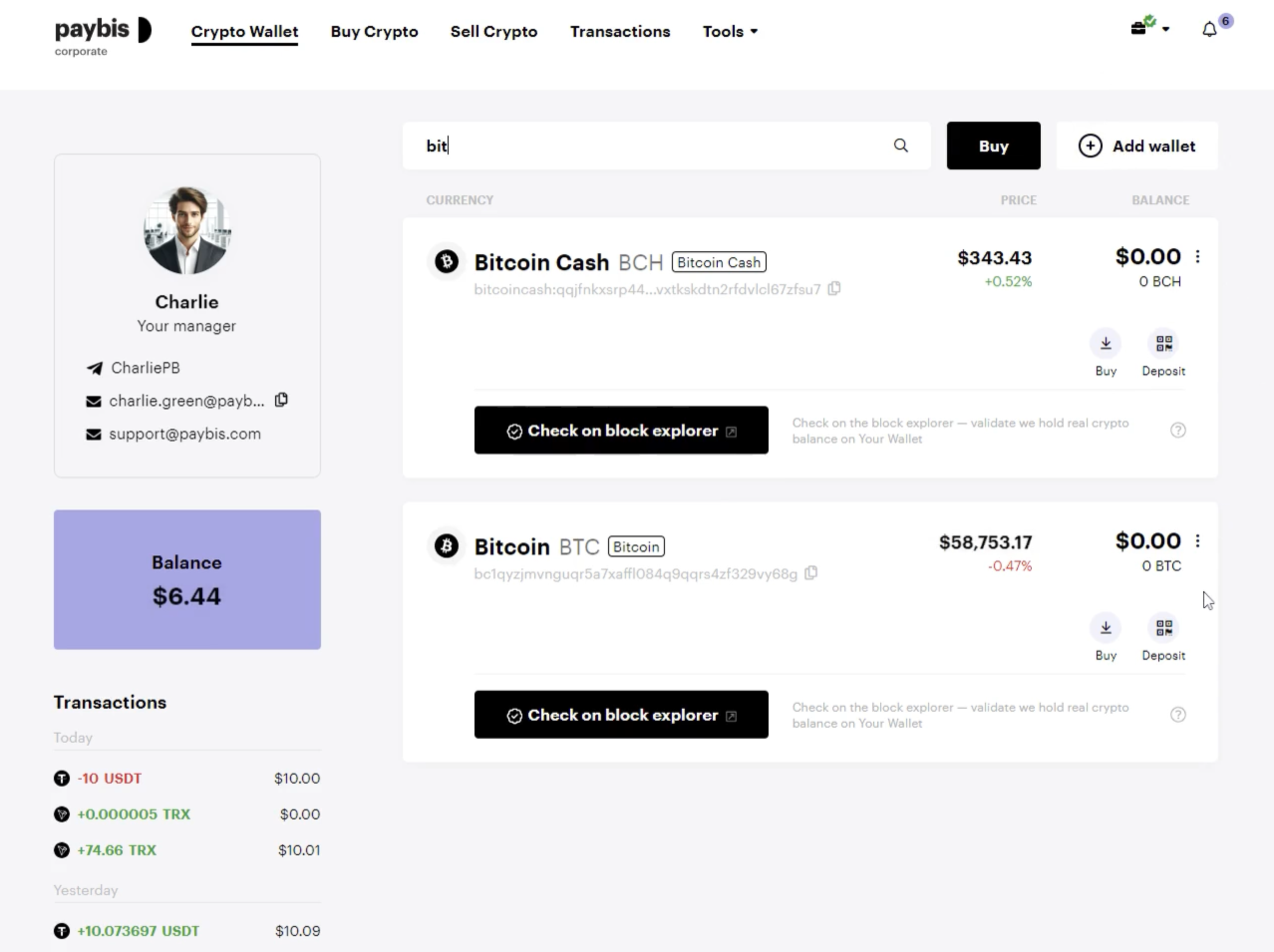
Paybis supports 54+ fiat currencies and 100+ cryptocurrencies. See the Paybis on-ramp coverage guide.
A practical way to map the provider’s currency support to your stack:
- List your top-10 markets by transaction volume. Identify the local currency, preferred payment method, and settlement rail for each.
- Cross-reference with the provider’s matrix. Flag any market where the local currency or payment method is unsupported.
- Identify gaps. Determine whether the provider can add support on demand or whether you need a secondary provider.
Payment Method Availability by Region
A provider that supports dozens of payment methods globally may not support the specific method your users prefer in a specific market. Paybis supports 35+ payment methods, including credit/debit cards, bank transfers (ACH, SEPA, SWIFT), Apple Pay, Google Pay, Skrill, Neteller, and PayPal.
For each of your top-10 markets, verify: card support (Visa and Mastercard), local bank transfer support (ACH in the US, SEPA in the EU, FPS in the UK), alternative payment methods (PIX in Brazil, UPI in India, Alipay in China), and whether the provider settles in the local currency or converts to USD/EUR/GBP first.
Managing Multi-Currency Payout Rails
Paybis supports SEPA and SWIFT for corporate ramps and mass payouts. For mass crypto payouts, partners fund a named corporate IBAN held in their own company name in USD, EUR, or GBP, then execute payouts in 14 supported crypto assets via API or portal. See the Paybis mass crypto payouts integration guide.
Cross-Border Compliance Requirements
In the markets where these frameworks apply, providers must comply with the Travel Rule (sender and recipient information sharing), DAC8 (EU crypto tax reporting), and local AML directives. The Travel Rule follows FATF Recommendation 16, implemented in the EU by Regulation (EU) 2023/1113. DAC8 is Council Directive (EU) 2023/2226, summarized in this EPRS briefing. Paybis complies with the Travel Rule. See the Paybis unhosted wallet verification guide. For DAC8 tax reporting, see the Paybis DAC8 tax reporting guide.
Request a compliance coverage matrix listing every compliance requirement the provider meets and the jurisdictions where it applies.
How Do You Assess Integration Depth and API Reliability?
Integration depth and API reliability predict go-live risk better than sales promises. Here is how to test both before signing.
Testing API Capabilities in Sandbox
Paybis offers a sandbox environment (base URL widget-api.sandbox.paybis.com) that accepts the same API calls and headers as production but does not move real funds. See the Paybis EMI partner API integration guide.
A sandbox readiness checklist should cover:
- Staging environment for webhook testing
- Test API keys
- Publicly accessible webhook endpoint
- Error handling for common API error codes
- Load testing to identify rate limits
Benchmark Time to First Live Transaction
Paybis offers four integration methods:
- Standalone (URL redirect): Build a signed URL and redirect the user. No Paybis API calls are required. See the Paybis web direct URL standalone integration guide.
- API-based: Server-to-server calls with your private API key. See the Paybis on-ramp API integration guide.
- Full SDK: Web, iOS, and Android SDKs for native integration.
- White-label OTC: Over-the-counter desk for high-volume transactions.
The Standalone option deploys in minutes. The full SDK launches in hours. Some integrations go live in under 48 hours.
API Implementation and Testing Guides
The provider’s API documentation should cover authentication, rate limits, error codes, webhooks, and sandbox testing. Paybis API documentation is available at docs.payb.is.
Managing Webhook Error States
Webhook error states cause more integration failures than any other factor. Paybis signs every webhook. Verify signatures on every delivery and handle failures.
A webhook error handling checklist should cover:
- Verify every webhook signature
- Handle duplicate deliveries idempotently
- Implement retry logic
- Set up failure alerts
- Reconcile transaction states daily via the API
How Do You Verify Client Fund Segregation and Asset Safety Protocols?
Client fund segregation means holding client funds in accounts separate from the provider’s operating funds, protecting them in the event of provider insolvency.
Verifying Client Fund Segregation and Safeguarding Policy
Request the provider’s safeguarding policy in writing. It should describe the segregation structure, banking partners, insurance coverage, and audit frequency. Paybis holds an EU PSD2 Payment Institution license, which requires client fund segregation under EU payment services regulation. See the Paybis regulated exchanges overview.
Request redacted bank statements showing segregated accounts, third-party audit reports, and regulatory filings describing the structure.
Banking Partner Reliability Metrics
A provider that works with tier-1 banks is less likely to experience banking partner failures. Paybis holds an EU PSD2 Payment Institution license, which requires client fund segregation, and processes SEPA, SWIFT, and FPS payments.
Client Fund Protection Audit Steps
- Request the safeguarding policy. Verify a compliance officer signed it in writing.
- Test withdrawal speed. Process a small withdrawal and time it. Delays may indicate liquidity issues.
- Review the audit reports. Confirm regular third-party audits.
For more, see the Paybis custodial wallets risk guide.
How Do You Assess Vendor Incident Response and Reliability?
A provider that cannot produce its last three outage reports is not ready for production.
Verifying Platform Uptime and SLA Terms
Paybis internal metrics (October 2026) put platform uptime at ~99.4%. The most recent 90-day window (checked 17 November 2026) shows Paybis On Off Ramp at 100.0% uptime on Web (Frontend) per the status page. See the Paybis status page.
Request the SLA in writing, specifying the uptime guarantee, penalty provisions, and exclusions (scheduled maintenance, force majeure).
Analyzing the Last Three Outage Reports
Request reports covering root cause, duration, impact, resolution, and prevention.
Defining Technical Support Escalations
Define your escalation path in writing with response times at each level: general support, technical support, account manager, and executive escalation. Paybis offers 24/7 support.
How Do You Assess AML Controls and Jurisdictional Reach?
This section covers the compliance checks, limits, and oversight practices to review before signing with a provider.
Minimizing KYC Verification Drop-offs
Paybis offers a No-KYC flow up to $1,000/year for low-risk countries. Standard KYC completes in approximately 2 minutes beyond that threshold. See the Paybis KYC documentation guide.
Background compliance checks allow approximately 90% of first-time users to transact without uploading a document.
Request the provider’s KYC drop-off data by cohort. Agree a drop-off threshold with the provider and track it cohort by cohort.
Assessing Vendor AML Screening Logic
Ask which sanctions lists the provider screens against, what transaction patterns trigger alerts, and how SARs are filed.
Defining Transaction Velocity Limits
Verify the provider’s transaction limits are consistent with your risk appetite.
Documenting Provider Oversight Controls
Document regular audits, monthly or quarterly performance reviews of compliance metrics, escalation paths, and contractual compliance obligations in a provider oversight policy.
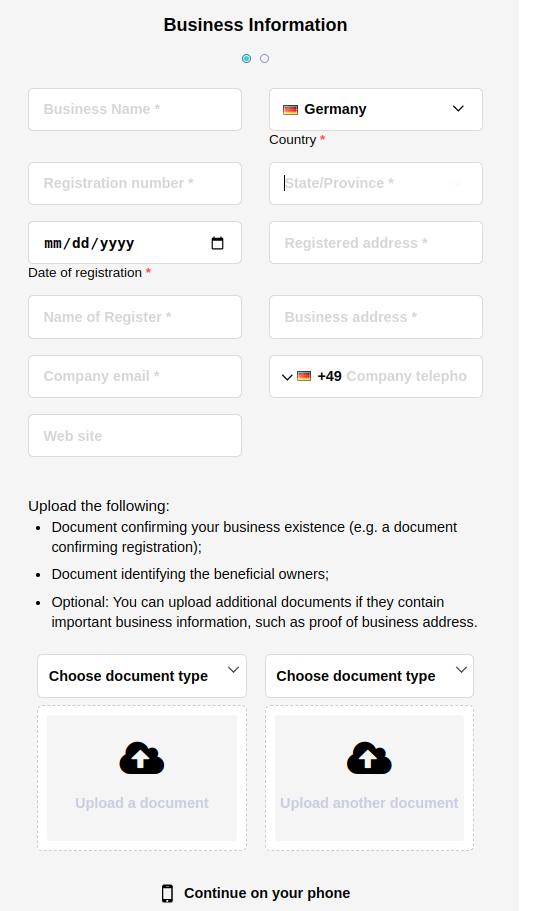
For a walkthrough of Paybis corporate onboarding and compliance, see the Paybis corporate account creation guide.
Ready to Test Paybis Against This Checklist?
Paybis is a crypto payment gateway that powers embedded buy and sell flows for businesses. Paybis brings 12+ years of crypto expertise, 24/7 technical support, and personal account management.
Contact the Paybis business team to start KYB onboarding, then request a sandbox environment and a jurisdictional coverage matrix for your top-10 markets.
Key Terminology
- Net received: The crypto a user actually receives for a fixed fiat input, or the fiat returned for a fixed crypto input, inclusive of all fees and spread.
- Smart Cascade Routing: Paybis’s payment orchestration engine that retries failed card transactions across multiple acquirers by region and approval rate, with 3DS authentication happening once regardless of retry attempts.
- 3DS decoupling: The separation of 3D Secure authentication from payment authorization, allowing a single authentication to cover multiple retry attempts across different acquirers.
- MiCA CASP: Markets in Crypto-Assets Crypto-Asset Service Provider authorization, required for crypto service providers operating in the EU.
- PSD2 PI: Payment Services Directive 2 Payment Institution license, required for payment service providers operating in the EU.
- VASP registration: Virtual Asset Service Provider registration, a national registration required in some jurisdictions for crypto service providers.
- MSB registration: Money Services Business registration with FinCEN (US) or FINTRAC (Canada), required for money transmitters.
- No-KYC threshold: The transaction amount below which users can transact without uploading identity documents. Paybis offers this up to $1,000/year for low-risk countries.
- Passporting: The ability of a provider licensed in one EU member state to operate across the EU without additional local licenses.
- Residual duties: Compliance obligations that remain with the buyer even when operating under a provider’s licenses and registrations.
- KYC (Know Your Customer): The process of verifying a customer’s identity and assessing potential financial crime risks. Crypto providers use KYC to meet regulatory requirements and prevent fraudulent transactions.
- Anti-Money Laundering (AML): Laws, regulations, and procedures designed to prevent criminals from disguising illegally obtained funds as legitimate income. Crypto providers implement AML controls through transaction monitoring, customer verification, and suspicious activity reporting.
FAQ
What License Types Should a Multi-Currency Account Provider Hold?
A multi-currency account provider should hold a MiCA CASP authorization and PSD2 Payment Institution license for EU operations, FinCEN MSB registration for US operations, and FINTRAC MSB registration for Canadian operations. FinCEN and FINTRAC are registrations, not licenses, and do not by themselves authorize moving money.
How Do I Verify Net Received Costs Across Providers?
Request a net received quote at representative transaction sizes for your payment mix and markets, covering ACH, SEPA, card, Apple Pay, Google Pay, Skrill, and PayPal. Run the same transaction across multiple providers using the same payment method and asset, then compare the net received amounts.
What Authorization Rate Lift Should I Expect from Cascade Routing?
Authorization rate lift depends on your payment mix, markets, and acquirer setup, so request provider-specific results from a pilot. Paybis Smart Cascade Routing with 3DS decoupling retries failed card transactions across multiple acquirers after a single authentication. The Multi-Acquirer Fallback Routing section covers the published result.
Which Compliance Obligations Transfer to the Provider?
The provider typically assumes KYC, AML screening, and fraud monitoring obligations under its own licenses and registrations. You retain residual duties including transaction monitoring, record keeping, customer due diligence, and suspicious activity reporting in your jurisdiction.
How Long Should Integration to First Transaction Take?
Paybis Standalone (URL redirect) integration deploys in minutes. Full SDK integration launches in hours. A provider that cannot demonstrate a sandbox-to-production timeline under one week warrants additional scrutiny before signing.
Disclaimer: Don’t invest unless you’re prepared to lose all the money you invest. This is a high‑risk investment and you should not expect to be protected if something goes wrong. Take 2 mins to learn more at: https://go.payb.is/FCA-Info