Build vs Buy: The Real Cost of Crypto Payment Infrastructure
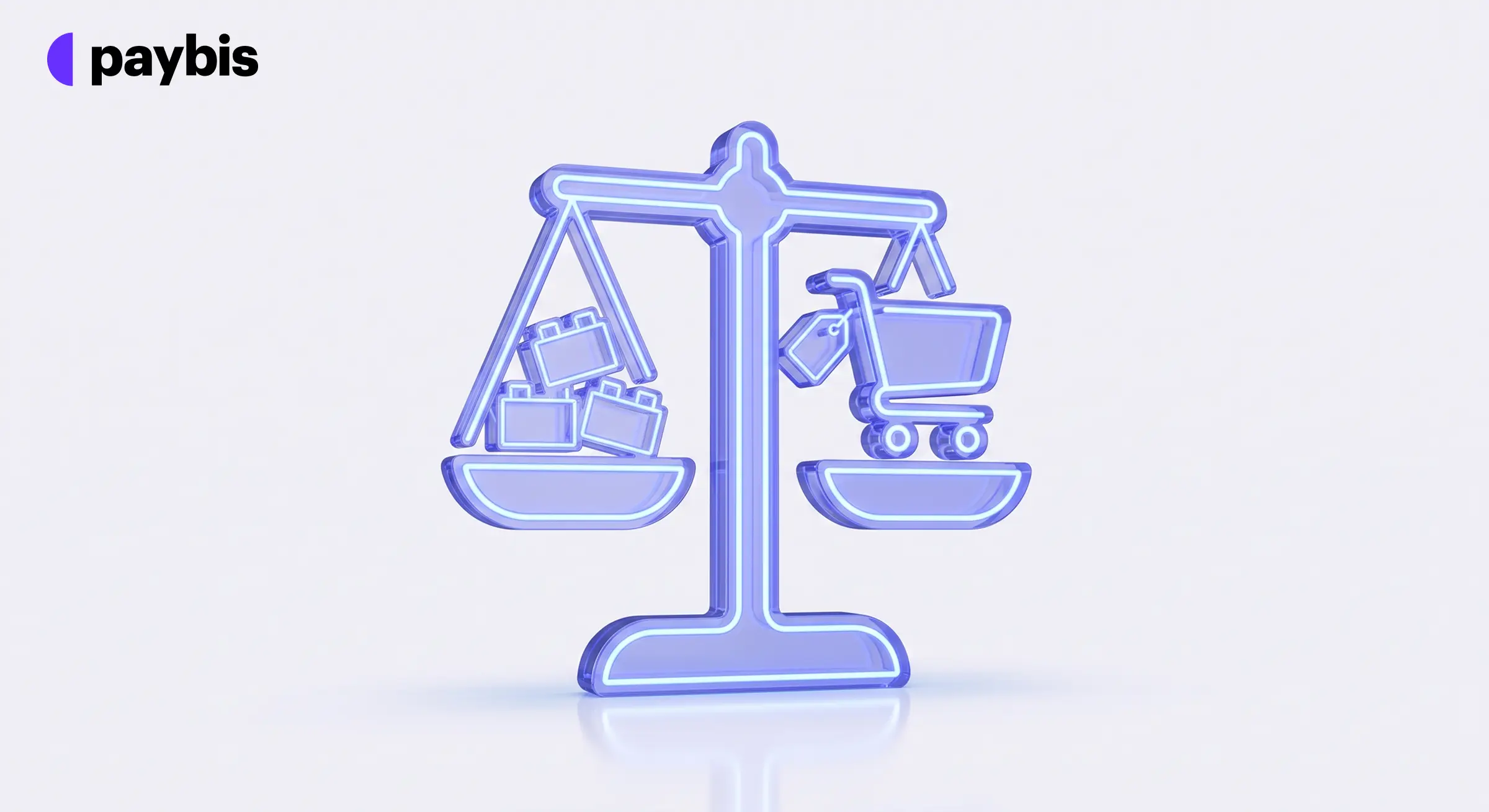
- Building crypto infrastructure looks cheaper because the estimate only counts engineering salaries.
- The real cost is licensing, ongoing compliance, custody risk, and the year or two before you are live.
- Building includes payment rails, conversion, custody, licensing, compliance, reconciliation, and permanent maintenance.
- A serious in-house build runs 12 to 24 months. Buying a regulated platform goes live in under 48 hours.
- Licences take years to obtain jurisdiction by jurisdiction, and you cannot legally operate without them.
- Compliance is a permanent cost of people, tools, audits, and reporting, not a feature you finish.
- Buying means connecting to a platform that already has the rails, custody, licences, and compliance, through one integration.
- Paybis provides fiat and crypto rails across 180+ countries through one API, live in under 48 hours.
- Building still makes sense when crypto payments are your actual product and you hold the licences and scale.
Building your own crypto payment setup looks like the cheaper option. You already have engineers, so why pay a provider? The real bill shows up later, and it has little to do with the code. It comes from the licences, which take years to get, and the compliance you run long after launch, while the build earns nothing the whole time.
Should you build or buy crypto payment infrastructure?
For most companies, buying is cheaper and far faster. Building wins only when crypto payments are your core product and you already hold the licences. Here is the difference at a glance.
| What it takes | Build it yourself | Buy a regulated platform |
|---|---|---|
| Time to live | 12 to 24 months | Under 48 hours |
| Licences | Obtain them yourself, country by country, over years | Provided by the platform |
| Compliance | Build the system and staff a team | Runs on the platform |
| Custody | Manage keys and security in-house | Handled by the platform |
| Payment rails | Integrate each method and region on your own | One integration across regions |
| Maintenance | Your team, on call for good | The platform’s job |
| Upfront cost | Large and hard to predict | Predictable and usage-based |
What does building crypto payment infrastructure involve?
Building crypto payment infrastructure takes several specialties at once, and each is a real build on its own. The main pieces are below.
- Payment rails. Rails are the connections that move money in and out. That covers card processing and local bank transfers in each country, plus the blockchains you pay out on. Every region and method is a separate integration to build and keep running.
- Conversion and liquidity. Turning normal money into crypto and back at a fair rate means sourcing the coins and handling price movement. Get the rate wrong and every transaction leaks money.
- Custody. Custody means holding the crypto safely. In practice that is managing private keys, the secret codes that control the coins, without ever losing them or letting them be stolen. It is a security job that never ends.
- Licensing. Licences are the government permissions to handle money and crypto, and you obtain them country by country. In the EU that means a crypto licence and a payments licence. Each one takes months to years.
- Compliance. Compliance means checking who your customers are and watching transactions for fraud and money laundering, then reporting all of it to regulators. It is a team and a system, and the work never finishes.
- Reconciliation. This is matching your own records to what actually moved, across both normal money and crypto. It is harder than it sounds, and it never stops.
- Maintenance. Chains and rules keep changing, and cards start getting declined for new reasons. Someone is on call for all of it, for as long as you run.
What is the real cost of building crypto infrastructure?
Engineering salaries are the smallest part. The real cost is the year or two before launch, and the licensing and compliance you carry long after.
- Time. A serious in-house build runs 12 to 24 months before it is live. That is a year or two your product waits on plumbing instead of growing.
- Licences. The permissions alone can take years to obtain, one jurisdiction at a time. You cannot legally operate without them.
- Ongoing compliance. Once it is built, compliance is a permanent cost. It means a team and tooling to run every month, plus regular audits and reporting.
- Risk. If you hold crypto, one key mistake or a breach can lose real money. If you get licensing or compliance wrong, the penalty comes from the regulator. Both land on you.
What does it mean to buy crypto infrastructure?
Buying means plugging into a platform that already has the licences and the rails in place. You connect once and go live in days instead of building for a year.
With buying, you build on top of the platform through one integration instead of underneath it. The work that would have taken a year becomes a connection you finish in days.
How does Paybis work for buying crypto infrastructure?
Paybis gives you fiat and crypto rails through one API. You go live in under 48 hours across 180+ countries, without building the banking or the compliance yourself. Here is what it covers.
- One integration, many markets. One connection gives you cards and local methods across 180+ countries, instead of a separate build for each region.
- Live in under 48 hours. Going live takes under 48 hours through a simple widget or a full API integration, well short of the year an in-house build needs.
- Licences carried by Paybis. Paybis operates under its MiCA CASP and Payment Institution licences in the EU, so obtaining them is not on your plate.
- Custody handled. Crypto is held under MPC custody, meaning no single person holds the key that can move it.
- No volume cap. Processing scales with you rather than throttling as you grow.
- Payouts and one balance. Mass Crypto Payouts and a single corporate account run through the same platform.
- 24/7 support with a personal account manager.
When does building crypto infrastructure make sense?
Building makes sense when crypto payments are your actual product and you already have the licences and the scale to run a platform team.
The honest test is whether this infrastructure is your product or your plumbing. If it is the product, building gives you control worth paying for. If it is plumbing, buying is almost always the better call.
Bottom line
Building crypto infrastructure is rarely a code problem. The hard parts are the licensing and the compliance, wrapped in a year or two of waiting, with the money you hold to keep safe on top. For most companies this infrastructure is plumbing rather than the product itself, so paying to skip the build and go live in days works out cheaper once you add up everything the estimate left out. Count the years and the compliance you take on, not just the salaries.
FAQ
Is it cheaper to build or buy crypto payment infrastructure?
For most companies, buying is cheaper once you count everything the build estimate leaves out. Engineering salaries are only part of it. Licensing, ongoing compliance, custody security, and the 12 to 24 months before you are live usually cost far more than the platform fee.
What does building crypto infrastructure actually involve?
It is several specialties at once: payment rails for cards and bank transfers, converting money to crypto and back, holding the crypto safely, obtaining licences country by country, running compliance checks and reporting, matching your records, and maintaining all of it as chains and rules change.
How long does an in-house crypto build take?
A serious in-house build commonly runs 12 to 24 months before it is live. Connecting to a regulated platform instead can take hours to a week, with going live in under 48 hours.
Why is licensing such a big part of the cost?
Licences are government permissions to handle money and crypto, and you obtain them one jurisdiction at a time. Each can take months to years, and you cannot legally operate without them. A regulated platform lets you operate under its licences instead.
When does building make more sense than buying?
Building can be worth it when crypto payments are your core product, you already hold the licences, and your volume is large enough to support a dedicated platform team. If the infrastructure is plumbing rather than your product, buying is usually the better call.
Disclaimer: Don’t invest unless you’re prepared to lose all the money you invest. This is a high‑risk investment and you should not expect to be protected if something goes wrong. Take 2 mins to learn more at: https://go.payb.is/FCA-Info