AI vs. Rule-Based Crypto Bots: Which Strategy Wins Your Trades? (Data-Backed)
Key Takeaways
Rule-based bots (Grid, DCA) use fixed logic and work best in sideways markets. AI bots adapt to volatility using machine learning. AI-enhanced Grid bots can substantially increase profits through dynamic parameter adjustment, while grid strategies deliver strong returns in ranging conditions. But here’s what matters more: the best bot is useless if your capital is stuck in a 3-day bank transfer. We provide verification in under 15 minutes and instant card purchases so your bot executes when the signal fires, not three days later when the move is over.
Liquidity delays ruin trades more often than bad code. When your bot triggers the perfect entry but your exchange balance isn’t funded, the opportunity is gone before your money even arrives. Waiting days for transfers while the market moves is one of the most expensive mistakes traders make.
The debate between AI-powered and rule-based crypto trading bots focuses on algorithms and APY claims. That misses the point. The real question is, which combination of strategy and funding infrastructure lets you execute when the market moves, not three days after it’s over.
Table of contents
What Are Crypto Trading Bots?
Crypto trading bots are automated programs that execute trades based on rules or adaptive algorithms. You connect them to exchanges via API, they monitor markets 24/7, and they place orders without you watching charts. The split you need to understand: static rule-based systems versus dynamic AI-driven models.
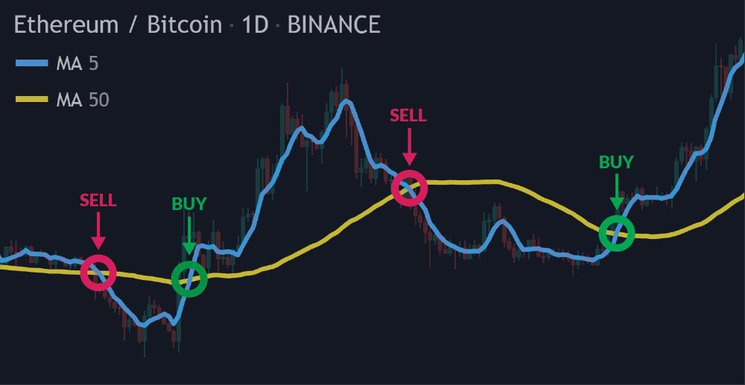
Rule-Based Bots: Predictable Execution
Rule-based bots follow explicit “if-then” logic. You define the conditions, the bot executes when conditions match. No interpretation, no adaptation.
- Grid Trading is designed for ranging markets. You set a price range (Bitcoin between $60,000 and $65,000) and the bot places buy orders below current price, sell orders above. As price oscillates, the bot captures profits from each swing. Grid bots can deliver 15-25% profits in ranging markets when properly configured on high-volatility pairs.
- Dollar-Cost Averaging (DCA) automates periodic purchases. Buy $100 of Ethereum every Monday regardless of price. Properly configured DCA strategies in volatile accumulation phases have produced substantial returns by systematically averaging into positions during drawdowns.
Key characteristics: Static until you manually change parameters, transparent logic, low computational requirements, effective in predictable conditions.
To go deeper on top tactics and tips outside of bots check out our ultimate guide on how to trade cryptocurrency.
AI/ML Bots: Adaptive Intelligence
AI-powered bots use machine learning to analyze datasets humans miss. They ingest price, volume, order books, on-chain metrics, and social sentiment. The bot learns from historical data, predicts movements, and adjusts strategy automatically.
Some platforms use algorithm intelligence to backtest multiple strategies and deploy the highest-scoring one. Advanced AI systems employ hundreds of sub-strategies that activate based on market conditions.
Key characteristics: Adapt to changing conditions, analyze multiple data sources, “black box” nature makes trade logic harder to understand, higher computational requirements.
Watch how you can harness the power of Deepseek in your own trading bot in the tutorial below.
The Showdown: AI vs. Rule-Based Performance
Head-to-Head Comparison
| Dimension | Rule-Based (Grid/DCA) | AI/ML-Powered |
|---|---|---|
| Best Market Condition | Sideways, ranging | Volatile, trending |
| Adaptability | Zero | High |
| Transparency | Complete | Limited |
| Setup Complexity | Low | High |
When Rule-Based Wins
In ranging markets, simplicity dominates. Grid bots profit from oscillations. DCA bots excel in volatile accumulation, allowing traders to systematically build positions without timing the market.
The limitation: rigid. If Bitcoin breaks above your $65,000 Grid ceiling and trends to $80,000, your bot stops. You miss the trend.
When AI/ML Wins
AI bots are built for chaos. By dynamically adjusting parameters based on volatility, AI-enhanced grid systems can substantially outperform static rules in trending or erratic markets. Advanced AI platforms identify cointegrated pairs and execute mean-reversion trades automatically.
The challenge: overfitting. A model perfect on 2023 data can fail on 2024 data if market structure changes. Test any AI bot on out-of-sample data before trusting it with real capital.
The Cost of Complexity
Bot platforms vary widely in pricing structure. Some offer free built-in bots with low trading fees, while others charge monthly subscriptions ranging from entry-level plans around $30/month to premium AI features exceeding $100/month. Factor these recurring costs into your expected returns.
The Hidden Variable: Funding Speed (The Fuel)
Here’s the truth most bot guides ignore: the best algorithm is useless if you can’t fund it instantly when the signal fires.
Your Grid bot identifies a 6% Bitcoin dip at 11 PM Saturday. Your capital is in checking. Traditional exchange bank transfers take multiple business days. By Tuesday, Bitcoin is up 9%. You watch the entire move from the sidelines because your fiat was in transit.
This is where we function as critical infrastructure – not a bot provider, but the instant liquidity rail that makes bot strategies executable.
Speed Differential: Us vs. Traditional Exchanges
Verification:
- Us: Verification typically completes in 5-15 minutes for most users. Upload ID, take selfie, approved.
- Traditional exchanges: Verification times range from hours to multiple days depending on platform load and manual review requirements.
Funding:
- Us: Instant card transactions. Buy USDT with Visa/Mastercard, crypto arrives in under 15 minutes. Withdraw to external wallet (your bot’s exchange) immediately.
- Traditional exchanges: Bank transfers typically require 3-6 business days. Card purchases often carry withdrawal restrictions lasting up to 10 days.
Consider opportunity cost. If your bot signals a 10% move and you capture it because you funded instantly through us, you net +2% after fees. If you wait 3 days and miss the move, you net 0%. Speed is the premium you pay for execution to capture your upside.
Real scenario: 3 AM Sunday. Bitcoin flash-crashes 8%. Your DCA bot signals buy, but you have $0 USDT on your exchange. You:
- Create account with us (2 minutes)
- Verify with ID + selfie (5-15 minutes)
- Buy $2,000 USDT with Apple Pay (3 minutes)
- Withdraw to exchange wallet (10 minutes)
- Bot executes buy at bottom (1 minute)
Total: 21-31 minutes from zero to filled. Bitcoin recovers 5% by morning. You captured the entry.
When your opportunities are time dependent, Paybis ensures you capture as much of your alpha as possible before the opportunity is lost.
Understanding Market Makers and Liquidity
Trading bots need liquidity to execute. Market makers provide continuous buy/sell orders, profiting from bid-ask spread and ensuring when your bot wants Bitcoin at $60,000, someone is selling.
Low liquidity crypto is the silent killer. If you run a Grid bot on a token with $50,000 daily volume and your bot tries a $5,000 order, you suffer massive slippage. This is why profitable strategies focus on high-liquidity pairs: BTC/USDT, ETH/USDT, major stablecoins.
Leading Crypto Trading Bot Platforms
Several platforms offer bot infrastructure. Most require you to fund an exchange first, then connect via API. Common platform types include:
- Multi-exchange integration platforms: Support DCA, Grid, and other rule-based bots with optional AI assistance. Integrate with 20+ exchanges. Subscription models typically start around $30-40/month for professional features.
- Exchange-native bot platforms: Some exchanges offer built-in bots at no subscription cost, charging only trading fees. These often include both basic and AI-enhanced versions.
- AI-first platforms: Specialized services offering pre-configured strategies based on machine learning. Monthly pricing scales with feature access and strategy complexity.
| Platform | Best For | Exchanges | Pricing |
|---|---|---|---|
| 3Commas | DCA, SmartTrade | 23+ | $22-$75/mo |
| Cryptohopper | Strategy marketplace | 13+ | $19-$99/mo |
| Pionex | Built-in exchange | Native | 0.05% fee |
| TradeSanta | Beginners | 6+ | $18-$90/mo |
| Custom Python | Full control (ccxt + backtrader) | Any with API | Free (time cost) |
All require USDT or BTC on your connected exchange to start. If you don’t have crypto when the bot signals, it cannot execute. This is where our instant funding infrastructure becomes your strategy infrastructure.
Dig into what the best traders use for their systems in this deep dive on How to use Crypto Trading Bots to Enter and Exit the Bull Market.
Risks and Considerations
- AI overfitting: Models trained on 2023 data can fail in 2024. The bot learned period-specific patterns, not generalizable principles. Always test on out-of-sample data.
- Rule-based rigidity: A Grid bot buying from $60k to $40k executes every order even if Bitcoin crashes to $20k. You’re fully invested at terrible prices.
- Black box decisions: You might not understand why your AI bot sold at a loss. Lack of transparency makes it hard to trust during drawdowns.
- Exchange security: Keep only active trading capital on exchanges. Secure your assets and protect against common threats. API keys should have read + trade permissions only (disable withdrawal).
- Slippage: Backtests don’t account for real execution. A 50% APY backtest might deliver 20% live because fills happen at worse prices.
Getting Started: Deployment Protocol
- Select strategy: Sideways market = Grid bot. Volatile accumulation = DCA. Trending with reversals = AI-adaptive. Check 30-day volatility on TradingView first.
- Backtest: Test on 6+ months historical data. Check maximum drawdown, not just total return.
- Secure funding infrastructure: Create your account with us before you need it. Complete verification. Test with $100 purchase.
- Launch bot: Generate exchange API with read + trade permissions (no withdrawal). Start with 10-20% of intended capital. Monitor first 48 hours.
- Monitor weekly: Compare actual vs. backtest returns. Adjust if market regime changes. Set portfolio-level stop-loss.
The Algorithm Needs Capital
AI bots adapt. Rule-based bots dominate sideways markets. AI-enhanced systems can substantially outperform static rules in volatile conditions, while grid strategies deliver strong returns in ranging markets. Both work in their domain.
But the algorithm is irrelevant if your capital is in a 72-hour ACH queue. Every entry you miss because funds were in transit is a permanent loss.
Your move:
- Match bot type to market conditions.
- Ensure you have instant funding when signals fire.
- Run your bot
- Keep us verified and ready for the 3 AM flash crash
Create your free account now. Verify in 5-15 minutes. When your bot signals the next high-conviction entry and your primary exchange is offline, you’ll execute in under 30 minutes instead of explaining why you missed it again.
See how this works in practice, and just how fast Paybis is in this tutorial below:
Key Terminology
Grid Trading: Rule-based strategy placing buy/sell orders at intervals within a price range, profiting from oscillations.
DCA (Dollar-Cost Averaging): Investing fixed amounts at regular intervals regardless of price, reducing volatility impact.
Overfitting: When an AI model learns training-data patterns that don’t generalize to new data, causing poor live performance.
Market Maker: Entity providing continuous buy/sell orders, profiting from bid-ask spread and ensuring liquidity.
FAQ
Can I connect us directly to third-party bot platforms?
No. We’re a fiat-to-crypto gateway, not a trading exchange. Use us to buy USDT instantly, then transfer to your exchange where your bot operates.
What's the minimum capital for running a Grid bot?
$500-$1,000 for meaningful grid density on major pairs like BTC/USDT. Below that, fees eat too much profit.
Do AI bots require constant monitoring?
Less than rule-based bots in theory, but more in practice. Check performance at least twice per week to verify they’re not overfitting.
What's our card approval rate?
85%+ according to internal data, significantly higher than many platforms during high-volatility periods when fraud filters tighten.
How long until I can withdraw crypto purchased with a card?
Immediately to an external wallet. No extended withdrawal holds on card purchases.
Disclaimer: Don’t invest unless you’re prepared to lose all the money you invest. This is a high‑risk investment and you should not expect to be protected if something goes wrong. Take 2 mins to learn more at: https://go.payb.is/FCA-Info