Are Bitcoin ATMs Safe? Real Facts From Security Experts
Bitcoin ATMs have increasingly drawn attention from scammers, raising concerns about their safety and reliability. However, when used correctly, they remain secure thanks to robust cryptographic protections and strict regulatory oversight.
Many regions have introduced transaction limits to enhance user protection, and while transfers are irreversible, awareness and caution can prevent most issues. The industry is dominated by a small number of major operators, which helps maintain consistent security standards.
In this article, we’ll look at some of the built-in safeguards of Bitcoin ATMs and how users can operate them safely to avoid scams.
Key Takeaways:
- Bitcoin ATMs are safe when used correctly, they rely on blockchain technology, public-key encryption, and regulatory oversight.
- No funds are stored locally in the machines, so physical attacks cannot access user assets.
- KYC and AML protocols (including ID checks and transaction reports) help prevent fraud and money laundering.
- User awareness is critical, most scams target people, not the machines themselves.
- Choosing reputable operators and following best practices ensures a secure crypto transaction experience.
Table of contents
How Bitcoin ATMs Ensure Safety
Bitcoin ATM machines use complex security protocols and verification systems to protect your transactions. A good grasp of these mechanisms shows why these machines remain secure with proper use.
For more information on how to use a crypto ATM, check out our in-depth article.
Blockchain and Decentralized Verification
Bitcoin ATMs work differently from regular bank ATMs. These machines operate on a decentralized network instead of connecting to a central bank. Your transaction gets recorded on the blockchain – a public digital ledger copied across thousands of computers worldwide. No single entity controls the verification process because of this distributed system.
Each transaction gets a unique digital signature that no one can change. This signature contains hashtag functions from previous blocks and creates an unbroken chain that makes fraud almost impossible. The network nodes must get identical results from hash validation to consider a transaction valid.
Public and Private Key Encryption
Public-key cryptography stands as the foundation of Bitcoin ATM security. Two mathematically connected keys work together to keep your funds safe.
Think of your public key as your crypto wallet address – you can share it with anyone sending Bitcoin your way. Your private key needs to stay secret since it lets you access your funds. Bitcoin ATMs only interact with your public key, which keeps your private key protected.
Your private key creates a digital signature by combining with your transaction data. This signature proves you own the funds without showing the private key, which protects your Bitcoin ATM transactions from unauthorized access.
How Mining Secures Your Transaction
The network puts your Bitcoin ATM transaction through a verification process called mining. Network computers known as miners compete to solve complex math puzzles that verify your transaction.
Your transaction becomes permanent on the blockchain once a miner solves the puzzle. The network creates one block about every 10 minutes. Difficulty adjustments happen every 2,016 blocks, roughly two weeks, based on how many miners participate.
Built-in Security Features of Bitcoin ATMs
Bitcoin ATM machines create multiple layers of security by combining reliable physical safeguards with advanced digital protections. These built-in features protect against common threats that plague traditional financial systems.
No Local Storage of Funds
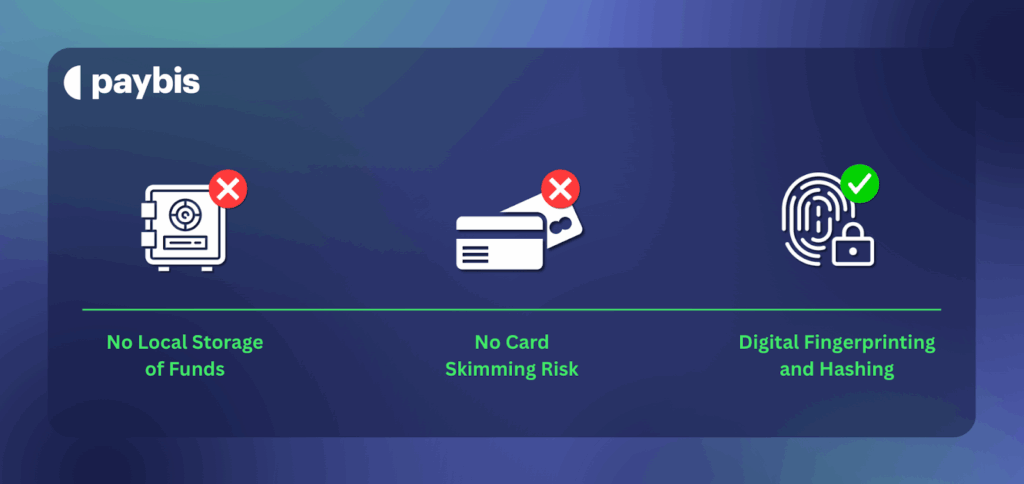
Bitcoin ATMs have a key security advantage – they don’t store cryptocurrency inside the machine. These kiosks connect to a server through encrypted HTTPS protocols that secure every transaction. This design ensures that physical attacks on the machine won’t give attackers access to any digital assets.
It also helps that many ATM operators use “cold storage” to keep digital assets completely offline and safe from online threats. This method cuts down the risk of stolen funds by a lot since the cryptocurrency exists only on the blockchain, not in the physical terminal.
No Card Skimming Risk
Thieves often install devices to steal card information from traditional ATMs. Bitcoin ATMs completely remove this risk by using different ways to verify users. Many machines need multiple forms of verification like:
- Fingerprint readers for biometric verification
- Mobile phone verification through SMS codes
- ID document scanning
- Facial recognition or “selfie” verification
These verification methods boost security and help operators follow regulations. Without card readers, criminals can’t install skimming devices – a big security advantage over regular ATMs.
Digital Fingerprinting and Hashing
Each Bitcoin ATM transaction gets a unique digital fingerprint through hashing. This cryptographic technique creates a distinctive identifier that stays permanently on the blockchain.
The hash value changes completely if someone tries to change even one character in the transaction data, which exposes tampering attempts right away. This unchangeable feature adds an invisible yet powerful layer of protection that works automatically with every ATM transaction.
Quality manufacturers build these physical Bitcoin ATMs with reliable hardware security. Some models use cold-rolled steel construction and reinforced internal vaults that take hours to breach, even for skilled locksmiths.
Compliance and Fraud Prevention Protocols
Bitcoin ATM machines have multiple layers of protection through regulatory frameworks. These machines must follow strict compliance requirements that protect users from fraud.
- Know Your Customer (KYC) requirements: KYC rules require Bitcoin ATM operators to verify user identities to prevent fraud and money laundering. Basic transactions need minimal info, while larger ones require government ID or biometric checks. Many operators, like Bitcoin Depot, now verify all users to strengthen security.
- Suspicious Activity Reports (SARs): Operators must report suspicious transactions to FinCEN and keep records for five years. These reports help authorities trace potential criminal activity.
- Currency Transaction Reports (CTRs): Cash transactions over $10,000, or smaller ones that total that amount daily, must be reported. This helps track large money movements in crypto.
- Elder abuse detection and escalation: Scammers often target older users. To protect them, operators use real-time monitoring, live support, transaction holds, and limited refund policies for verified fraud.
Why Bitcoin ATMs Are Safe if Used Responsibly
The security of any bitcoin atm machine depends on both technical safeguards and user watchfulness. Several key factors make these machines secure when you use them the right way.
Global Developer Oversight and Open-Source Code
Bitcoin runs on open-source code that thousands of developers worldwide inspect. This worldwide review helps find and fix vulnerabilities quickly. Unlike traditional banking systems that keep their code private, Bitcoin’s transparent system lets the community improve security through constant checks. The network becomes more secure as developers find and eliminate weak points.
Low Risk of 51% Attacks
A 51% attack happens when bad actors take control of more than half the network’s computing power. For Bitcoin, these attacks are almost impossible to execute. Anyone trying to attack would need massive resources.
The cost alone stops most attempts – attackers would need thousands of specialized mining machines that require considerable funds. The price tag to attack Bitcoin is nowhere near worth any potential gains. While smaller cryptocurrencies don’t deal very well with these threats, Bitcoin’s huge network stands strong.
User Responsibility and Best Practices
Your actions determine how safe Bitcoin ATMs are. Remember these key points:
- Never send cryptocurrency to unknown wallets or individuals
- Stay skeptical of urgent payment requests
- Pick ATMs from trusted operators
- Do your own research and learn the basics of using Bitcoin
These guidelines and a solid grasp of blockchain technology’s security features make Bitcoin ATMs a safe option for crypto transactions.
Conclusion
Bitcoin ATMs combine advanced blockchain technology with traditional finance, offering strong security through public-key cryptography, blockchain verification, and multi-step authentication. While ATM scam reports have surged since 2020, the main risk lies in user awareness, not the machines themselves.
Regulations like KYC checks and transaction limits further enhance protection, and Bitcoin’s immense network hashrate makes large-scale attacks nearly impossible. Still, vigilance is key, no system can prevent users from sending funds to scammers. Used responsibly, Bitcoin ATMs provide a secure, reliable gateway to cryptocurrency access.
FAQ
Are Bitcoin ATMs safe?
Yes. While ATMs may not be the most convenient method to buy or sell your coins, it is certainly safe to use. All you need to do is follow the instructions on the screen and make your payment. In most cases, if any doubts or questions arise, there will be a phone number that you can call to ask for further assistance or information.
Are there any fees associated with using Bitcoin ATMs?
Yes, Bitcoin ATMs typically charge fees for their services. These fees can vary depending on the operator and transaction amount, but they are generally higher than standard online cryptocurrency exchanges.
Can I withdraw cash from a Bitcoin ATM?
Some Bitcoin ATMs allow you to sell Bitcoin for cash, effectively enabling withdrawals. However, not all machines offer this feature, so it’s best to check the specific ATM’s capabilities beforehand.
What measures are in place to prevent fraud at Bitcoin ATMs?
Bitcoin ATMs implement various fraud prevention measures, including Know Your Customer (KYC) requirements, Suspicious Activity Reports (SARs), and Currency Transaction Reports (CTRs). Many also have specialized safeguards to protect vulnerable users, such as the elderly.
How can I use a Bitcoin ATM safely?
To use a Bitcoin ATM safely, choose machines from reputable operators, never send cryptocurrency to unknown wallets, be skeptical of urgent payment requests, and follow the ATM’s security protocols. It’s also crucial to understand the transaction process and be aware of common scam tactics.
Disclaimer: Don’t invest unless you’re prepared to lose all the money you invest. This is a high‑risk investment and you should not expect to be protected if something goes wrong. Take 2 mins to learn more at: https://go.payb.is/FCA-Info