Bitcoin Lightning Network: Complete Layer 2 Guide
- The Lightning Network is a payment protocol on top of Bitcoin that lets people send payments instantly without waiting for blockchain confirmations
- It works through payment channels: two parties lock funds into a shared address and can send money back and forth as many times as they want without touching the blockchain
- Only opening and closing a channel gets recorded on Bitcoin’s blockchain. Everything in between happens directly between the two parties
- Lightning transactions typically cost less than a cent. On-chain Bitcoin fees can spike to $10-$50 during busy periods
- The network has over 60,000 public channels and around 5,000 BTC in publicly visible capacity as of early 2026
Sending $5 worth of Bitcoin on-chain can cost more in fees than the payment itself. Don’t get surprised; it’s just a consequence of how Bitcoin works at its base layer. The blockchain prioritizes security above everything else, and that comes with a limit: around 7 transactions per second globally.
For large transfers or long-term storage, that’s perfectly fine. For buying a coffee or splitting a bill with a friend, it’s completely impractical.
That’s the problem the Lightning Network was built to solve. It sits on top of Bitcoin, lets people transact freely at near-zero cost, and still settles everything in real Bitcoin at the end.
What Is the Bitcoin Lightning Network?
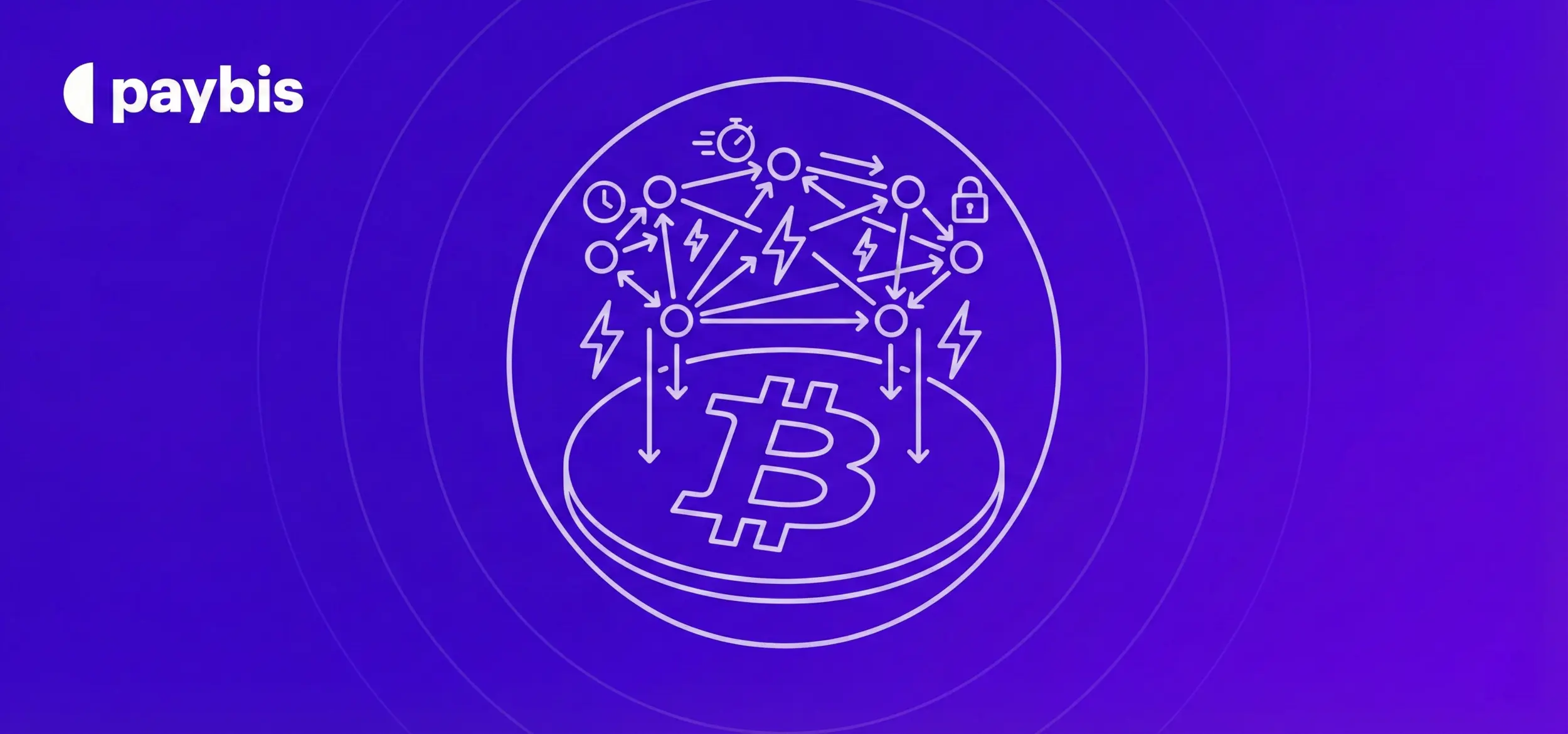
The Lightning Network is a payment protocol layered on top of Bitcoin that enables near-instant transactions at minimal cost. It processes payments off-chain through direct channels between users, then settles the final balances on the Bitcoin blockchain.
Instead of recording every transaction on the blockchain, Lightning lets two parties open a private payment channel between themselves. They send Bitcoin back and forth as many times as they want, instantly and for almost no fee. Only when they close the channel does the final balance get written to the blockchain.
A useful way to think about it: a bar tab. You don’t pay for every drink separately; you run a tab all night and pay once at the end. Lightning works the same way, with cryptographic guarantees making sure neither side can manipulate the final number.
The concept was first laid out in a 2015 whitepaper by Joseph Poon and Thaddeus Dryja. The first live implementations hit Bitcoin’s mainnet in 2018.
How Does the Bitcoin Lightning Network Work?
Two users open a payment channel by locking Bitcoin into a shared multi-signature address on the blockchain. They can then transact between each other indefinitely off-chain. When they’re done, they broadcast the final balance to the blockchain and the channel closes.
Here’s the step-by-step:
- Opening a channel: both parties fund a multi-sig wallet on the Bitcoin blockchain. This is the only on-chain transaction needed to get started.
- Transacting off-chain: payments flow instantly between the two parties. Each transaction updates a shared balance sheet, but nothing hits the blockchain yet.
- Routing through the network: you don’t need a direct channel with everyone you want to pay. Lightning routes payments through interconnected channels. If Alice has a channel with Bob, and Bob has one with Carol, Alice can pay Carol through Bob without opening a new channel.
- Closing the channel: when either party is done, they broadcast the final state to the Bitcoin blockchain. The blockchain records only the end result, not the hundreds of transactions in between.
What stops anyone from cheating? Both parties hold signed copies of every state update. If someone tries to broadcast an old balance instead of the current one, the other party can claim the entire channel’s funds as a penalty. In practice, attempting to cheat costs you everything.
Lightning vs On-Chain Bitcoin: The Key Differences
Lightning is best for small, frequent payments where speed and low fees matter. On-chain Bitcoin is better for large transfers, long-term storage, or when you need a permanent record on the blockchain.
The numbers tell the story clearly:
| Category | On-Chain Bitcoin | Lightning Network |
|---|---|---|
| Speed | 10-60 minutes | Under 1 second |
| Fees | $1-$50+ depending on congestion | Fractions of a cent |
| Throughput | ~7 transactions per second | Millions per second theoretically |
| Settlement | Final on the blockchain | Final when channel closes |
| Best for | Large transfers, storing value | Small payments, micropayments |
This is also why Bitcoin mining and base-layer security still matter as Lightning scales. Lightning doesn’t replace the blockchain. It depends on it. The blockchain handles final settlement; Lightning handles the volume in between.
What Can You Actually Use Lightning For?
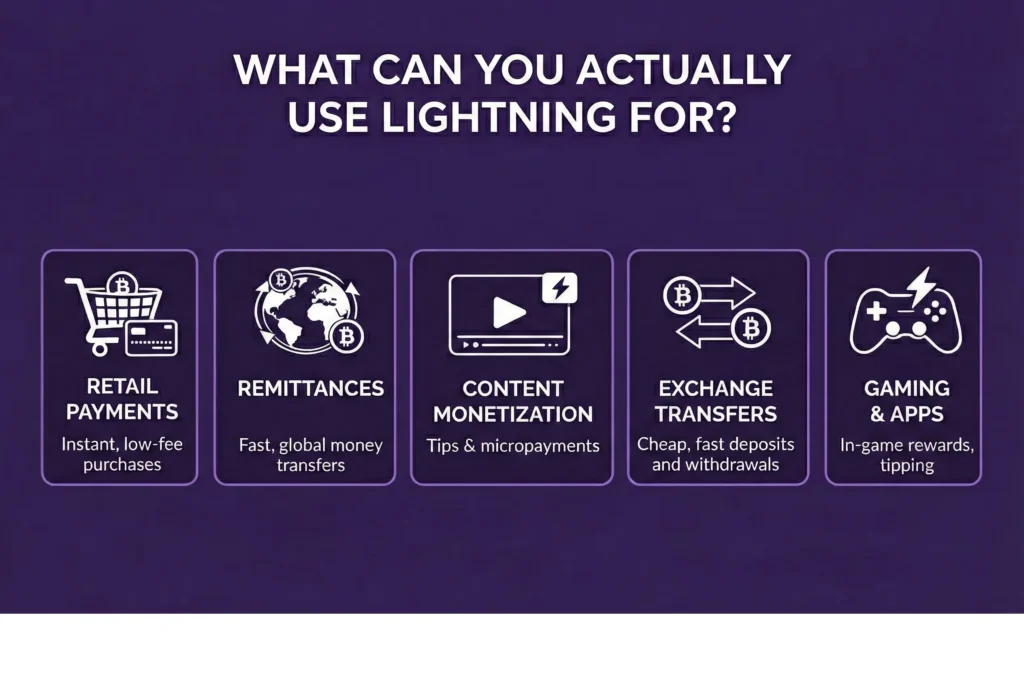
The most common uses are small Bitcoin payments, tipping content creators, paying for services online, and cross-border remittances. Several major exchanges also support Lightning for fast, low-fee Bitcoin deposits and withdrawals.
When Lightning first launched, it was mostly a technical experiment used by developers. The real-world use cases have filled in considerably since then:
- Retail payments: apps like Strike and Wallet of Satoshi let merchants accept Bitcoin via Lightning with near-zero fees, making small purchases actually viable
- Remittances: sending money internationally over Lightning costs a fraction of what traditional wire services charge and settles in seconds instead of days
- Content monetization: platforms built on Podcasting 2.0 stream micropayments directly to creators, paying fractions of a cent per minute of listening
- Exchange transfers: several major exchanges now support Lightning for faster BTC deposits and withdrawals without waiting for on-chain confirmations
- Gaming and apps: developers use Lightning to build experiences where users earn or spend tiny amounts of Bitcoin in real time
The micropayment use case is worth highlighting specifically. A $0.01 payment on-chain can cost $5 in fees, which is mathematically pointless. On Lightning, that same payment costs less than a fraction of a cent.
Lightning Network Limitations
Lightning works well for what it’s designed to do, but it’s not without real trade-offs. Anyone planning to use it should know where it struggles.
- Liquidity requirements: to receive payments through a channel, someone needs to have already committed Bitcoin to that channel on their side. New users frequently run into inbound liquidity issues when setting up for the first time.
- Channel management: running your own Lightning node means keeping an eye on channel balances and occasionally rebalancing. Most wallet apps handle this automatically now, but it’s still more hands-on than a basic Bitcoin wallet.
- Not great for large amounts: Lightning works best for small payments. Routing a large transfer through the network is possible in theory, but often fails in practice because individual channels don’t have enough capacity.
- Needs to be online: to receive Lightning payments, your node generally needs to be running. Unlike an on-chain Bitcoin address, which can receive funds anytime, Lightning requires an active connection.
- Still being built: the protocol has matured a lot since 2018, but development is ongoing. Wallet experiences vary a lot depending on which app you use, and some rough edges remain.
For day-to-day small payments, these are manageable. For cold storage or moving serious amounts of Bitcoin, the base layer is still the right choice.
How to Get Started with Lightning
Most people’s first instinct is to assume Lightning requires technical setup. It doesn’t have to.
The simplest starting point is a custodial Lightning wallet like Wallet of Satoshi or Strike. The provider manages the infrastructure, you fund the wallet with Bitcoin, and you’re immediately ready to send and receive. No need for any channel to open manually, and a node to run.
If you prefer not handing custody to a third party, non-custodial wallets like Phoenix or Breez handle channel management automatically in the background. You keep control of your funds without needing to understand the plumbing.
Going deeper, software like LND or Core Lightning lets you run your own node, route payments for others, and earn small fees in return. That’s the advanced end, and most users will never need to go there.
The practical starting point for most people is buying Bitcoin and downloading a Lightning wallet. From there, you can send your first Lightning payment within minutes.
Bottom Line
Is the Lightning Network the future of Bitcoin payments? It’s the strongest solution currently available for making Bitcoin practical at an everyday scale. The technology works, the network is growing, and real people are using it for real transactions.
The Bitcoin blockchain does one thing exceptionally well: it settles value in a way that can’t be altered or reversed. It was never built for thousands of tiny daily transactions. Lightning fills that gap without changing anything about how Bitcoin’s base layer works:
- Payments settle in under a second
- Fees are negligible even for tiny amounts
- Your Bitcoin stays in your control
- The base layer remains untouched
For anyone curious about Bitcoin beyond just holding it, Lightning is where the day-to-day use case actually comes together.
FAQ
What is the Bitcoin Lightning Network in simple terms?
A payment layer on top of Bitcoin that lets you send Bitcoin instantly and cheaply. Instead of recording every transaction on the blockchain, it processes payments through private channels and only settles the final result on-chain.
How does the Lightning Network work?
Two parties open a channel by locking Bitcoin into a shared blockchain address. They transact freely off-chain as many times as they want. When they’re done, the final balance is recorded on the Bitcoin blockchain and the channel closes.
Is the Lightning Network safe?
The design makes cheating extremely costly. Both parties hold signed records of every state update, and broadcasting an outdated balance gives the other party the right to claim the entire channel. Custodial Lightning wallets, however, carry the same risk as any custodial service: the provider holds your funds.
How much does a Lightning transaction cost?
Usually less than one cent. Fees are set by the node operators routing your payment and are expressed in millisatoshis. For most payments under a few hundred dollars, the cost is effectively zero.
Disclaimer: Don’t invest unless you’re prepared to lose all the money you invest. This is a high‑risk investment and you should not expect to be protected if something goes wrong. Take 2 mins to learn more at: https://go.payb.is/FCA-Info