Bitcoin Mining Rig: 8 Best Setups Compared
- Bitcoin mining rigs cost $2,000-$10,000 and consume 3,000-5,500 watts continuously.
- The Antminer S21 leads with 200 TH/s but requires electricity under $0.03/kWh to profit.
- Home electricity rates ($0.10-$0.15/kWh) make all mining rigs unprofitable in 2026.
- Used older models (S19 XP, S19j Pro) cost less upfront but burn more power per terahash.
- Mining rigs generate 75+ decibel noise and tremendous heat requiring dedicated cooling.
- Break-even timelines range from 9-28 years even with cheap $0.03/kWh electricity.
- Most people should buy Bitcoin directly through platforms like Paybis instead of mining.
If you hear the phrase “Bitcoin mining rig,” and you picture a computer quietly earning passive Bitcoin income in the corner of your home office, we have bad news for you. That stopped working in 2013.
Bitcoin mining rigs cost $2,000-$10,000 and consume 3,000-5,500 watts of power continuously. They generate enough heat to warm a room in winter and make summer unbearable. They produce 75+ decibels of noise (like a vacuum cleaner running 24/7), which means modern mining is industrial. Home miners with residential electricity ($0.10-$0.15/kWh) lose money on every rig here.
But you’re here because you want to know which rigs are available, how they compare, and whether any scenario makes mining viable. This guide answers those questions with actual numbers.
Table of contents
- What Is a Bitcoin Mining Rig?
- The 8 Best Bitcoin Mining Rigs Compared
- 1. Antminer S21 (200 TH/s) – Best Overall Efficiency
- 2. Whatsminer M60S (172 TH/s) – Strong Alternative
- 3. Antminer S19 XP (140 TH/s) – Best Value Option
- 4. Antminer S21 Hydro (335 TH/s) – Premium Power Option
- 5. Whatsminer M50S (126 TH/s) – Budget Workhorse
- 6. Antminer S19j Pro (104 TH/s) – Entry-Level ASIC
- 7. AvalonMiner 1466 (150 TH/s) – Alternative Choice
- 8. Antminer T21 (190 TH/s) – Efficiency Champion
- What is Mining Rig Profitability?
- Building vs Buying Pre-Made Mining Rigs
- Does Buying a Mining Rig Make Sense?
- Bottom Line
What Is a Bitcoin Mining Rig?
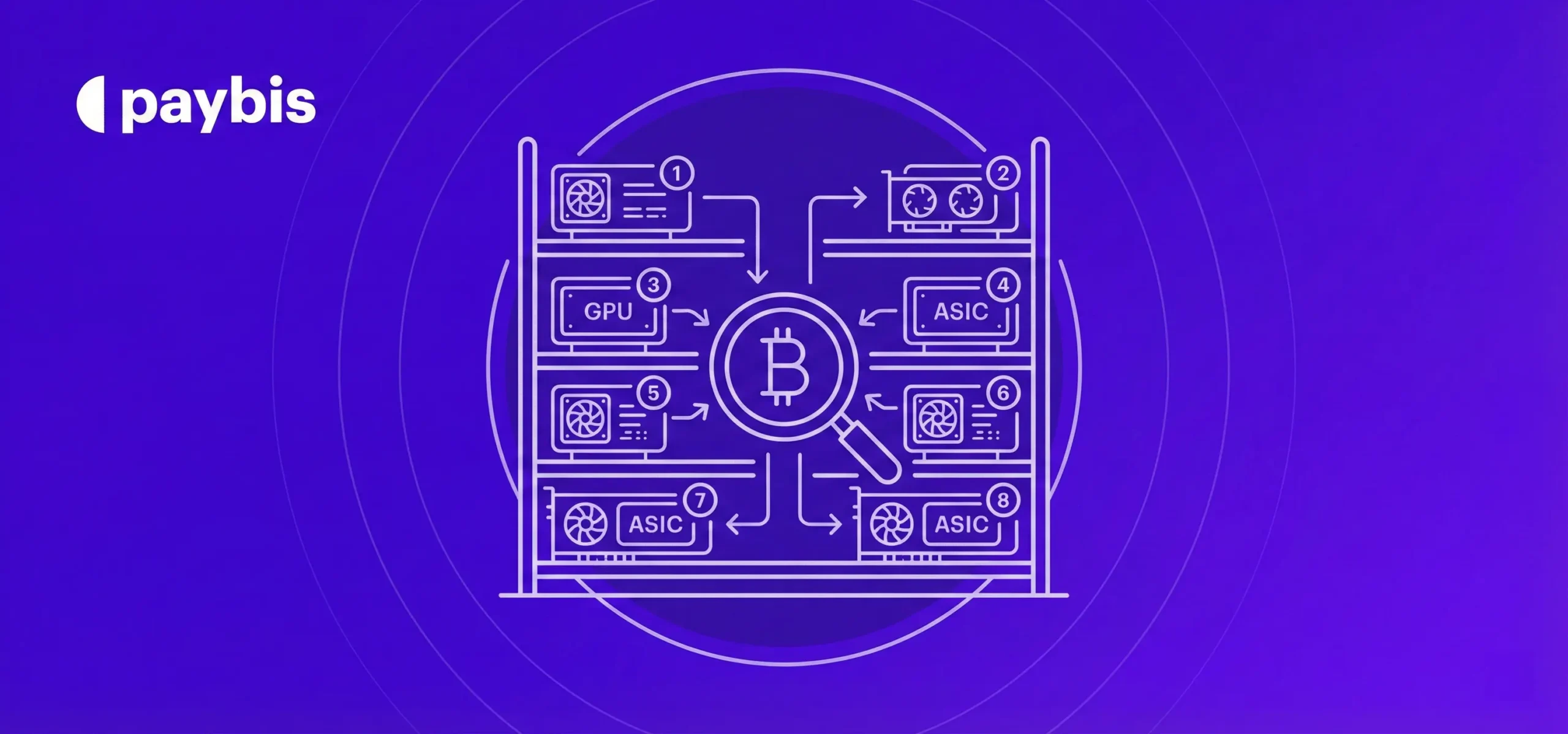
For Bitcoin, mining rig and ASIC miner mean the same thing. “Mining rig” originally meant custom-built computers with multiple GPUs, but only ASICs can profitably mine Bitcoin now. The terms are used interchangeably.
Bitcoin mining rig is a specialized computer built specifically to mine Bitcoin. These machines are different from regular computers: they compute SHA-256 hashes as fast as possible to validate transactions and earn block rewards.
The term “mining rig” used to mean multiple graphics cards connected to a motherboard. That worked until 2013. Today, Bitcoin requires ASICs (Application-Specific Integrated Circuits) – purpose-built chips that mine thousands of times more efficiently than any graphics card.
A modern mining rig includes the ASIC miner (with chips, fans, and a control board), power supply, and ethernet connection. The entire setup is self-contained. You just need to power it on, connect to your network, configure your mining pool, and it starts mining.
The 8 Best Bitcoin Mining Rigs Compared
1. Antminer S21 (200 TH/s) – Best Overall Efficiency
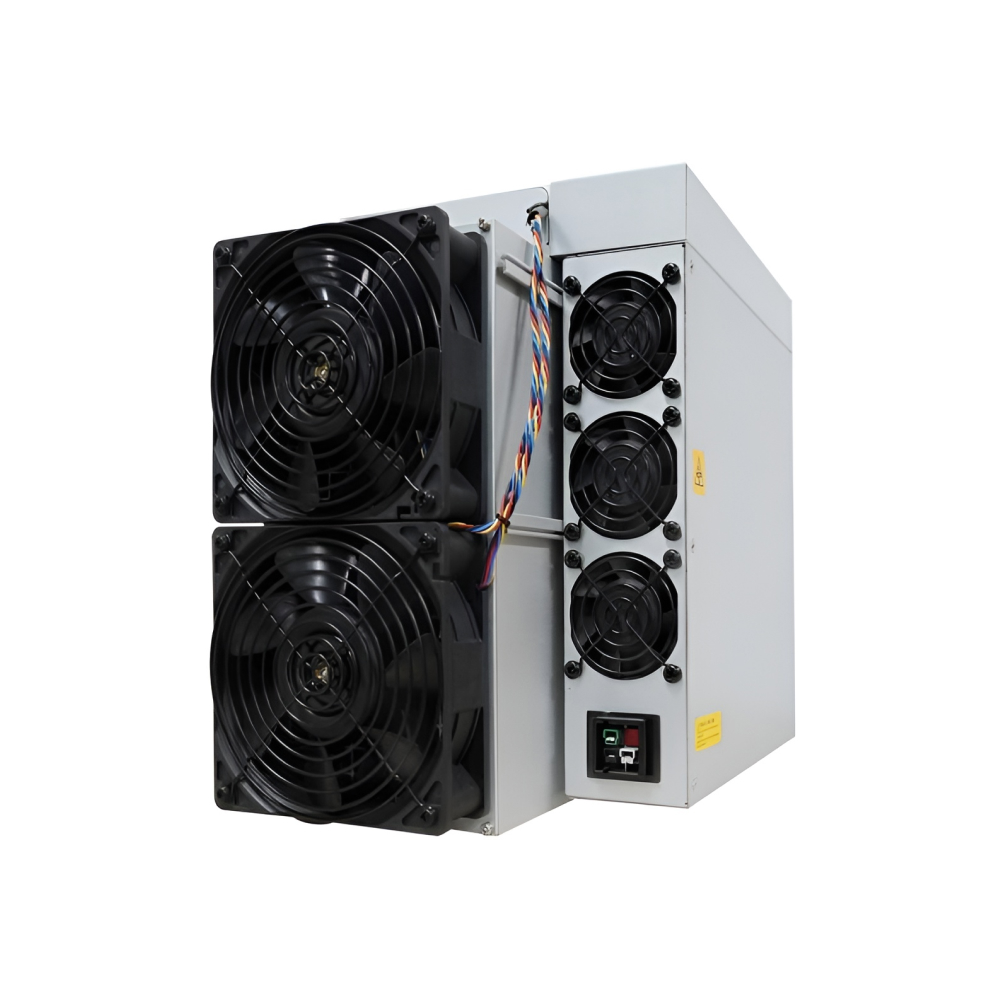
Bitmain’s Antminer S21 represents the current state-of-the-art using 5nm chip technology for exceptional hashrate, with industry-leading power efficiency.
Specifications:
- Hashrate: 200 TH/s
- Power: 3,500W
- Efficiency: 17.5 J/TH
- Cost: $3,000-$5,000
- Price per TH: $15-$25
At $0.05/kWh: Daily revenue $3.93, electricity $4.20 = -$0.27 loss
At $0.03/kWh: Daily revenue $3.93, electricity $2.52 = $1.41 profit (9.8 year break-even)
The S21 excels in low-electricity environments. Industrial miners with power below $0.03/kWh can operate profitably.
Best for: Large operations with extremely cheap electricity (under $0.03/kWh).
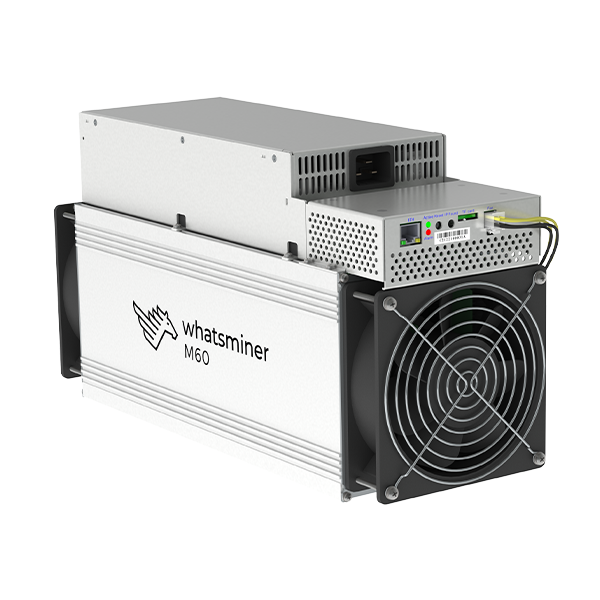
2. Whatsminer M60S (172 TH/s) – Strong Alternative
MicroBT’s Whatsminer M60S competes directly with the Antminer S21 with slightly lower hashrate but solid build quality and better warranty support in some regions.
Specifications:
- Hashrate: 172 TH/s
- Power: 3,422W
- Efficiency: 19.9 J/TH
- Cost: $2,800-$4,500
- Price per TH: $16.28-$26.16
Whatsminer has built a reputation for reliability and lower failure rates. At $0.05/kWh, this loses $0.80 daily. At $0.03/kWh, it profits $0.90 daily (10.8-year break-even).
Best for: Miners prioritizing reliability and service over maximum hashrate.
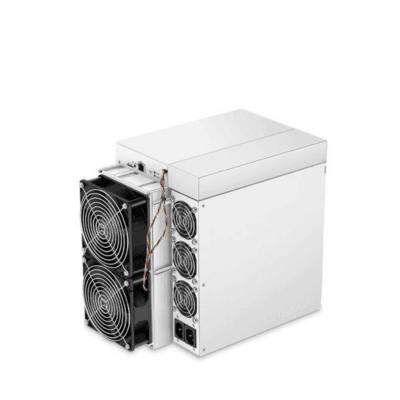
3. Antminer S19 XP (140 TH/s) – Best Value Option
The S19 XP from 2022 remains competitive due to lower prices. New units sell for $2,000-$3,000, used for $1,200-$1,800.
Specifications:
- Hashrate: 140 TH/s
- Power: 3,010W
- Efficiency: 21.5 J/TH
- Cost: $2,000-$3,000 (new), $1,200-$1,800 (used)
- Price per TH: $14.29-$21.43
Uses 7nm chips (one generation older). Lower purchase price creates faster payback potential with cheap power. At $0.03/kWh, profits $0.43 daily (11.6-year break-even at $1,800).
Most people find buying Bitcoin through Paybis simpler and more profitable than using such mining equipment.
Best for: Budget miners with electricity under $0.03/kWh, willing to accept older technology.
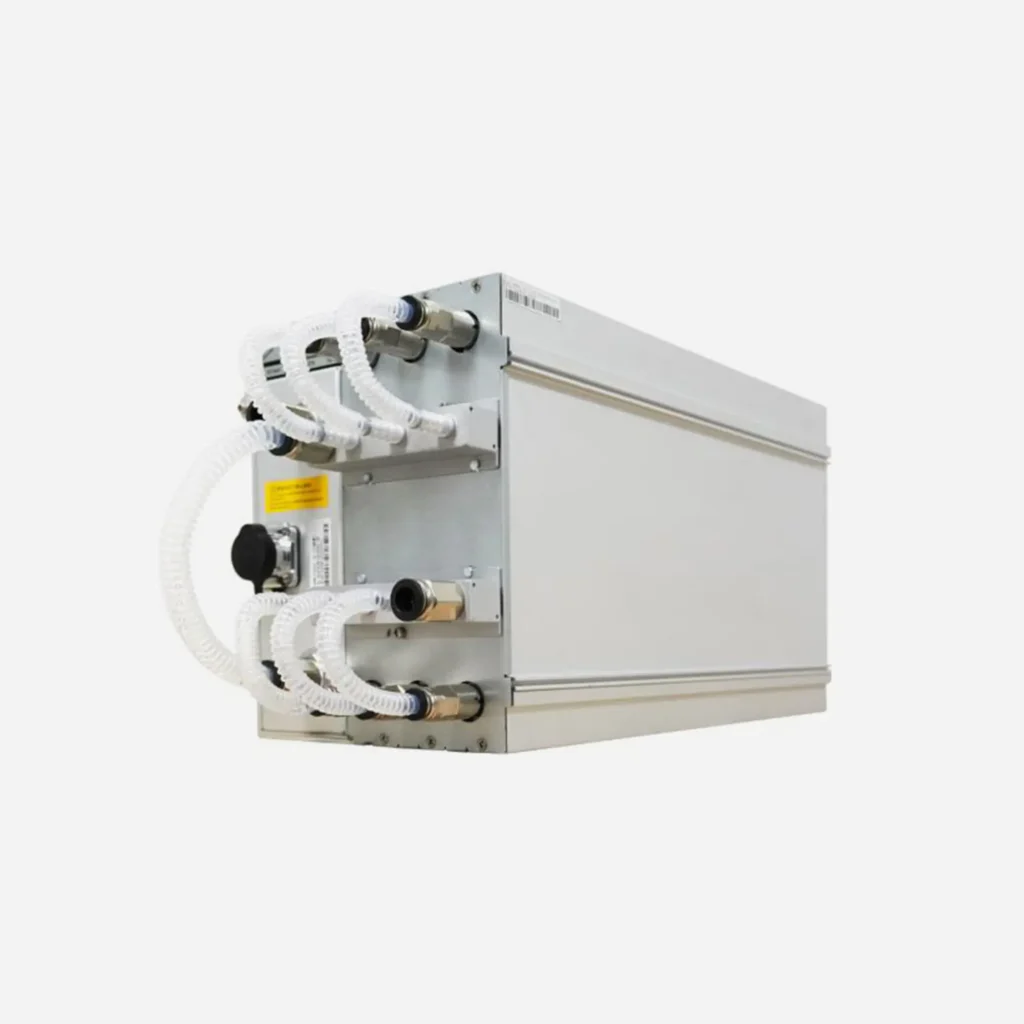
4. Antminer S21 Hydro (335 TH/s) – Premium Power Option
Bitmain’s hydro-cooled version doubles the hashrate, since it uses liquid cooling instead of air. This means higher clock speeds without overheating.
Specifications:
- Hashrate: 335 TH/s
- Power: 5,360W
- Efficiency: 16 J/TH
- Cost: $7,000-$10,000
- Price per TH: $20.90-$29.85
Requires coolant circulation systems ($500-$2,000), heat exchangers ($300-$1,000), and maintenance expertise. At $0.03/kWh, profits $2.77 daily with 9.3 year break-even.
Best for: Industrial farms with existing liquid cooling infrastructure. Not suitable for home mining.
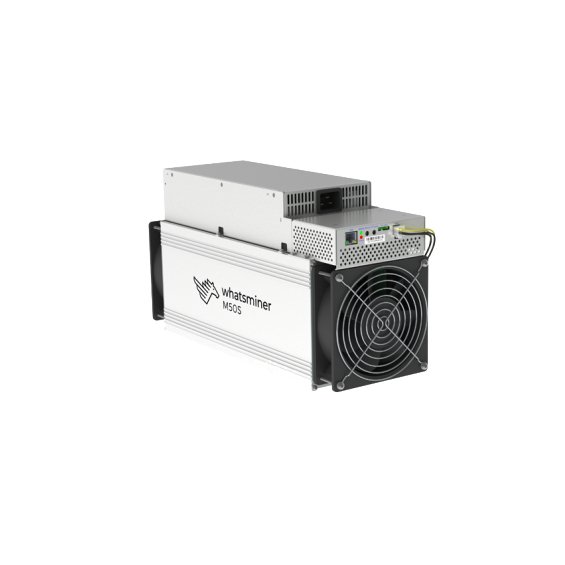
5. Whatsminer M50S (126 TH/s) – Budget Workhorse
It’s an older generation at reduced prices. Many farms are upgrading and flooding the market with used units.
Specifications:
- Hashrate: 126 TH/s | Power: 3,276W | Efficiency: 26 J/TH
- Cost: $1,500-$2,500 (new), $800-$1,200 (used) | Price per TH: $11.90-$19.84
At $0.03/kWh, a used M50S profits $0.12 daily (22.8-year break-even).
Best for: Free or nearly free electricity (excess solar). Most scenarios favor buying Bitcoin directly.
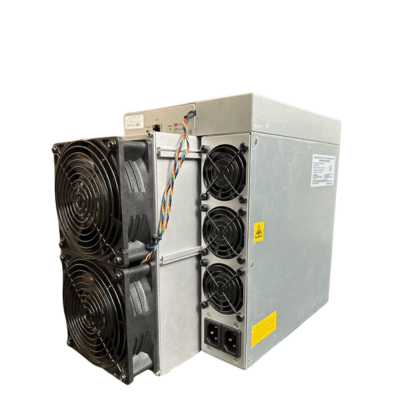
6. Antminer S19j Pro (104 TH/s) – Entry-Level ASIC
Older model at $600-$1,200 used. Burns significant power relative to hashrate. Even at $0.03/kWh, it operates at a loss or minimal profit.
Specifications:
- Hashrate: 104 TH/s | Power: 3,068W | Efficiency: 29.5 J/TH
- Cost: $600-$1,200 (used) | Price per TH: $5.77-$11.54
Best for: Educational purposes or free electricity. Most hobbyists should buy Bitcoin through Paybis instead.
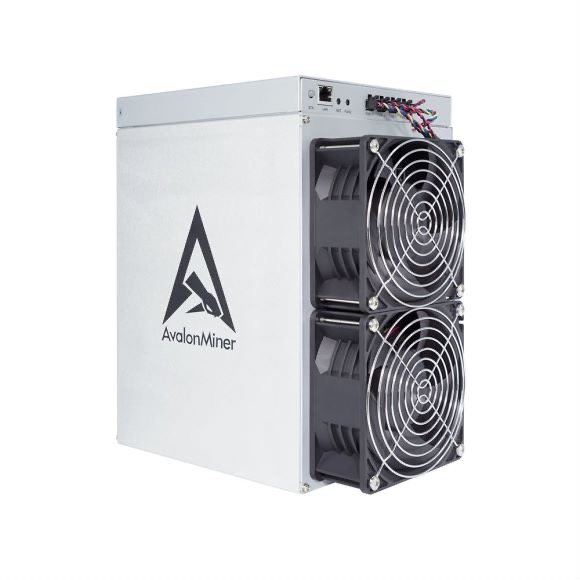
7. AvalonMiner 1466 (150 TH/s) – Alternative Choice
Canaan’s AvalonMiner represents the third major manufacturer. It provides competitive specs at lower prices but less robust support than Bitmain/Whatsminer.
Specifications:
- Hashrate: 150 TH/s | Power: 3,500W | Efficiency: 23.3 J/TH
- Cost: $2,200-$3,500 | Price per TH: $14.67-$23.33
At $0.03/kWh, it profits $0.28 daily (28.6-year break-even), so it’s harder to resell than market leaders.
Best for: Diversified hardware manufacturers or when Bitmain/Whatsminer supply is exhausted.
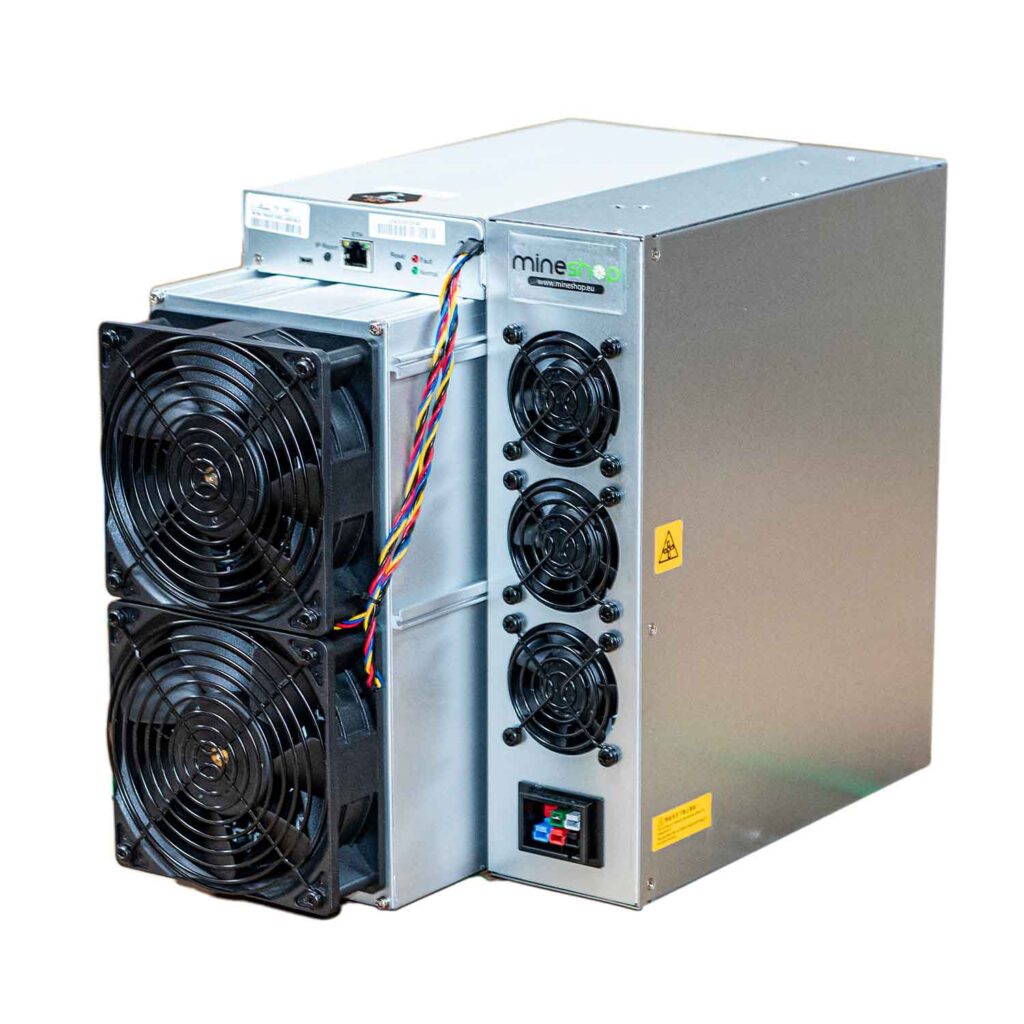
8. Antminer T21 (190 TH/s) – Efficiency Champion
Antminer T21 targets efficiency over raw hashrate with lower power consumption.
Specifications:
- Hashrate: 190 TH/s | Power: 3,610W | Efficiency: 19 J/TH
- Cost: $3,200-$4,800 | Price per TH: $16.84-$25.26
At $0.03/kWh, it profits $1.17 daily (11.9-year break-even).
Best for: Fixed electrical capacity, maximizing hashrate within power constraints.
What is Mining Rig Profitability?
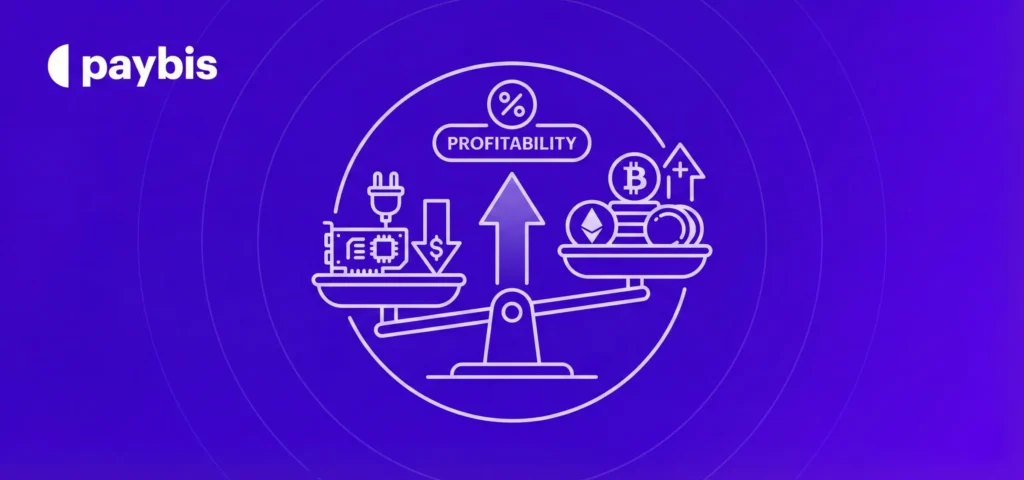
Mining rigs consume 3,000-5,500 watts continuously (72-132 kWh daily). At $0.10/kWh, one rig costs $7.20-$13.20 daily ($216-$396 monthly). At $0.15/kWh, costs reach $10.80-$19.80 daily. Electricity typically exceeds mining revenue unless rates are below $0.05/kWh.
All calculations assume Bitcoin at $67,000. Actual results depend on three fluctuating factors:
- Bitcoin price: Higher prices mean higher revenue. When Bitcoin dropped from $126,000 to $67,000, mining revenue was nearly cut in half while electricity costs stayed constant.
- Network difficulty: More Bitcoin or Ethereum miners joining increases difficulty and reduces individual earnings. Difficulty adjusts every two weeks. When Bitcoin prices rise, more miners activate hardware, reducing everyone’s rewards.
- Electricity costs: The biggest factor you control. At $0.03/kWh, some rigs profit. At $0.08/kWh, losses pile up. At typical home rates ($0.12-$0.16/kWh), mining is financially catastrophic.
- Profitable mining requires electricity under $0.03/kWh or betting that Bitcoin prices will rise enough to offset current losses. For most people, buying Bitcoin directly through Paybis provides better returns and complete liquidity.
Building vs Buying Pre-Made Mining Rigs
You can’t “build” a Bitcoin mining rig like a gaming PC. ASIC miners are integrated units from specialized manufacturers. The chips, cooling, control boards, and firmware come as a package.
“Building” a mining operation means setting up multiple ASICs with proper cooling and electrical infrastructure – not assembling individual components.
Where to buy:
- Direct from manufacturers (Bitmain, MicroBT, Canaan): Lower prices, longer wait (2-6 months)
- Authorized resellers (Compass Mining, Kaboomracks): Faster shipping, 10-20% price premium
- Used marketplace (eBay, forums): Lower prices, no warranty, higher risk
Can you build your own Bitcoin mining rig?
No. Bitcoin mining requires specialized ASIC chips from a few manufacturers. You can only buy complete ASIC units. “Building” means setting up multiple pre-made ASICs with cooling and electrical infrastructure.
Does Buying a Mining Rig Make Sense?
You can’t run an s19 or equivalent in a 1 room apartment. Imagine your apartment was 10 feet away from a highway with cars going 70mph. But all the cars had crummy tires that made a very annoying high pitched whine. Plus the 240v outlet needed, usually can’t upgrade the electrical box in an apartment, and if you can it’s >$1000. The response that everyone says in this group still holds true: just buy the coins. I’ve tried some home mining. Even in the basement in a closed room you can hear the fans whine all the way across the house.
Askimbo1 on Reddit
Industrial operations with megawatt-scale facilities and negotiated electricity contracts dominate mining in 2026. Equipment becomes scarce as new models launch every 12-18 months.
Better alternative: Purchasing Bitcoin directly through Paybis using credit cards, bank transfers, PayPal, or other methods.
Why direct purchase wins:
- No electricity costs
- Complete liquidity
- No maintenance
- No noise or heat
- Better returns
Use the Bitcoin calculator to see how much BTC you’d receive. That amount would take years to mine, even with efficient equipment and cheap electricity.
Bottom Line
At current Bitcoin prices ($67,000) and network difficulty, profitable home mining is nearly impossible unless you have electricity under $0.03/kWh. Most residential electricity costs $0.10-$0.15/kWh, so at those rates, every rig loses money daily.
Mining might make sense if you have:
- Free or sub-$0.03/kWh electricity
- Existing infrastructure
- Industrial scale (50+ units)
- Long-term Bitcoin price speculation.
For everyone else, buying Bitcoin directly generates better returns.
FAQ
How much does a Bitcoin mining rig cost?
New Bitcoin mining rigs cost $2,000-$10,000, depending on model. Used older-generation miners cost $600-$2,000. Add power supplies ($150-$300), electrical upgrades ($500-$2,000+), and ongoing electricity costs ($200-$600 monthly). Total setup typically exceeds $3,000-$8,000.
How long does it take to mine 1 Bitcoin with a mining rig?
With an Antminer S21 (200 TH/s), approximately 68 years solo or in a pool at current difficulty. The same rig mines 0.00004 BTC daily, requiring 68 years to accumulate 1 Bitcoin. Industrial farms with 1,000 units might mine 1 Bitcoin every 25 days.
What is the most profitable Bitcoin mining rig?
No rig is profitable for most users at current prices and typical electricity rates. At $0.03/kWh or below, the Antminer S21 and Whatsminer M60S offer best efficiency. Most home miners lose money regardless of hardware. Buying Bitcoin directly provides better returns.
Can I mine Bitcoin at home with a mining rig?
Technically yes, practically no. Rigs consume 3,000-5,500 watts, generate tremendous heat, produce 75+ decibel noise, and require 240V outlets. Residential electricity rates ($0.10-$0.15/kWh) make profitable home mining impossible.
Disclaimer: Don’t invest unless you’re prepared to lose all the money you invest. This is a high‑risk investment and you should not expect to be protected if something goes wrong. Take 2 mins to learn more at: https://go.payb.is/FCA-Info