Your Guide to Crypto Market Maker Incentives: Beyond the 0.1% Fee

Key Takeaways
Market maker rebates require institutional-scale capital you don’t have. Major exchanges reserve negative fees for firms trading $100M+ monthly. For retail traders managing $5K-$250K portfolios, chasing rebates means competing with algorithmic firms that have superior technology and capital. The smarter play? Focus on execution speed and arbitrage opportunities. Paybis doesn’t offer maker rebates (we’re a broker, not an exchange), but our instant settlement and global payment rails let you capture arbitrage spreads that slow exchanges miss. A 5% arbitrage opportunity captured in 15 minutes beats a 0.02% rebate you’ll never qualify for.
Major exchanges advertise 0.1% trading fees and promise lower rates for high-volume users. Some platforms whisper about “negative fees” where they pay you to trade. The reality is market maker rebates exist for institutional whales moving hundreds of millions monthly. For your typical trader, the path to accessing these incentives is prohibitively steep. Understanding how these programs work helps you decide where to focus your energy.
Table of contents
- What Are Crypto Market Makers and Why Do Exchanges Pay Them?
- The Economics of Maker-Taker Fee Structures
- Can Retail Traders Access Market Maker Incentives?
- The Role of Trading Bots in Modern Market Making
- Paybis vs. The Rebate Game: Optimizing for Arbitrage Instead
- Understanding Liquidity and Spreads in Crypto Markets
- Risks and Considerations for High-Frequency Strategies
- The Bottom Line: Speed Beats Rebates for Retail
- Key Terminology
What Are Crypto Market Makers and Why Do Exchanges Pay Them?
Market makers provide liquidity to an exchange by continuously placing buy and sell orders for specific assets. They keep the order book populated so you can execute transactions without causing dramatic price swings.
Market makers profit from the bid-ask spread, the difference between the highest price a buyer will pay and the lowest price a seller will accept. If Bitcoin’s best bid is $50,000 and best ask is $50,005, a market maker captures that $5 spread on each matched transaction.
Why exchanges incentivize them:
- Tighter spreads: More liquidity shrinks the gap between buy and sell prices, reducing your cost per transaction.
- Deeper order books: You can fill large orders without causing massive price movements or slippage.
- Higher trading volumes: Active markets attract more participants, creating a network effect.
Professional market making firms maintain inventory, manage risk with sophisticated algorithms, and connect to exchanges via high-speed APIs. You use web interfaces with latencies measured in hundreds of milliseconds, not microseconds. According to analyses of exchange volumes, institutional market makers generate a significant portion of trading activity on major platforms.
The Economics of Maker-Taker Fee Structures
The maker-taker model splits traders into two categories based on how your orders interact with the order book.
- Maker orders add liquidity to the book. When you place a limit buy at $49,900 and the current market price is $50,000, your order sits on the book waiting for a match, you become a maker.
- Taker orders remove liquidity by immediately matching existing book orders. A market buy at current prices always makes you a taker.
Exchanges reward makers with lower fees and charge takers more to incentivize liquidity provision.
Transaction breakdown:
You place a limit order to buy 1 BTC at $50,000 (maker). Another trader sells into your order (taker). At 0.1% maker fee and 0.2% taker fee:
- Your cost (maker): $50
- Their cost (taker): $100
- Exchange revenue: $150 from a single $50,000 trade
Multiply that across millions of daily transactions, and you understand why exchanges compete aggressively for volume.
Can Retail Traders Access Market Maker Incentives?
The short answer: not realistically.
Volume-based rebate programs attract institutional liquidity providers, not individual traders. While specific tier requirements vary by exchange and change frequently, the barrier to entry is massive.
The pattern across major exchanges:
Most platforms structure their VIP programs with these common characteristics:
- Entry-level fee discounts begin at $1M-$5M in 30-day trading volume
- Negative maker fees (rebates) typically start at $100M+ in monthly volume
- Top tiers require maintaining both volume thresholds and significant token holdings
- Many rebate tiers require application and market maker approval
The math doesn’t favor retail:
You have $100,000 in capital and trade aggressively, turning it over 10 times monthly. That’s $1,000,000 in volume. To reach typical rebate thresholds, you need 100X more volume. Your options:
- Trade 1,000 times per month instead of 10 (unrealistic execution frequency)
- Increase capital to $10,000,000 (beyond retail scale)
- Use 100X leverage (catastrophic risk during volatility)
None are viable without institutional backing.
Professional firms operate with entirely different infrastructure. They run co-located servers in exchange data centers, maintain multi-million dollar inventories across dozens of trading pairs, and employ teams of quantitative analysts. You’re not competing on a level playing field.
The Role of Trading Bots in Modern Market Making
If manual trading can’t reach rebate thresholds, can automation help?
Crypto trading bots automate strategies that would be impossible to execute manually. Market making bots continuously place and adjust orders based on market conditions, attempting to capture the spread while managing inventory risk.
Common bot strategies:
- Grid trading: Places buy and sell orders at predetermined intervals above and below current price, profiting from volatility.
- Arbitrage: Identifies price discrepancies across exchanges and executes simultaneous buy-sell orders.
- Market making: Quotes both sides of the order book, earning the spread while minimizing directional exposure.
Popular platforms and their limitations:
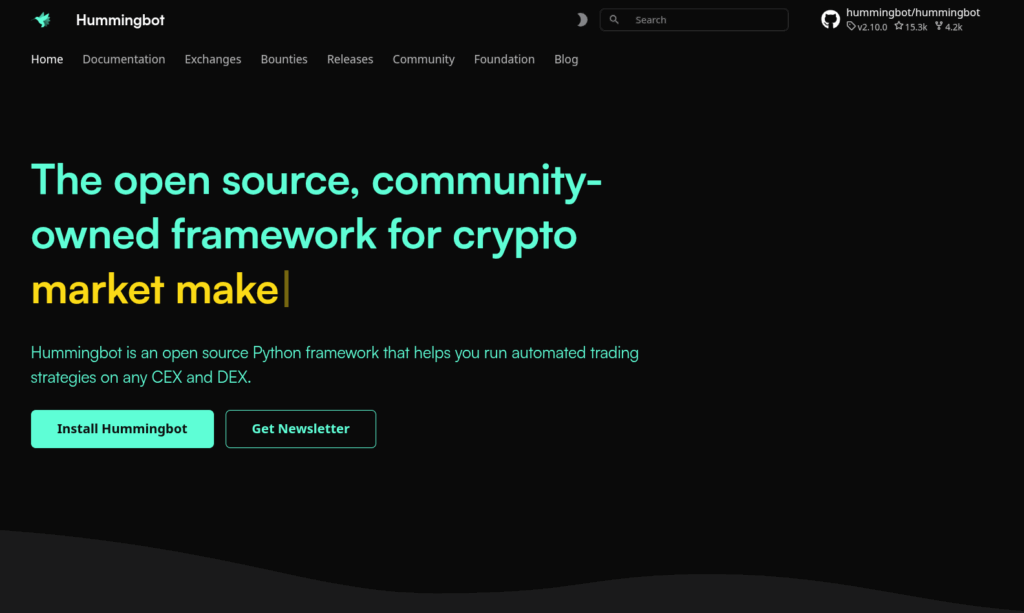
- Hummingbot: Open-source with high customization, but requires technical knowledge to configure properly.

- 3Commas: User-friendly interface and cloud-based operation, but monthly subscription costs eat into profits.
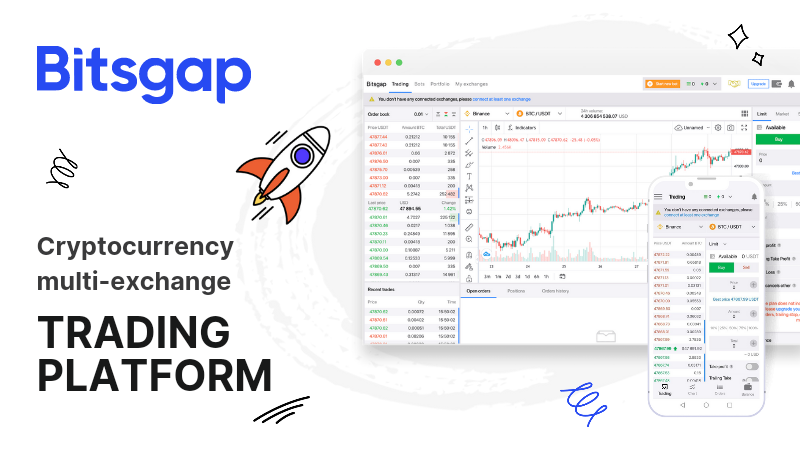
- Bitsgap: Supports multiple exchanges with demo mode available, but limited free tier functionality.
These tools can increase trading frequency and volume, theoretically helping you approach fee discount tiers but the capital and technical requirements remain significant barriers.
The reality check:
Running a profitable bot strategy requires capital to withstand drawdowns, technical knowledge to configure parameters, and constant monitoring to prevent catastrophic losses during flash crashes. Machine learning and AI have advanced crypto trading, but they’ve also attracted fiercer competition.
Institutional firms employ data scientists who build predictive algorithms that adjust spreads in milliseconds. Your retail bot, no matter how sophisticated, reacts to the same market data with higher latency and less capital.
Risks of bot-based market making:
- Overfitting: Backtesting a strategy on historical data doesn’t guarantee future performance. Markets change constantly.
- Flash crashes: A bot without proper stop-losses can lose your entire capital in seconds during extreme volatility.
- API failures: Exchange outages or rate limits can leave your bot holding unintended positions with no way to exit.
- Capital requirements: To meaningfully compete for volume-based rebates, you need to deploy $500K-$2M across multiple pairs. Most retail traders can’t sustain that exposure.
Paybis vs. The Rebate Game: Optimizing for Arbitrage Instead
To be clear Paybis doesn’t offer maker-taker fee rebates. We operate as a cryptocurrency broker, not an order book exchange.
What we offer instead:
- Instant execution: Buy crypto with a credit card, and it arrives in your wallet within 15 minutes. No 3-5 day ACH holds.
- Global payment rails: Support for 80+ payment methods including PIX, Faster Payments, and regional options that major exchanges don’t handle.
- Transparent pricing: All fees (service fee, processing fee, network fee) shown before you confirm. No hidden spreads.
Our fee structure is straightforward: your first card transaction has the Paybis service fee waived (you pay only payment processing fees, typically 4.5%, plus network fees). Subsequent card transactions incur a 2.49% Paybis service fee, plus the same payment processing fees.
Here’s why that matters for traders:
Cryptocurrency arbitrage involves buying an asset on one exchange and selling on another to capture price discrepancies. During normal market conditions, these spreads are 0.1-0.5%. During volatility or regional restrictions, they can widen to 5-15%.
The profitability window is measured in seconds or minutes. Arbitrage opportunities have a half-life measured in seconds to minutes before the market corrects.
Scenario comparison:
You identify Bitcoin trading at $45,000 on one platform and $50,000 in a regionally restricted market (11% spread during capital controls).
- Option A (Traditional Exchange): Initiate a bank wire. Wait 2-3 business days for funds to clear. The spread closes within hours as arbitrageurs exhaust the opportunity. You miss it entirely and poof goes your alpha.
- Option B (Paybis): Buy $10,000 of BTC instantly via card. Total fees: ~7% = $700. Receive $9,300 worth of BTC in 15 minutes. Transfer to restricted market exchange and sell at 11% premium = $10,323. Net profit after Paybis fees: $323 on a $10K position.
For this strategy to works when your opportunities to capture your alpha are time dependent. These opportunities appear during:
- Regional capital controls creating price premiums
- Flash crashes where one exchange lags in repricing
- New exchange listings with initial liquidity shortages
- Payment method arbitrage (PIX vs. bank wire timing differences)
“I appreciate Paybis for its ability to facilitate instant cryptocurrency purchases using my card, which significantly enhances the efficiency of my transactions.” – Verified user review of Paybis
The trade-off is clear: You pay little more per transaction, but you gain the ability to move when others can’t and ultimately capture more alpha. For traders who execute 2-5 strategic arbitrage trades per year, that speed premium can be more profitable than chasing rebates you’ll never qualify for.
To get a sense of just how fast Paybis is watch our How to Buy BTC with Paybis Instantly tutorial below:
Understanding Liquidity and Spreads in Crypto Markets
To evaluate whether rebate programs are worth pursuing, you need to understand what market makers actually provide.
Liquidity measures how easily you can buy or sell an asset without affecting its price. A liquid market has tight spreads and deep order books, meaning you can fill large orders with minimal slippage.
The bid-ask spread shows the gap between the highest buy order and lowest sell order. If Bitcoin’s best bid is $50,000 and best ask is $50,010, the spread is $10. Market makers narrow this spread by continuously quoting both sides.
Why this matters for you:
When you execute a market order, you pay the spread. On a liquid major pair like BTC/USDT on major exchanges, the spread might be $5-10. On low liquidity altcoins, it can be hundreds of dollars.
Trading in illiquid markets amplifies your costs far more than maker-taker fees. A 0.1% fee means nothing if slippage costs you 2% on execution.
Risks and Considerations for High-Frequency Strategies
Before you commit capital to chase volume-based rebates, understand these five critical risks:
- Inventory risk: Market makers hold positions. If the market moves against you while holding $500K in BTC inventory and the price drops 10%, you lose $50K wiping out years of fee savings.
- Technical failure: Bot malfunctions or API outages can leave you with unintended exposure. One misconfigured parameter can drain your account in minutes.
- Liquidity risk: Low liquidity crypto assets tempt you with wider spreads, but you can’t exit during stress without massive slippage.
- Regulatory risk: Exchanges freeze accounts during volatility or regulatory reviews. If your capital locks up while an arbitrage window closes, you’ve lost the opportunity permanently.
- Capital efficiency: Tying up $250K to generate $5K in annual rebates delivers a 2% return. Compare that to capturing 3-5 arbitrage opportunities per year that each net $2K-5K with far less capital exposure.
“I especially appreciate the transparent fee structure—no hidden costs or surprises. Verification was fast, and the platform has never let me down.” – Verified user review of Paybis
Our users value transparency. Fees matter, but they matter less than missing opportunities because your funds are stuck in transit.
The Bottom Line: Speed Beats Rebates for Retail
The market maker incentive structure is built for institutional players. Unless you’re managing $10M+ in capital and executing hundreds of trades daily, you won’t access meaningful rebates.
For traders, the better strategy is optimizing for execution speed and payment flexibility. The ability to move funds instantly when opportunities arise creates more profit than saving 0.1% on trading fees.
Understanding market cycles and recognizing when volatility creates arbitrage windows is more valuable than grinding volume to reach a fee discount tier that’s perpetually out of reach.
Paybis is one of the fastest on-ramps to ensure you can capture your alpha before the opportunity is lost. Create a Paybis account to prioritize speed over fee optimization today. When arbitrage opportunities appear, you’ll execute while others wait for bank transfers. The cost of missing one 8% spread exceeds the fees on a dozen Paybis transactions.
For more on optimizing your trading approach, explore what portfolio trackers tell you about your actual performance versus fee obsession.
Key Terminology
Bid-Ask Spread: The difference between the highest price a buyer will pay (bid) and the lowest price a seller will accept (ask). Narrower spreads indicate higher liquidity.
Liquidity: The ease of buying or selling an asset without causing significant price movement. High liquidity means tight spreads and deep order books.
Maker Order: A limit order that adds liquidity to the order book because it doesn’t immediately execute. Exchanges reward makers with lower fees.
Taker Order: An order that removes liquidity by matching immediately against existing orders. Exchanges charge higher fees to takers.
Rebate: A negative fee where the exchange pays the trader for providing liquidity. Typically requires institutional-scale volume.
Arbitrage: Buying an asset on one exchange and selling on another to profit from price differences. Success depends on execution speed.
Slippage: The difference between expected trade price and actual execution price, caused by lack of liquidity or large order size.
FAQ
What volume do you need to earn negative maker fees on major exchanges?
Most exchanges reserve negative maker fees for VIP tiers requiring $100M-$500M+ in 30-day trading volume, plus significant platform token holdings and often requiring direct application and approval.
Can retail traders realistically access maker rebates?
No. Even entry-level rebate tiers demand institutional capital, infrastructure, and trading volume that retail portfolios can’t sustain.
Does Paybis offer maker-taker fee structures?
No. Paybis operates as a broker, not an order book exchange, so maker-taker models don’t apply. We provide instant execution at transparent quoted prices.
What's more profitable: chasing rebates or executing arbitrage?
For retail traders with sub-$500K portfolios, capturing 2-3 high-spread arbitrage opportunities per year (8-12% spreads during regional restrictions or flash crashes) typically generates higher returns than grinding toward volume discounts requiring $100M+ monthly volume you can’t realistically achieve.
How long do crypto arbitrage opportunities last?
Most spreads close within seconds to minutes as algorithms and bots correct the price discrepancy across exchanges. Execution speed determines whether you profit or miss the window entirely.
Disclaimer: Don’t invest unless you’re prepared to lose all the money you invest. This is a high‑risk investment and you should not expect to be protected if something goes wrong. Take 2 mins to learn more at: https://go.payb.is/FCA-Info