Crypto Mining Profitability in 2026: Most Popular Coins + Revenue Calculator
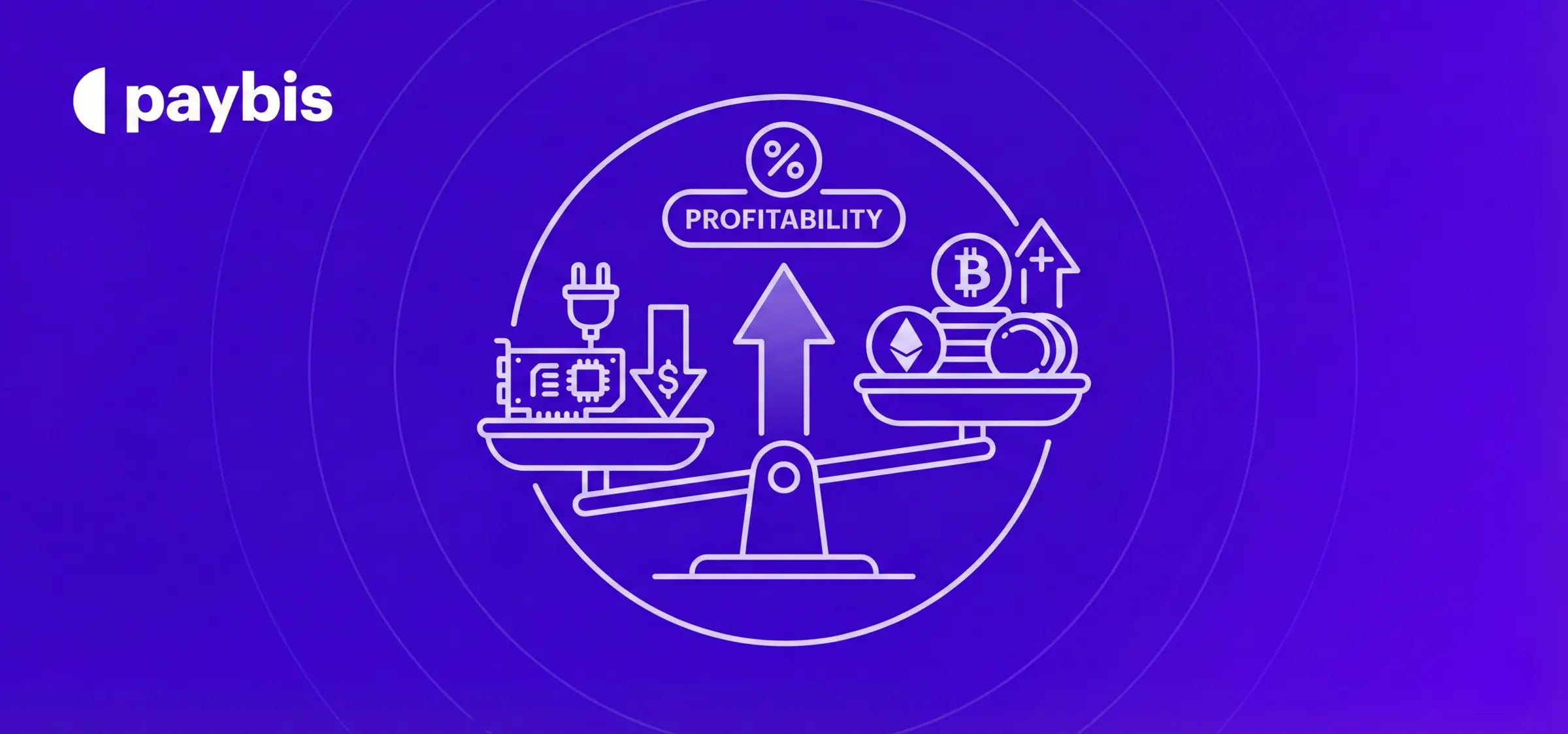
- Mining profitability comes down to four variables: electricity rate, hardware efficiency, network difficulty, and coin price. No coin is universally profitable. The right answer depends on your setup.
- Bitcoin needs industrial ASIC hardware and electricity below $0.08/kWh to make consistent money. It is not a practical starting point for home miners.
- Litecoin and Dogecoin run on the same Scrypt ASIC through merge mining. The combined LTC + DOGE revenue is what makes Scrypt mining work in 2026.
- Monero is the only major coin where a standard CPU is enough to mine competitively. No ASIC, no GPU needed.
- Electricity cost is the most important number in your calculation. Above $0.10/kWh, margins get thin. Above $0.12/kWh, most setups lose money.
- Use the calculator below to run your own numbers before buying any hardware.
Mining crypto in 2026 requires more thought than it did five years ago. Difficulty is higher, hardware is more expensive, and the 2024 Bitcoin halving cut block rewards in half. For miners without cheap electricity, the margins are slim.
That said, mining still works. You just need to pick the right coin for your hardware and know your electricity rate before you spend anything. If the numbers do not add up for your setup, you can always buy Bitcoin with a card and skip the hardware entirely. This guide helps you figure out which path makes more sense.
What Actually Determines Mining Profitability
Four variables separate a profitable mining setup from one that loses money. Most people focus on the wrong ones.
- Hashrate determines your share of the block rewards the network produces. More hashrate means more income. The only way to increase it is with better hardware.
- Power consumption determines what the hashrate costs to run. Two machines with identical hashrate but different power draws have completely different profit margins. Efficiency matters as much as speed.
- Network difficulty adjusts automatically to keep block times steady. When more miners join, your share of each block shrinks. A coin that looks profitable today can look very different in three months if it attracts a wave of new hashrate.
- Coin price is the most unpredictable factor. A setup earning $8/day at current prices earns $4/day if the price drops 50%. Run your numbers at today’s price and at a lower one. If both scenarios work, you have a solid operation.
The calculator below takes your hashrate, power draw, electricity rate, and pool fee and shows you daily revenue and profit.
Mining Profitability Calculator
Mining Profitability Calculator
Enter your hardware specs, electricity rate, and coin price to see real profit.
Note: This calculator produces estimates only. Results depend on live network difficulty, coin price, and your actual hardware performance, all of which change daily. It is not financial advice. Past mining profitability does not guarantee future returns. Always verify figures with your mining pool before making hardware or investment decisions.
You can also use our crypto profit calculator to keep track of your existing or potential investments.
How to Use the Profitability Calculator
What do you need to run the calculator? Again, four numbers.
Your hashrate is in your hardware’s spec sheet. ASICs list it in GH/s or TH/s. CPUs mining Monero work in KH/s. Use the manufacturer’s figure as a starting point. Real-world output can vary by 3–5% based on temperature and firmware.
Your power consumption should come from a plug-in power meter, not the spec sheet. Manufacturers list typical draw, not peak draw under load. A basic meter costs around $20 and gives you the real number.
Your electricity rate is on your utility bill in cents per kWh. If you have a tiered tariff, use the rate that applies to the hours your miner runs. Running 24/7? Use your peak rate.
Your pool fee is listed in your pool’s documentation. Most pools charge between 0.6% and 2.5%. The difference adds up across a year. On a $270/month operation, 1% extra in fees costs over $30 annually.
Once you have those four numbers, put them in the calculator. Then run it a second time with the coin price 30–40% lower. If both scenarios come out positive, the operation is solid. If the lower scenario puts you in the red, the margin is too thin to rely on.
Which Coins Can You Mine in 2026?
Bitcoin (BTC): ASIC Only, Large Scale
Bitcoin’s block reward is 3.125 BTC after the April 2024 halving, which means there is a lot of money per block. It is also why competition is brutal, and the network hashrate keeps climbing. To profit from BTC mining today, you need a current-generation ASIC and electricity below $0.05–$0.08/kWh.
If you are thinking about becoming a Bitcoin miner from scratch, the capital requirement is high. An Antminer S21 Pro costs around $4,500–$6,000 and produces 234 TH/s. At $0.10/kWh, the margins are tight. At $0.06/kWh with a full rack of current hardware, the picture improves a little bit. Bitcoin mining works at scale with cheap power. It is not where most people should start.
- Hardware: SHA-256 ASIC (Bitmain Antminer S21 Pro, Whatsminer M66)
- Block reward: 3.125 BTC
- Electricity threshold: Below $0.08/kWh
Litecoin + Dogecoin (LTC + DOGE): Merge Mining is the Model
Litecoin and Dogecoin use the same algorithm: Scrypt. One Scrypt ASIC mines both at the same time. That is called merge mining, and it is how virtually all individual Scrypt miners operate in 2026. You do not choose between LTC and DOGE. You run both and count the combined revenue.
An Antminer L9 (17 GH/s) earns roughly $4.63/day in LTC and $10.63/day in DOGE at $0.07/kWh. Electricity costs around $6/day at that rate. Net profit is approximately $9/day, or $270/month. At a hardware cost of $5,000–$7,000, break-even is 18–26 months.
Litecoin’s block reward is 6.25 LTC following the August 2023 halving. The next halving is expected around 2027. Dogecoin pays a fixed 10,000 DOGE per block with no halving schedule. That means DOGE miner income stays the same over time.
For the full hardware and pool setup, the Litecoin mining guide covers everything step by step. For the DOGE side of the same operation, the Dogecoin mining guide explains how merge mining works in practice.
- Hardware: Scrypt ASIC (Bitmain Antminer L9)
- Block reward: 6.25 LTC + 10,000 DOGE (merged)
- Electricity threshold: Below $0.10/kWh
Monero (XMR): CPU Mining, No ASIC Required
Monero is the exception. Its RandomX algorithm is built for CPUs. ASICs cannot compete with it efficiently, so a decent desktop processor is all you need to start.
A Ryzen 9 7950X produces around 25–28 KH/s and earns roughly 0.003–0.004 XMR/day. At current prices, that is around $0.60–$0.80/day in revenue. Electricity at $0.10/kWh costs about $0.41/day. The margins are small, but if you already own the hardware, your entry cost is zero.
Monero pays a fixed 0.6 XMR per block with no halving. That reward stays the same regardless of time. The only risk is price movement, not a shrinking block reward.
The Monero mining guide covers XMRig setup, pool selection, and the huge pages configuration that most new miners skip.
- Hardware: Modern CPU (AMD Ryzen 9 7950X or 5950X)
- Block reward: 0.6 XMR (fixed)
- Electricity threshold: Below $0.08/kWh
Ethereum Classic (ETC): The Main Option for GPU Miners
Ethereum Classic is the main GPU-mineable coin still on proof-of-work. Ethereum switched to proof-of-stake, but ETC did not. It uses the Etchash algorithm and runs well on mid-range to high-end GPUs, especially AMD cards with enough VRAM.
GPU rigs cost less to start than ASICs. They can also switch to other coins if ETC profitability drops. The downside is lower absolute revenue compared to a solid ASIC operation. Difficulty has also risen since Ethereum miners had nowhere else to go after the merge.
- Hardware: GPU (AMD RX 6800 XT, Nvidia RTX 3080 or newer)
- Block reward: 2.56 ETC
- Electricity threshold: Below $0.10/kWh
Kaspa (KAS): GPU Mining with a Speculative Angle
Kaspa uses the kHeavyHash algorithm and confirms one block per second. GPU miners have been drawn to it since 2023. Newer ASICs are now appearing for KAS, too, which is pushing GPU margins down. It is still viable if you already own the hardware; you just should not build a new mining rig around it.
You need to treat KAS as a speculative position alongside a more stable operation rather than a primary revenue source. Price volatility is higher than that of established coins.
- Hardware: GPU (AMD or Nvidia) or KAS ASICs
- Electricity threshold: Below $0.08/kWh for GPU
Coin Comparison at a Glance
| Coin | Algorithm | Hardware | Block Reward | Halving | Best For |
|---|---|---|---|---|---|
| Bitcoin | SHA-256 | ASIC only | 3.125 BTC | ~2028 | Large-scale operations |
| Litecoin + DOGE | Scrypt | Scrypt ASIC | 6.25 LTC + 10K DOGE | LTC ~2027 / DOGE none | Home ASIC miners |
| Monero | RandomX | CPU | 0.6 XMR | None (tail emission) | Home CPU miners |
| Ethereum Classic | Etchash | GPU | 2.56 ETC | Yes | GPU rig operators |
| Kaspa | kHeavyHash | GPU / ASIC | Variable | Gradual reduction | Speculative GPU miners |
When You Should Reconsider Mining
If your electricity is above $0.12/kWh and you are starting from zero, most coins will not return a profit without a significant price increase.
The simpler option is to buy crypto directly on Paybis and hold it. You get exposure to the same assets without buying hardware, paying electricity bills, managing heat, or troubleshooting downtime.
The one exception is Monero. If you own a modern CPU and your electricity is not expensive, running XMRig costs almost nothing. You are not buying hardware. You are just using power from a machine you already run. In that case, mining on idle hardware makes sense even at average electricity rates.
Bottom Line
In crypto mining, your electricity rate and hardware efficiency matter more than which coin you choose. Get those two right, and most coins on this page can turn a profit. Get them wrong, and no coin will fix it.
Run the calculator with your real numbers. Test it at a lower coin price, too. And if the math does not work for mining, buying crypto on Paybis gets you the same exposure without the overhead.
FAQ
What is the most profitable crypto to mine in 2026?
It depends on your hardware. Scrypt ASIC miners do best with Litecoin and Dogecoin merged. CPU miners should look at Monero. Large-scale operations with cheap power can still make Bitcoin work.
Is crypto mining still profitable in 2026?
Yes, if your electricity is cheap and your hardware is efficient. Bitcoin requires the lowest electricity rate and highest upfront cost. Monero needs no hardware investment beyond a modern CPU. Use the calculator on this page with your specific numbers.
What electricity rate do I need for mining?
Below $0.08/kWh is where most ASIC operations become clearly profitable. Between $0.08/kWh and $0.10/kWh, margins are workable with efficient hardware and merge mining. Above $0.12/kWh, most setups lose money unless prices rise significantly.
What is merge mining?
Merge mining lets your ASIC mine two coins that share the same algorithm at the same time, with no extra power cost. Litecoin and Dogecoin both use Scrypt. One machine earns both. It is the standard way Scrypt miners operate in 2026.
Do I need an ASIC to mine crypto?
Not for Monero. For Bitcoin, Litecoin, and Dogecoin, ASICs are required in 2026. GPU mining still works for Ethereum Classic and Kaspa.
How often does profitability change?
Constantly. Network difficulty adjusts every few days to weeks. Coin prices move daily. Re-run the calculator at least once a month, and any time there is a significant price or difficulty change.
Disclaimer: Don’t invest unless you’re prepared to lose all the money you invest. This is a high‑risk investment and you should not expect to be protected if something goes wrong. Take 2 mins to learn more at: https://go.payb.is/FCA-Info