
Capitulation
Capitulation refers to the point at which investors decide to sell their holdings all at once, accepting significant losses, after having endured persistent decline in asset prices.
What is Capitulation?
Capitulation is a significant event in financial markets that marks the end of a prolonged period of decline. It occurs when investors, overwhelmed by fear and losses, surrender and sell their assets, leading to a sharp decline in prices. Capitulation is driven by a psychological phenomenon where investors succumb to fear. The pain of watching continued losses can amplify the selling pressure in the market.
What are the Implications of Capitulation for Investors
Once there is a capitulation, the following are some occurrences that follows:
- Market Bottom: Capitulation often marks the bottom of a bear market. Savvy investors may look for buying opportunities as prices stabilize and start to recover.
- Reduced Risk: Once capitulation occurs, the selling pressure decreases, potentially reducing market volatility and risk.
- Psychological Relief: For investors who have capitulated, selling off their holdings can provide psychological relief, allowing them to reassess and rebuild their investment strategies without the burden of ongoing losses.
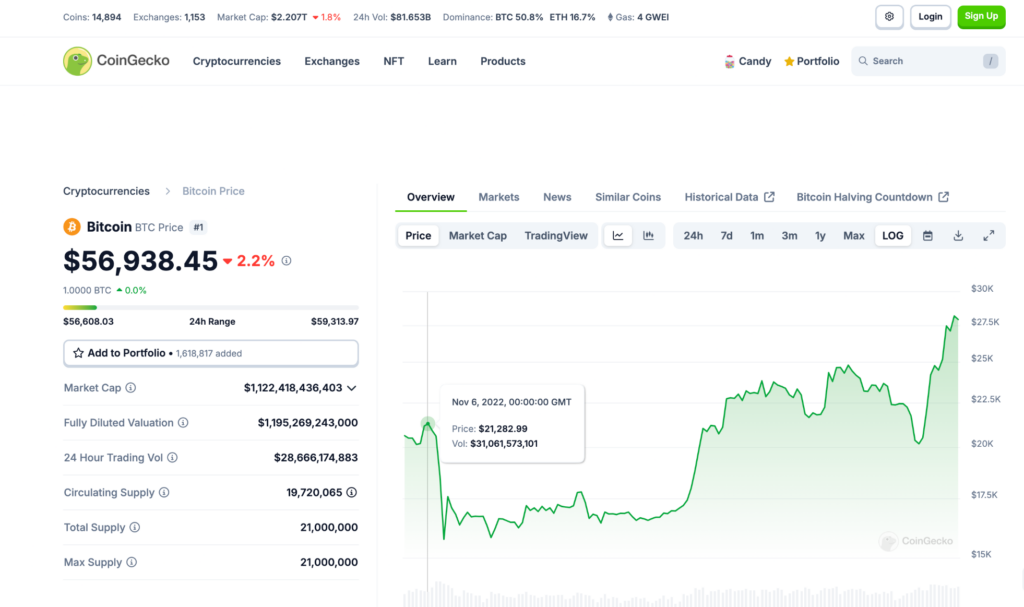
In the image below, a major capitulation event occurred when many investors sold off their Bitcoin holdings between November 6 and November 10, 2022, marking the lowest point on the Bitcoin chart for the bear market.
As seen in the chart below, the capitulation pushed the price of a Bitcoin to $15,742, its lowest since the last bear market in 2020.
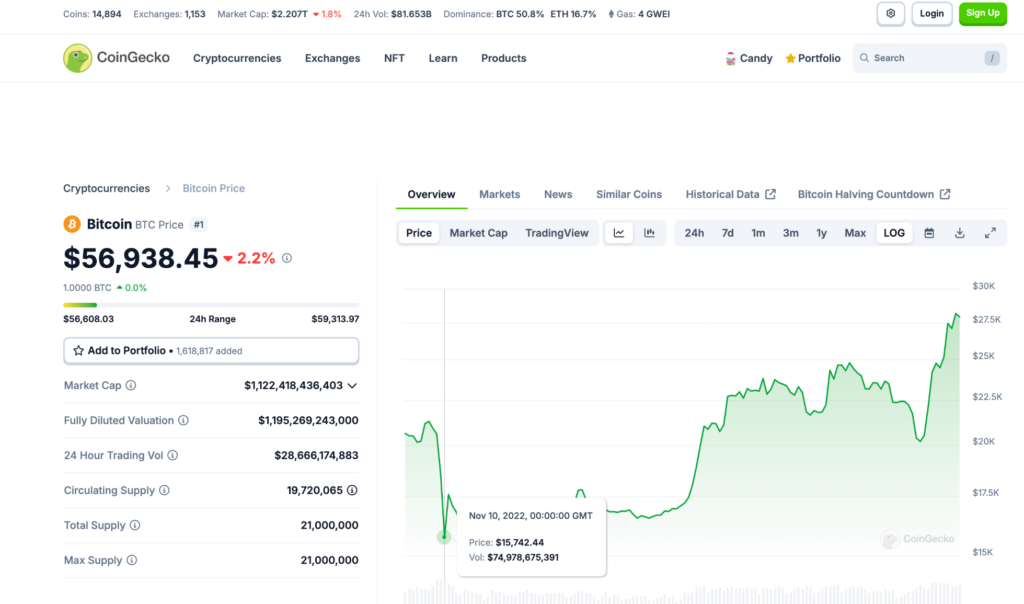
Bitcoin Chart: Coingecko
What are the Causes of Capitulation?
Capitulation in the cryptocurrency market can be caused by the following factors:
- Extended Bear Markets: Prolonged periods of declining prices can erode investor confidence, leading to a buildup of fear and anxiety.
- Economic Indicators: Negative economic news, such as poor earnings reports, high unemployment rates, or declining GDP, can contribute to investor pessimism.
- Market Sentiment: A shift in market sentiment towards extreme fear can trigger widespread selling. This shift is often influenced by media reports and analyst predictions.
- Technical Triggers: Breaks of key support levels or moving averages can trigger automated selling and panic among traders.
What are Some Indicators of Capitulation?
Technical analysis indicators can signal capitulations. Some of these indicators are:
- Volume Spikes: One of the most reliable indicators of capitulation is a significant increase in trading volume when there is a sell-off. This suggests that many investors are selling simultaneously.
- Price Declines: Sharp and sudden declines in asset prices, often exceeding previous downward trends, can indicate capitulation.
- Sentiment Indicators: Tools like the Fear & Greed Index can provide insights into market sentiment, with extreme fear levels often preceding capitulation.
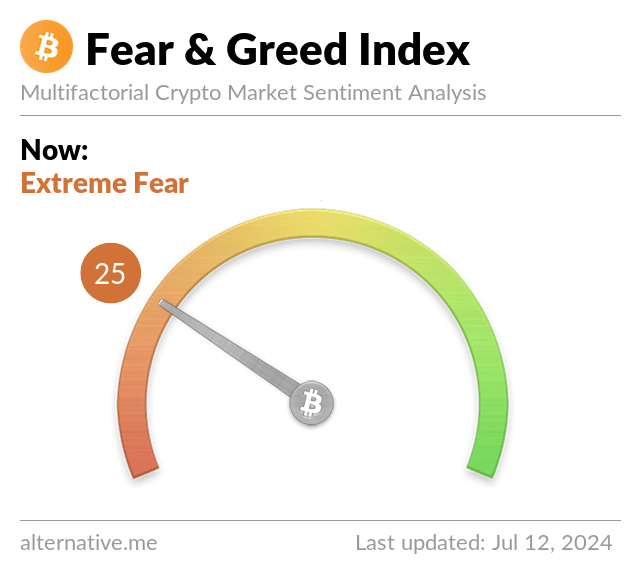
Crypto Fear and Greed Index (alternative.me)
Strategies During Capitulation
The following are some of the strategies that can be used by traders during a capitulation event:
- Stay Calm and Rational: Avoid making impulsive decisions based on fear. Assess the situation logically and consider the long-term prospects of your investments.
- Reevaluate Your Portfolio: Use the opportunity to review your holdings. Identify fundamentally strong assets that may be undervalued due to market volatility.
- Consider Averaging Down: If you have confidence in your investments, consider buying more at lower prices to reduce your average cost per share.
- Diversify: To mitigate risk, ensure your portfolio is diversified across different asset classes.
Conclusion
Capitulation is an important concept in financial markets, representing a tipping point driven by investor fear and mass selling. Recognizing the signs of capitulation can help investors make informed decisions, whether to protect their assets or seize potential opportunities as the market stabilizes.
Browse the Paybis Glossary to master more web3 lingo!
Alternatively, explore related terms and articles below.
Disclaimer: Don’t invest unless you’re prepared to lose all the money you invest. This is a high‑risk investment and you should not expect to be protected if something goes wrong. Take 2 mins to learn more at: https://go.payb.is/FCA-Info