How to Mine Dogecoin: Is It Still Worth It in 2026?
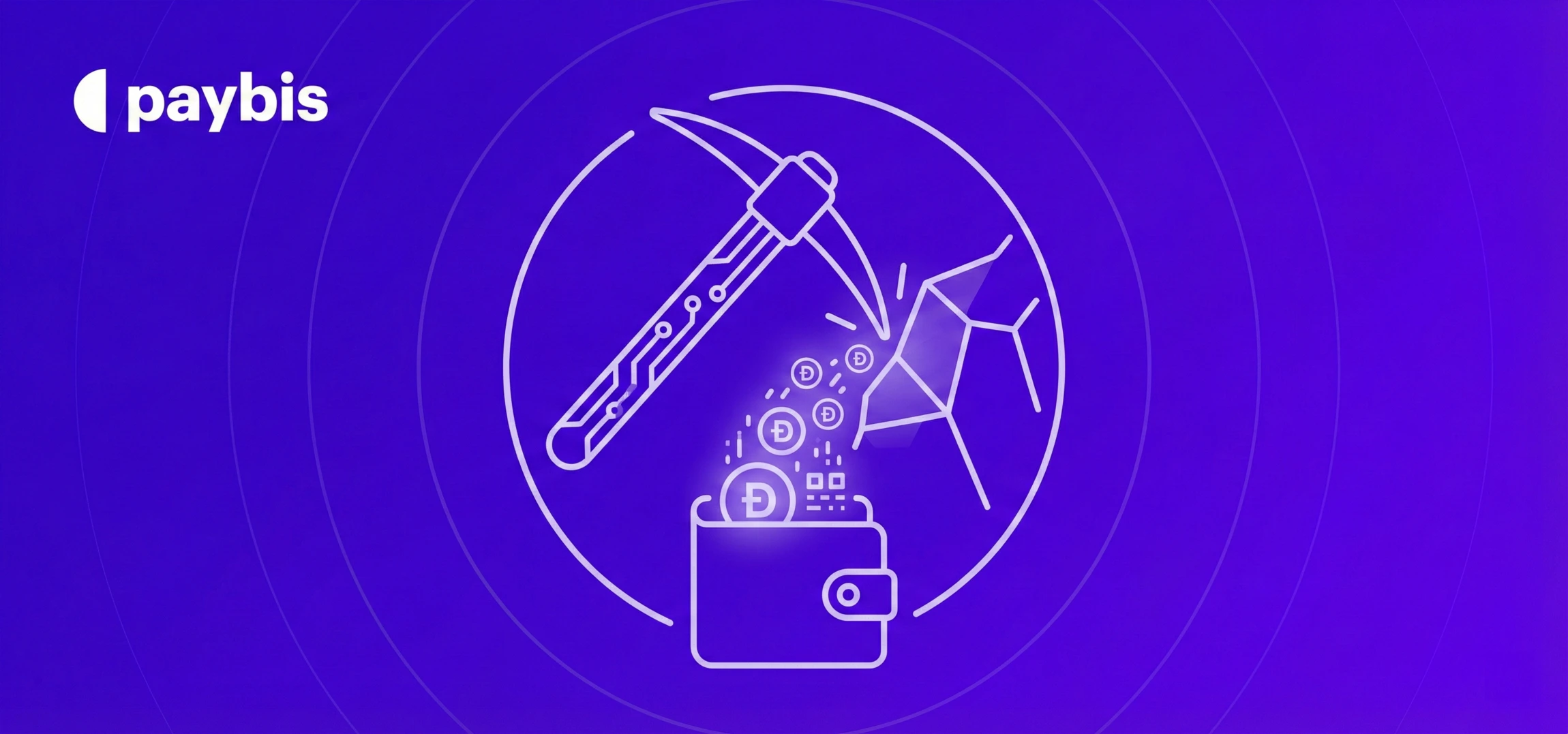
- Dogecoin uses the Scrypt algorithm, so you need a Scrypt ASIC to mine it, which is the same hardware used for Litecoin. The Bitmain Antminer L9 (16–17 GH/s) is the current standard.
- Set up a personal Dogecoin wallet first to get a receiving address. Then create an account on a mining pool. F2Pool, LitecoinPool.org, and Kryptex all support DOGE.
- Because Dogecoin and Litecoin share the same algorithm, your ASIC mines both at once through merge mining. Most of your daily revenue comes from DOGE, not LTC.
- Log into your miner’s web interface, enter the pool stratum address, your worker name, and your wallet address, then reboot. The miner connects within 15–20 minutes.
- A single Antminer L9 (17 GH/s) earns roughly $10.63/day in DOGE at current prices. After electricity at $0.07/kWh, net profit is around $4–5/day from DOGE alone.
- Dogecoin has no supply cap and no halving schedule, which means block rewards stay fixed at 10,000 DOGE. Price volatility still drives most of the risk.
- Mining on a phone, laptop, or home PC is not profitable. Apps that claim otherwise are not legitimate.
Dogecoin started as a joke in 2013, built on a Shiba Inu meme and released with almost no serious expectations. Twelve years later, it has a market cap in the billions, a dedicated mining community, and search volumes that spike every time a price rally makes headlines.
But you probably already know that. You are more interested in “Does mining Dogecoin in 2026 actually make financial sense?” and how to get started without wasting money on the wrong setup.
This guide answers both of those questions directly.
Table of contents
How Dogecoin Mining Works
Miners confirm transactions on the Dogecoin network by competing to solve a cryptographic puzzle. The first miner to solve it earns the block reward, currently fixed at 10,000 DOGE per block. Unlike Bitcoin and Litecoin, Dogecoin has no supply cap and no halving event. The block reward has stayed at 10,000 DOGE since 2014, which means there is no countdown clock forcing miners to rely on fees instead of rewards.
Dogecoin uses the Scrypt proof-of-work algorithm, the same one used by Litecoin. That shared algorithm is the foundation of merge mining, which is the most important thing to understand about DOGE economics in 2026. When you mine on a pool that supports merge mining, your hardware earns both Dogecoin and Litecoin simultaneously, from the same operation, without any additional power cost. The two coins are essentially mined as a pair.
New blocks are confirmed every minute on average and give Dogecoin one of the fastest block times of any major proof-of-work coin.
Can You Mine Dogecoin on a PC, Phone, or Laptop?
Technically yes, but the earnings are so close to zero that the electricity cost far exceeds any reward you’d receive.
Before Scrypt-specific ASICs existed, GPU and CPU mining were viable. But that window closed years ago. The network hashrate is now dominated by industrial ASIC hardware, and a laptop or gaming PC cannot compete on efficiency. You would spend more on electricity than you would earn in DOGE.
Mobile apps that advertise Dogecoin mining for phones fall into two categories. Some are simulated mining games with no real payouts, and others are outright scams. Neither produces actual Dogecoin. If you want to mine DOGE in 2026, you need a Scrypt ASIC.
What You Need Before You Start Mining Dogecoin
What are the prerequisites for mining Dogecoin? A Scrypt ASIC miner, a personal wallet with a receiving address, and a pool account. The wallet comes first, because you’ll enter that address during miner configuration.
1. A Scrypt ASIC Miner
The Bitmain Antminer L9 is the current generation, released in 2024 in three output variants. All three use the same hardware design and firmware; the only difference is hashrate due to chip binning during production.
| Model | Hashrate | Power Draw | Efficiency | Est. Daily Profit* |
|---|---|---|---|---|
| Antminer L9 (15 GH/s) | 15 GH/s | 3,150W | 0.21 J/MH | ~$1.50–$9 |
| Antminer L9 (16 GH/s) | 16 GH/s | 3,360W | 0.21 J/MH | ~$2–$11 |
| Antminer L9 (17 GH/s) | 17 GH/s | 3,570W | 0.21 J/MH | ~$2.26–$4.63 (LTC only) |
Estimates at $0.07–$0.10/kWh for LTC rewards. DOGE merge mining adds significantly more. Figures move with coin prices.
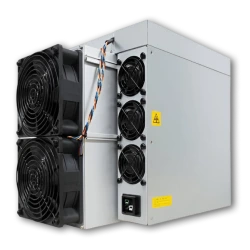
The older Antminer L7 (9.16 GH/s) is still available second-hand. It draws the same power as the L9 but produces roughly half the hashrate. At $0.10/kWh, the L7 runs at a net loss on LTC alone and only breaks even when DOGE merge mining rewards are included. If your electricity is cheap and the price is right, it can still work. Otherwise, the L9 is the better investment from the start.
Before you power on, you need a dedicated 220–240V circuit with at least a C32 breaker. The L9 draws up to 3,570W continuously and runs at around 72–76 dB. A basement, outbuilding, or container setup handles both the noise and the heat. Running it in a shared living space is not practical.
2. A Dogecoin Wallet
You need a receiving address before you configure your miner, because that’s where pool payouts are sent. You can use our Dogecoin Wallet to receive these payouts.
Trust Wallet and Dogecoin Core are both reliable options. For larger holdings, a crypto wallet with hardware support adds a meaningful layer of security.
Write down your seed phrase and keep it offline. Your wallet address is what you’ll paste into the pool dashboard when setting up payouts.
3. A Mining Pool Account
Solo mining Dogecoin is not practical for individual miners. The network hashrate is large enough that a single machine would go weeks or months between block discoveries. Pool mining groups your hashrate with other miners so that rewards come in regularly, proportional to your contribution.
Choosing a Mining Pool for Dogecoin
Most Litecoin pools also support Dogecoin merge mining, so the choice overlaps with what you’d consider for LTC.
Let’s look at the pool options for mining Dogecoin in 2026.
- F2Pool is one of the largest mining pools globally and supports Dogecoin with merge mining enabled. It uses a PPS+ payout model and charges around 2.5% on LTC earnings. DOGE rewards from merge mining are distributed separately. Good dashboards and reliable uptime make it a popular choice.
- LitecoinPool.org has operated since 2011 and runs on a pure PPS model. Every valid share you submit is credited immediately, regardless of whether the pool finds a block. Merge mining with DOGE runs automatically. The 2% fee is higher than some competitors on paper, but the PPS model means you’re not exposed to pool luck variance.
- Kryptex Pool credits LTC payouts hourly and converts DOGE merge mining rewards to LTC as a daily bonus. A straightforward option for miners who want their earnings in a single currency.
- Prohashing takes a different approach and automatically mines whichever Scrypt coin is most profitable at any given moment. It pays in your chosen currency at a flat 4.99% fee. Worth considering if you want to maximize daily dollar revenue rather than accumulate DOGE specifically.
One note worth keeping in mind: mining exclusively at the largest available pool concentrates hashrate in a way that creates long-term security risks for the network. LitecoinPool.org has historically capped its growth for exactly this reason, and it’s something worth factoring into your choice.
Step-by-Step Setup
How do you configure an Antminer L9 to mine Dogecoin?
- Step 1: Create your pool account. Sign up at your chosen pool and note the stratum connection address. It looks something like
stratum+tcp://doge.f2pool.com:3333. You’ll also set a worker name, typically in the formatusername.workername. - Step 2: Connect and power on the miner. Plug the L9 into the Ethernet and power it on. Give it 2–3 minutes to complete its boot sequence.
- Step 3: Find the IP address. Log in to your router and check the list of connected devices. Once you have the IP, enter it into a browser.
- Step 4: Log in to the web interface. Default credentials are usually
root / root. Change the password immediately after logging in. - Step 5: Open Miner Configuration. Enter your primary pool URL and port in Pool 1. Add a backup connection in Pool 2, ideally a secondary server from the same pool. Set your worker’s name and use
xas the password field, which most pools accept. - Step 6: Save and reboot. The miner restarts and begins connecting to the pool. Full connection usually takes 10–20 minutes, depending on the model.
- Step 7: Verify on the pool dashboard. Log in to your pool account and confirm the worker is active and submitting shares. Set your Dogecoin wallet address as the payout destination. If merge mining with LTC is enabled, add your Litecoin address as well.
Is Mining Dogecoin Profitable in 2026?
The answer depends almost entirely on your electricity rate and whether you count merge mining revenue as part of the calculation, which you should.
In February 2026, the Antminer L9 (17 GH/s) earns roughly $10.63/day in DOGE through merge mining. On the LTC side, the same machine adds approximately $4.63/day at $0.07/kWh. Electricity cost runs around $6/day at that rate, leaving a net profit of roughly $9/day. That’s around $270/month before any price movement.
At an L9 purchase price of $5,000–$7,000, break-even lands between 18 and 26 months at current prices and difficulty. That assumes neither DOGE nor LTC moves significantly, which is unrealistic, but it gives you a baseline to compare against your own electricity cost.
The picture changes fast at higher rates. At $0.10/kWh, electricity climbs to around $8.60/day and the margin compresses. Above $0.12/kWh, profitability depends almost entirely on coin price movement rather than operational efficiency. Running the numbers at your actual electricity rate before buying any hardware is the most important step in this process. The CoinWarz DOGE mining calculator updates in real time and lets you plug in your exact figures.
One aspect of Dogecoin that distinguishes it from most other mineable coins is the absence of a supply cap or halving schedule. Block rewards have been fixed at 10,000 DOGE since 2014. For miners, this means there is no future event that reduces your reward per block, which removes one of the major uncertainties that affects Bitcoin and Litecoin mining economics over time. The risk is purely on the price side.
If mining does not fit your setup but you want DOGE exposure, you can buy Dogecoin on Paybis without hardware or a trading account. And if you are weighing DOGE mining against Litecoin mining, the Litecoin mining guide covers the same hardware in more depth since the setups are nearly identical.
Common Mistakes Made When Mining Dogecoin
So what tends to go wrong for new Dogecoin miners?
Relying on price assumptions that haven’t been tested
DOGE is one of the more volatile assets in crypto. The numbers above are based on current prices, but Dogecoin has moved 10x in both directions within a single year. Mining it is a long-term bet that you want to hold DOGE regardless of short-term price movement. If you plan to sell immediately at current prices and those prices drop 60%, the hardware investment no longer makes sense.
Ignoring electricity costs until after purchase
Many new miners focus entirely on hashrate and hardware cost, then check their electricity rate afterward. A rate above $0.10/kWh significantly compresses the margin. At $0.12/kWh or above, a price decline in DOGE turns a thin profit into a loss. Calculate your electricity first and stress-test the numbers at lower coin prices before ordering anything.
Sending payouts to an exchange wallet
Mining directly to an exchange address creates custodial risk. If the exchange freezes withdrawals, suffers a hack, or closes your account, your mining rewards are inaccessible. Mine to a personal wallet you control and transfer to an exchange only when you are ready to sell. If you ever need to buy more DOGE without going through an exchange, you can buy Dogecoin with a bank account on Paybis directly to your own wallet.
Not enabling merge mining
Some new miners configure their pool account for DOGE only and miss out on the LTC rewards that come automatically from merge mining. In February 2026, the LTC side of a single L9 adds roughly $4.63/day at $0.07/kWh. Over a year, that is a meaningful difference. Confirm that merge mining is enabled in your pool settings and that you have a Litecoin wallet address configured for payouts.
Bottom Line
Dogecoin mining in 2026 is profitable for miners with electricity below $0.07/kWh who treat it as a multi-year operation. The Antminer L9 is the hardware to use, merge mining with Litecoin is essential to the economics, and pool mining on F2Pool, LitecoinPool.org, or Kryptex handles the rest.
Above $0.10/kWh, the margin is thin enough that a price correction in DOGE would push the operation into a loss. If your electricity costs are in that range, buying DOGE directly and holding it achieves the same exposure without the hardware overhead. The same logic applies to Bitcoin: if mining is not viable for your setup, you can buy Bitcoin on Paybis and hold it in your own wallet.
FAQ
Can I mine Dogecoin for free?
No. Mining requires hardware and electricity. Apps or websites that advertise free Dogecoin mining either simulate the process without real payouts or are not legitimate. Actual DOGE mining requires a Scrypt ASIC.
How long does it take to mine 1 Dogecoin?
With an Antminer L9 (17 GH/s) on a pool, you earn fractions of DOGE continuously rather than whole coins at a time. Based on current difficulty, a single L9 earns the equivalent of roughly 1 DOGE every few seconds in pool share credits. The more useful number is daily revenue, which is around $10.63 in DOGE at current Dogecoin prices.
How much Dogecoin is left to mine?
Dogecoin has no supply cap. Unlike Bitcoin’s 21 million limit or Litecoin’s 84 million, DOGE issues 10,000 coins per block indefinitely. As of 2026, over 148 billion DOGE are in circulation. There is no scarcity mechanism built into the issuance schedule.
Can I mine Dogecoin on Android or iPhone?
No. Mobile devices cannot compete with ASIC hardware on efficiency or hashrate. Apps that claim to mine DOGE on a phone are not generating real Dogecoin. The network is secured entirely by dedicated ASIC miners.
What is the current Dogecoin block reward?
10,000 DOGE per block, unchanged since 2014. Dogecoin has no halving events, so this reward stays fixed. Blocks are confirmed approximately every minute.
Is it better to mine Dogecoin or just buy it?
Mine if your electricity is cheap and you are comfortable holding DOGE through price fluctuations over a multi-year horizon. Buy if your electricity rate is average or above, or if you want DOGE exposure without the hardware investment and operational overhead. You can buy Dogecoin on Paybis without creating a trading account.
Disclaimer: Don’t invest unless you’re prepared to lose all the money you invest. This is a high‑risk investment and you should not expect to be protected if something goes wrong. Take 2 mins to learn more at: https://go.payb.is/FCA-Info