Your Crypto Market Maker Strategy: Why DEX ‘Low Fees’ Can Cost You More

Key Takeaways:
-
- DEX “low fees” are a myth: Uniswap’s 0.3% trading fee (one of several tiers on V3) hides variable gas costs, 0.22%-1.4% slippage, and 0.5%-5% MEV extraction.
-
- Total cost for $500 trade: Uniswap = $25.70 (5.1%) during normal gas, $55.85 (11.2%) during congestion. Paybis = $34.95 (7.0%) with zero execution risk.
-
- Paybis wins when: You’re trading under $5K per transaction, gas is spiking, or you need price certainty during volatility (15-minute lock eliminates slippage).
-
- DEXs win when: You’re trading over $5K per transaction with patience, or buying obscure altcoins not listed on CEXs.
-
- Failed transaction math: DEX charges gas even when your trade fails. We charge $0 and refund your card immediately.
You’ve heard the pitch before. Swap tokens on a DEX for just 0.3%, with full control. It sounds like a no-brainer compared to centralized exchanges charging 3-7% on card purchases. But that 0.3% isn’t real. It ignores the gas fees that spike when you need to trade most, the slippage that eats into every swap, and the MEV bots silently front-running your transactions.
In this breakdown, we’ll show you exactly what you’re actually paying on decentralized exchanges versus platforms like Paybis and when each option makes sense for your specific trade.
Table of contents
- What Crypto Market Makers Actually Do
- The Hidden Tax of DeFi: Breaking Down DEX’s Real Costs
- The Math That Matters: Total Cost of Ownership for a $500 Trade
- When AI Bots Own the Market
- Use DEXs for This, Paybis for That
- The Risks No One Wants to Talk About
- Stop Optimizing for the Wrong Number
- Key Terminology
What Crypto Market Makers Actually Do
A crypto market maker sits on both sides of the market so you always have someone to trade with. Without them, you’d place an order and wait hours for a counterparty to match your price. Market makers populate order books with buy and sell orders, narrowing the gap between the highest bid and lowest ask, a spread you pay every time you trade.
The mechanics differ drastically between centralized exchanges like Paybis and decentralized exchanges like Uniswap. Understanding this difference is the key to calculating your true cost.
Traditional Order Books: How Paybis Matches Your Trades
On a centralized exchange using an order book, market makers continuously place limit orders on both sides of the market. Professional market makers often specialized algorithmic trading firms, profit from the bid-ask spread. They might buy Bitcoin at $60,000 and sell at $60,050, pocketing $50 per coin.
Regulatory filings indicate that Paybis acts as principal in retail transactions. When you buy Bitcoin on Paybis, you’re buying directly from our inventory, which we source through liquidity partnerships. This structure allows us to offer a 15-minute price lock guarantee. The quote you see is the price you get if you complete the transaction within that window.
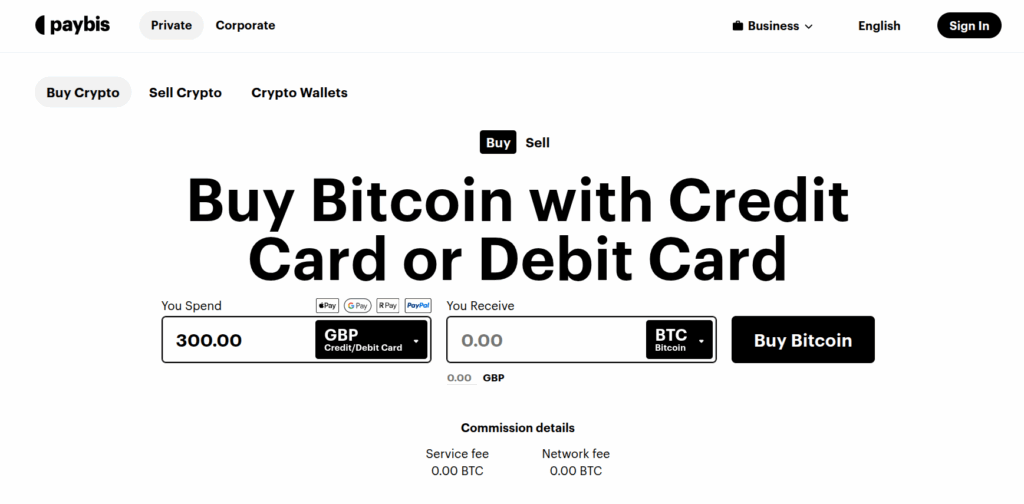
For your trades under $5,000 where speed matters, this eliminates execution risk. No slippage surprises. No failed transactions that still cost gas. You see the total cost upfront. Check our live rates for your exact all-in cost.
Automated Market Makers: How Uniswap Replaces Order Books
DEXs threw out the order book and replaced it with liquidity pools and algorithmic pricing. Instead of matching buyers and sellers, AMMs use smart contracts holding reserves of token pairs. Anyone can deposit tokens to become a liquidity provider and earn trading fees.
Uniswap V3 uses the constant product formula (x*y=k) with multiple fee tiers (0.01%, 0.05%, 0.30%, 1%) to optimize for different asset volatilities. The 0.30% tier is common for standard pairs like ETH/USDC. When you buy ETH from a pool, you add USDC and remove ETH, but the product must stay constant. The more you buy relative to pool size, the worse your price gets. This is slippage.
The constant product formula means buying 1 ETH from a 10 ETH pool drives the price up 11.1% due to the shrinking supply. Larger trades relative to pool size equal worse slippage. For high-liquidity pairs like ETH/USDC, slippage on small trades is minimal. For obscure altcoins, slippage wrecks your trade.
Curve Finance optimizes for stablecoins using a hybrid constant sum and constant product formula, drastically reducing slippage when trading assets expected to maintain similar prices.
The key difference: DEX pricing is algorithmic and variable. CEX pricing is set by market makers competing for your order.
The Hidden Tax of DeFi: Breaking Down DEX’s Real Costs
The 0.3% trading fee on many Uniswap pools is just the entry ticket. The real cost comes from four variable expenses that stack up fast.
Gas Fees: The Ethereum Toll
Every swap on a DEX requires blockchain validators to execute the smart contract. You pay them in gas. Gas fees fluctuate based on network congestion, spiking brutally during high-activity periods. Some Layer 2 networks like Arbitrum, Optimism, and Base have been able to reduce this cost at times to under $1 per swap. If you’re converting fiat to crypto, you still need an on-ramp like Paybis first.
A 2024 academic analysis of 534,198 Uniswap V3 trades found that for small trades, gas fees are the dominant cost component, often exceeding both the protocol fee and slippage combined. While current gas fees are typically lower than historical peaks, they remain unpredictable and can surge during network congestion or market volatility, the exact moments you need to execute fast.
For a $200 trade, even a modest gas fee of $10-15 represents 5-7.5% of your trade value. You just paid 17-50x the trading fee in gas alone.
We include all network fees in the upfront quote. When we show you “$500 purchase = 0.0089 BTC + $37.50 total fees,” that’s the final number. No surprises when Ethereum congestion spikes 300% during a crash.
Slippage: The Price You Didn’t Agree To
Slippage is the difference between your expected price and execution price. On a DEX, your transaction sits in the mempool until a validator includes it in a block. Prices can move during that wait. Setting slippage tolerance (e.g., 0.5%) means your transaction fails if the price moves beyond that threshold, but you still pay gas.
Research shows significant variance by liquidity. High-liquidity pairs (ETH/USDC on Uniswap V3) average 0.22% in transaction costs including slippage. Low-liquidity pairs (PEPE/ETH) average 1.4% in transaction costs. That’s a 6.4x difference. Trade a memecoin during a pump, and you can easily lose 5-10% to slippage alone.
MEV: The Silent Front-Running Tax
Maximal Extractable Value (MEV) is profit extracted by reordering transactions in a block. The most common attack you’ll face is the sandwich attack:
- A bot detects your pending $1,000 ETH buy order in the mempool
- Bot places a large buy order before yours (front-running), driving up the price
- Your order executes at the inflated price
- Bot immediately sells (back-running), profiting from the spread
MEV tracking data shows over 72,000 sandwich attacks in a 30-day period on Ethereum, extracting more than $1.4 million. In one extreme case, a trader lost over $215,000 in a single sandwich attack swapping stablecoins on Uniswap V3.
You won’t see MEV on your transaction receipt. It’s invisible value extraction. Compare your executed price to the mid-market rate on CoinGecko at the exact timestamp. If you paid 2-3% more than the spot price after accounting for the trading fee, you likely got sandwiched.
Our 15-minute price lock means the rate you see is the rate you get, period. No bot can manipulate your price between quote and execution.
Failed Transactions: Paying for Nothing
On Ethereum, you pay gas even when your transaction fails. Common failure causes include insufficient gas limit, price movement exceeding your slippage tolerance, or network congestion.
Uniswap data shows fewer than 0.5% of transactions fail on-chain for high-liquidity pairs. That sounds low until you realize each failure costs you gas with zero crypto to show for it. Try three times during a crash, and you’ve burned money with nothing to show.
When we reject a transaction for security reasons, you pay nothing. The full payment returns to your card automatically.
The Math That Matters: Total Cost of Ownership for a $500 Trade
Advertised fees lie. Let’s calculate the real numbers.
| Cost | US-Low Gas | US-High Gas | PB-First | PB-Repeat |
|---|---|---|---|---|
| Service Fee | 0.3% = $1.50 | 0.3% = $1.50 | $0 (waived) | 2.49% = $12.45 |
| Processing Fee | None | None | 4.5% = $22.50 | 4.5% = $22.50 |
| Gas Fee | $20 | $50 | Included | Included |
| Slippage | 0.22% = $1.10 | 0.22% = $1.10 | $0 | $0 (15-min lock) |
| MEV Risk | ~0.5% = $2.50 | ~0.5% = $2.50 | $0 | $0 |
| Failed TX Cost | $0.10* | $0.25* | $0 | $0 |
| Total Cost | $25.70 (5.1%) | $55.85 (11.2%) | $22.50 (4.5%) | $34.95 (7.0%) |
| Price Lock | Mempool risk | Mempool risk | 15 minutes | 15 minutes |
*0.5% probability amortized
For a $500 trade, Paybis saves you $20.90 during congestion. The real arbitrage: Paybis eliminates execution risk when you need to move fast.
When AI Bots Own the Market
Market making bots dominate DEX trading. These aren’t retail traders manually clicking “swap.” They’re algorithms optimizing for microsecond execution, running arbitrage across multiple exchanges, and extracting MEV from your trades. AI-driven market makers analyze order flow and volatility in real-time, giving them an information edge.
You can build your own trading bot, but that requires capital, API access, and technical expertise. On Paybis, you don’t need a bot to get a fair price. We source liquidity from multiple providers, and your quote is locked for 15 minutes.
Use DEXs for This, Paybis for That
Neither platform is “best” for everything. Here’s when to use each.
Use a DEX when:
- Trading obscure altcoins not listed on CEXs. If it’s only available on Uniswap, you have no choice.
- Providing liquidity for yield. Earn LP fees by depositing tokens into pools.
- You’re trading over $5,000 per transaction routinely. At that volume, Binance (0.1%) or Kraken (0.16%) beat our 7% flat rate. Use us for urgent >$5K trades when Binance rejects your card or you need weekend execution.
Use Paybis when:
- Converting fiat to crypto. DEXs don’t handle USD/EUR/GBP. We support multiple payment methods including cards, Apple Pay, bank transfers, and PIX.
- You need execution certainty during volatility. The 15-minute price lock eliminates slippage risk.
- Your trade is under $5,000 and you value time over saving $10-$20 in fees.
- You’re making weekend or urgent trades. Banks are closed. Binance wire takes 3 days. Our card purchases settle in 15 minutes with instant verification.
“Very fast buy/send. I really like this app.” – Verified user review of Paybis
This isn’t about one platform being “better.” It’s about recognizing the tool fits the job.
The Risks No One Wants to Talk About
Both CEXs and DEXs have failure modes. Being honest about trade-offs is how you avoid losing money.
DEX Risks:
- Smart contract bugs can drain pools (DeFi hacks extracted millions in 2024)
- Impermanent loss if you’re an LP and prices diverge
- Rug pulls on new tokens by malicious developers
- Regulatory uncertainty: future regulations could impact access
CEX (Paybis) Risks:
- We hold your crypto during the 15-minute purchase window. If you withdraw immediately (which we allow), exposure is minimal. Long-term storage means trusting our zero major hacks since 2014 record
- KYC/AML requirements: you must verify identity, but the good news is you can get verified in 2 minutes with Paybis.
- Transaction rejections for security, sometimes without detailed explanation
- Geographic restrictions due to compliance requirements
The trade-off: DEXs give you control and privacy. CEXs give you speed and simplicity. Pick your poison based on the trade.
Stop Optimizing for the Wrong Number
The crypto industry glorifies “low fees” because it’s an easy marketing claim. But you don’t optimize for the lowest nominal fee. You optimize for lowest total execution cost.
A $500 trade on Uniswap with $30 in gas, $2 in slippage, and $3 in MEV costs you $36 (7.2%), not the advertised $1.50 (0.3%). You just paid more than Paybis while taking on execution risk, price uncertainty, and the cognitive load of monitoring gas prices.
Here’s the calculation that matters: Does this platform deliver the outcome I need at the lowest total cost for this specific trade? For fiat-to-crypto under $5K during volatility or urgency, Paybis’s transparent 7% beats DEX variable costs. For large trades or obscure tokens, DEXs win. For routine DCA where you can wait, Binance wins.
Use the fee calculator on our site to compare your exact all-in price vs. estimated DEX gas + slippage before buying.
Create a free account, verify in 2 minutes, and test a small purchase. Lock your price for 15 minutes, no slippage, no sandwich attacks. You’ll thank yourself during the next flash crash. Get started today.
Further reading
- Your First Market Making Bot: A Step-by-Step Crypto Trading Guide
- The 12-Point Checklist for Trading Low-Liquidity Crypto
Key Terminology
Liquidity Pool: A smart contract holding reserves of two or more tokens that traders swap against. Example: an ETH/USDC pool on Uniswap.
Bid-Ask Spread: The difference between the highest price a buyer will pay (bid) and the lowest price a seller will accept (ask). Narrower spreads equal lower costs.
Slippage: The difference between your expected trade price and actual execution price. High slippage means you got a worse deal than quoted.
Gas Fee: The cost paid to blockchain validators to process your transaction. Fluctuates with network demand.
MEV (Maximal Extractable Value): Profit extracted by reordering, inserting, or censoring transactions in a block. Sandwich attacks are a common form.
AMM (Automated Market Maker): A protocol using liquidity pools and algorithms to price assets instead of traditional order books.
Price Lock: A feature where your quoted price is fixed for a set period. During the May 2021 crash, Bitcoin moved 8-12% in 15-minute windows. A price lock eliminates slippage risk during that volatility, worth 2-5% of trade value vs. DEX mempool execution.
FAQ
Can I use Paybis to trade altcoins not available on centralized exchanges?
We support 80+ major cryptocurrencies but don’t list obscure altcoins. For those, you need a DEX.
What's the breakeven point where Uniswap becomes cheaper than Paybis?
Approximately $800-$1,000 trades during normal gas conditions and low volatility. Above that threshold, assuming you avoid MEV and execute during low congestion, DEX percentage-based fees can beat our flat rate.
How much slippage should I expect on a $1,000 ETH trade on Uniswap?
High-liquidity pairs (ETH/USDC): 0.22% average = $2.20. Low-liquidity pairs (obscure altcoins): 1.4% average = $14. Paybis: $0 due to 15-minute price lock.
Does Paybis charge me if my transaction fails verification?
No. When we reject a transaction, you pay zero fees and the payment returns to your card automatically.
Disclaimer: Don’t invest unless you’re prepared to lose all the money you invest. This is a high‑risk investment and you should not expect to be protected if something goes wrong. Take 2 mins to learn more at: https://go.payb.is/FCA-Info