Buying and Selling Gift Cards with Crypto (2026 Guide)
- You can buy gift cards with crypto or sell gift cards for crypto, but each direction carries different fees and scam risks.
- Selling a $100 gift card for crypto will typically net you less than face value, reportedly $60 to $92 depending on the brand and platform, based on rates advertised on peer-to-peer gift card marketplaces such as CoinCola at the time of writing.
- Paybis shows all fees (service, processing, and network) before you confirm, so you know your exact payout upfront.
- Scams are common in both directions, so verify platform reputation and use escrow protection before trading.
Crypto assets can increase or decrease in value. Paybis is a payment gateway, not an investment service. This content is for informational purposes only and does not constitute financial advice.
Quick Answer: You can buy gift cards with crypto on marketplaces like Bitrefill or CoinCards, or sell gift cards for crypto on peer-to-peer platforms like CoinCola. Expect to receive 60-92% of face value when selling, per CoinCola’s published rates, depending on the card brand. For a safer, faster alternative, buy Bitcoin with a card or sell crypto for a bank payout through Paybis, with competitive fees and all costs shown before you confirm.
You have a gift card you will never use, or crypto you want to spend. The swap seems simple, but the scam risk is real. This guide walks through the legitimate platforms, the realistic rates, the scam red flags, and the moment when a direct crypto payout through a regulated gateway is the better move.
How Do You Swap Crypto for Gift Cards?
The gift card and crypto market works in two directions: spending crypto on retailer cards and converting unwanted cards into crypto. Both are legal in most places, but neither is free.
How Do You Spend Crypto on Everyday Gift Cards?
Buying gift cards with crypto follows a straightforward process: browse available brands, select the card and denomination, pay with cryptocurrency, and receive a digital code. Delivery times vary by platform and whether the card is in stock, though many platforms advertise fast turnaround, according to Refillarena platform data.
How Do You Convert Gift Cards to Crypto Safely?
Selling gift cards for crypto requires more caution. List the gift card type and value on a trusted peer-to-peer marketplace. Only provide the card number and PIN through the platform’s approved process after the buyer’s funds are secured in escrow. The risk lies in handing over card codes before payment clears.
How Much Is Your Gift Card Worth in Crypto?
The ranges below are based on CoinCola’s published rates and vary by platform and over time. Expect to receive about 60-92% of face value, depending on the brand and platform. For a $100 Amazon gift card, the estimated payout is reportedly $80 to $92, representing a discount of $8 to $20. A $100 Steam card might only net $65 to $80. Regional restrictions, demand, and platform fees all affect the final rate. Always check the exact payout before confirming the trade.
How Do You Buy Gift Cards with Crypto Safely?
Legitimate platforms exist for buying gift cards with crypto, but the quality varies widely. The best ones offer buyer protection, verified sellers, and transparent fees.
Which Platforms Are Legitimate for Crypto-to-Gift-Card Purchases?
Bitrefill and CoinCards are established platforms with years of operation and large selections of supported brands. Bitrefill offers gift cards for use in many countries, per Bitrefill’s site. CoinCards reportedly serves the Canadian market alongside the US, the UK, Australia, and Europe, per CoinCards’ site. Both platforms accept multiple cryptocurrencies and advertise delivery of digital codes shortly after payment confirmation.
How Do You Buy Amazon Gift Cards with Crypto?
Amazon gift cards are the most liquid option for crypto-to-gift-card purchases. You can buy Amazon gift cards with crypto on Bitrefill, CoinCards, and peer-to-peer platforms. Rates are typically closest to face value (see payout rates below), reportedly because Amazon cards see some of the strongest buyer demand.
How to Get Steam Cards Using Bitcoin
Steam gift cards are popular among gamers looking to buy a Steam gift card with crypto. Bitrefill and CoinCola both support Steam cards. Delivery is often automatic once the payment confirms on the blockchain, though timing varies by platform.
How Do You Buy an Apple Gift Card with Crypto?
Apple and iTunes gift cards are widely available on crypto gift card platforms. You can buy Apple gift card with crypto through Bitrefill or CoinCola. These cards typically retain 70-85% of face value when resold, per CoinCola’s published rates, making them less liquid than Amazon but still viable.
How Do You Purchase a Gift Card with Crypto Step by Step?
- Choose a trusted platform: Look for established marketplaces with buyer protection and verified sellers. Check independent reviews before committing.
- Select your gift card: Browse available brands and choose the region and denomination. Make sure the card is valid for your country or account region.
- Pay with crypto: Send the exact amount to the provided wallet address. Many platforms accept Bitcoin, Ethereum, and stablecoins.
- Receive your code: Once your crypto payment confirms on the blockchain, the platform delivers your digital gift card code via email or on-screen.
- Redeem immediately: Apply the code to your account on the retailer’s official site to confirm it works.
What Fees Do You Pay When Buying Gift Cards with Crypto?
Gift card platforms may charge a service fee, include a markup in the quoted price, or apply a network fee (the blockchain transaction cost, which varies with network congestion). The total cost depends on the platform and payment method. For example, a $100 card might cost $103 to $108 in crypto once these costs are included.
How Do You Exchange Gift Cards for Crypto Safely?
Selling gift cards for crypto can be riskier than buying. You hand over the card code before payment clears, which creates an opportunity for fraud.
Where Can You Exchange Gift Cards for BTC?
Peer-to-peer platforms like CoinCola reportedly let you sell gift cards for crypto by connecting you directly with buyers who pay in Bitcoin or other cryptocurrencies. Rates vary by card type and demand, but advertised rates generally range from 60-92% of face value, per CoinCola’s published rates. Amazon cards tend to be listed at the strongest rates, while niche cards fetch less.
How to Cash Out Gift Cards to Crypto
The process starts with gathering your gift card details: card number, PIN, and remaining balance. You list the card on a platform, set your asking price (or accept the platform’s rate), and wait for a buyer. Once a buyer accepts, you send the card details and wait for verification. If the card is valid, the platform releases crypto to your wallet.
How to Trade Steam Codes for Crypto
Steam gift cards are liquid but not as valuable as Amazon cards. You can sell Steam gift card for crypto on CoinCola or peer-to-peer marketplaces. Advertised rates reportedly range from 65-80% of face value, per CoinCola’s published rates. Gaming cards may have a smaller buyer pool, so trades can take longer to complete or settle at lower payouts.
How Do You Convert Google Play Gift Cards to Crypto?
Google Play gift cards can be sold for crypto on platforms like CoinCola. Advertised payout rates reportedly range from roughly 60-82% depending on the region and demand, per CoinCola’s published rates. Always verify the exact balance on the card before listing it, as errors slow down payouts and can result in disputes.
How Do You Convert a Gift Card to Crypto Step by Step?
- Choose a platform: Pick a peer-to-peer marketplace or gift card exchange with escrow protection. Avoid platforms with no dispute resolution process.
- Gather card details: Have the full card number, PIN, and remaining balance ready. Do not share these until the transaction begins.
- List your card: Select the card type (Amazon, iTunes, Google Play, or others) and decide which cryptocurrency you want to receive.
- Start the trade: Once a buyer accepts, send the card details through the platform’s secure messaging system. Never share codes via email or unencrypted chat.
- Wait for verification: The buyer checks the card balance during the verification process.
- Receive crypto: Once verified, the platform releases crypto to your wallet. Check the transaction on the blockchain to confirm receipt.
What Are Realistic Payout Rates by Card Type?
Payout rates vary widely depending on the card brand and market demand, with Amazon cards commanding the highest rates and less popular cards often fetching less due to lower buyer interest. These ranges are based on CoinCola’s published rates and rates advertised on other peer-to-peer gift card marketplaces at the time of writing.
| Card Type | Reported Payout Range | Notes |
|---|---|---|
| Amazon | 80-92% | Reportedly strong demand, quick sales |
| Steam | 65-80% | Popular with gamers, rates vary by platform |
| Apple/iTunes | 70-85% | Reported rates vary by region |
| Google Play | 60-82% | Per CoinCola’s published rates, which vary by region |
| Vanilla (Visa) | 70-88% | Reportedly depends on activation status |
How Can You Stay Safe When Trading Gift Cards for Crypto?
Stay safe by using escrow-protected platforms and never sharing card codes before the buyer deposits funds. The gift card and crypto market attracts scammers because transactions are hard to reverse. Crypto payments generally cannot be undone, and gift card codes are nearly impossible to recover once redeemed.
What Scams Happen When Buying Gift Cards with Crypto?
Fake crypto gift card stores can look almost identical to the real thing. Scammers reportedly build lookalike sites that copy the design and sometimes use a name that is only slightly different from a legitimate platform. Once you send crypto, the site may disappear or claim technical issues while keeping your payment. Always double-check the URL and look for reviews on independent sites before sending payment. Crypto payments generally cannot be reversed, so choose platforms with escrow or buyer guarantees.
What Scams Happen When Selling Gift Cards for Crypto?
One commonly reported scam involves a buyer asking you to “verify” the card by revealing the full card number, PIN, and security code before payment. This gives the other party complete access to your gift card balance. Once they redeem the card, they can disappear without sending crypto. Another red flag is any platform offering rates unusually close to face value, since legitimate platforms take a margin and may not be able to sustain rates that high.
How to Spot a Safe Crypto Site
Look for platforms with a long operating history, transparent fee structures, and verified user reviews on independent sites. A legitimate platform will never ask for your card details before a trade begins. Check for escrow protection, which holds your crypto or card code until both parties confirm the transaction. Platforms with 24/7 customer support and clear dispute resolution policies are safer than those with only email contact forms.
Red flags include:
- No escrow or buyer protection: If the platform does not hold funds in escrow, you have no recourse if the other party disappears.
- Rates above 95%: Legitimate gift card exchanges cannot offer rates that high without losing money.
- Pressure to move off-platform: Scammers may ask you to continue the trade via Telegram, WhatsApp, or email to avoid platform oversight.
- No reviews or only fake-looking reviews: Check independent review sites for real user experiences. A platform with very few reviews, or only glowing reviews posted in a short burst, is a warning sign.
How Do You Safely Trade Gift Cards for Crypto?
Use platforms with escrow services that hold crypto until the buyer confirms the card works. Never share card codes until the trade begins and the platform confirms the buyer has deposited funds. Verify the exact balance on the card before listing it, as errors slow payouts and can result in disputes. Complete identity verification quickly to build trust with buyers and speed up the transaction.
If a platform asks you to send card details before the buyer deposits crypto, walk away. Legitimate platforms never require this. Always check the platform’s dispute policy before starting a trade, since policies on problems like region mismatch or defective codes vary widely between platforms.
Why Choose a Direct Crypto Payout Instead of Gift Cards?
If your goal is converting crypto into spendable money, a direct bank payout is usually faster, cheaper, and safer than routing through gift cards.
How Does the Gift Card Route Compare to a Direct Bank Payout?
Selling a $100 Amazon gift card for crypto on a peer-to-peer platform reportedly nets you $80 to $92, per CoinCola’s published rates, though actual rates vary. The gap is the cost of convenience and the risk of dealing with unverified buyers. In contrast, selling crypto directly on Paybis with a bank transfer payout costs 0.99% in service fees, plus a processing fee (0.05% or a minimum of €2) and a network fee. On a $100 sale, the service fee is $0.99, and the €2 minimum processing fee applies because 0.05% is only $0.05. The network fee (the cost miners charge to process your transaction) varies with blockchain congestion and is not set by Paybis.
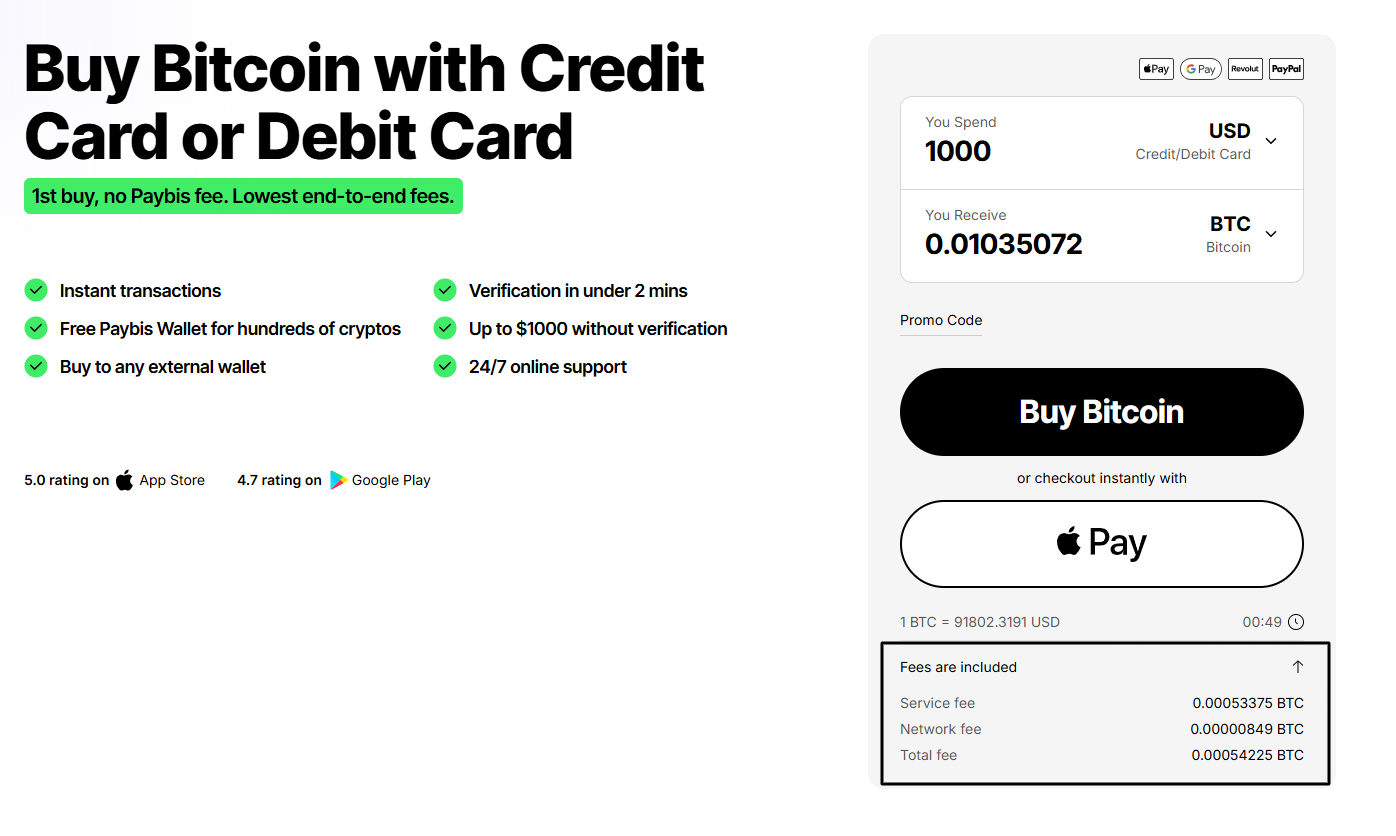
Paybis shows all three fees before you confirm, so you can compare the total with the discounted rates on gift card platforms.
| Method | Typical Payout Rate | Time to Complete | Scam Risk | Fees |
|---|---|---|---|---|
| Sell gift card for crypto (P2P) | Reportedly 60-92% of face value, per CoinCola’s published rates | Varies, can take hours to find a buyer | High | Platform fee + discounted rate |
| Sell crypto directly on Paybis (bank transfer) | Total shown before you confirm | See processing details below | Low | 0.99% service + processing (0.05% or min €2) + network |
| Buy gift card with crypto (market) | Face value minus a markup that varies by platform | Varies by platform | Medium (varies by platform) | Markup + network fee |
| Buy crypto directly on Paybis | Total shown before you confirm | Typically minutes | Low | Service fee from 1.49% + processing fee (4.5-8.5% for card transactions over $50, depending on currency) + network fee |
Risk levels: High = unverified buyers, no escrow, irreversible payments. Medium = some escrow, mixed reviews. Low = regulated platform, compliance checks, account recovery.
Paybis operates in 180+ countries with support for 35 payment methods and 90+ cryptocurrencies. The platform is registered with FinCEN (MSB in US) and FINTRAC (MSB in Canada), is PCI DSS Level 1 compliant, and has operated since 2014 with no security breaches. Paybis has 33,505 Trustpilot reviews with a rating of 4.2 out of 5, or “Great” (as of 17 November 2026).
“I’ve been using Paybis for a while now – and it’s really nailed the “easy and dependable” part for me. What I like most is how simple it is: I just pick how much crypto I want, pay with my card, and the coins are in my wallet.” – Christine K. on G2
When Does a Direct Bank Payout Beat Gift Cards?
If you need to convert crypto to spendable money, a direct bank payout is almost always the better option. Paybis processes transactions instantly (<1 minute), with settlement near-to-instant (depends on the blockchain). The time for funds to reach a bank account is a separate stage and depends on the payment rail and receiving bank. Verification takes about 2 minutes for most users. You see the service fee, processing fee, and network fee before you confirm, so there are no surprises.
The gift card route makes sense mainly when you cannot access a direct service that converts crypto to local currency in your country, or when you specifically want to spend crypto at a retailer that does not accept it directly. Gift card platforms include a markup that varies by platform and deliver codes quickly, while converting crypto to your local currency can involve its own fees and settlement delays, so compare the total cost of both options for your situation before deciding.
Paybis offers 24/7 live chat with an average response time of ~15 seconds. Sell crypto for a bank payout and see your total fee breakdown (service, processing, and network) before you confirm.
What Are the Tax Rules for Selling Gift Cards?
Spending crypto on a gift card counts as a disposal (getting rid of an asset, the same as selling it). In the US, a disposal can trigger a capital gain or loss, per the IRS virtual currency guidance. If you purchased one Bitcoin for $30,000 and later spent the entire Bitcoin when its value was $40,000, you may realize a $10,000 capital gain, subject to applicable tax rules.
Selling a gift card for crypto can still have tax consequences. Selling or spending the crypto you receive later can be a taxable event. Tax rules differ by country and by personal situation, so consult a tax advisor before you buy or sell.
For more information on crypto taxes, see your country’s tax authority.
Key Terminology
- Blockchain: A decentralized digital ledger that records cryptocurrency transactions. Once confirmed, crypto transfers are generally irreversible, making it important to verify payment details before trading gift cards.
- Escrow: A service that holds funds or card codes until both parties confirm the transaction is complete. This protects buyers and sellers from fraud.
- Network fee: The cost miners charge to process your transaction on the blockchain. This fee varies based on network congestion and is not controlled by Paybis or gift card platforms.
- Wallet: Software or hardware that stores your crypto. You need a wallet address to receive crypto when selling a gift card.
- Payout rate: The percentage of face value you receive when selling a gift card. A 75% payout rate on a $100 card means you get $75 in crypto.
- Disposal: Tax term for getting rid of an asset. When you spend crypto, tax authorities treat it as selling the crypto, which may trigger capital gains tax.
- Face value: The amount printed on the gift card. A $100 Amazon card has a face value of $100, but you may only receive $80-92 when selling it for crypto, per CoinCola’s published rates.
- Peer-to-peer (P2P): A marketplace model that connects buyers and sellers directly. P2P gift card trades carry additional scam risks when buyer verification and escrow protection are limited.
FAQ
Can I Buy Gift Cards with Crypto Instantly?
Delivery times vary by platform. Digital gift card codes are usually delivered after your crypto payment confirms on the blockchain, and the wait depends on network congestion and whether the platform has the card in stock. Some platforms advertise near-instant delivery for in-stock cards, but always verify the platform’s reputation before sending payment.
How Much Will I Lose Selling a Gift Card for Crypto?
Expect to receive 60-92% of face value, per CoinCola’s published rates, depending on the card brand and platform. Amazon cards typically fetch 80-92%, while Google Play cards range from roughly 60-82%, both per CoinCola’s published rates. The discount covers the buyer’s margin and the risk they take on when paying for a card they cannot fully verify.
Are Crypto Gift Card Exchanges Legal?
Yes, buying and selling gift cards with crypto is legal in most countries. However, in many jurisdictions tax authorities treat crypto as property, so spending crypto to buy a gift card may count as a disposal and could trigger capital gains tax. Always check your local regulations and consult a tax advisor if needed.
What Happens If My Gift Card Code Doesn't Work?
Policies vary by platform. Some platforms reportedly replace genuinely defective codes after verified first-use failure, and you may need to provide proof of failure, such as screenshots showing the redemption error. Region mismatch is often treated as user error and may be non-refundable, so check the platform’s terms before you buy.
Which Gift Cards Have the Best Crypto Exchange Rates?
Amazon gift cards have the best rates, reportedly fetching 80-92% of face value thanks to their broad usability. Google Play cards reportedly range from roughly 60-82%, Apple/iTunes cards from 70-85%, and Steam cards from 65-80%, all per CoinCola’s published rates. Rates for other card types vary widely between platforms.
Disclaimer: Don’t invest unless you’re prepared to lose all the money you invest. This is a high‑risk investment and you should not expect to be protected if something goes wrong. Take 2 mins to learn more at: https://go.payb.is/FCA-Info