How Old Do You Have to Be to Buy Crypto?

- You must be 18 years old to buy crypto on regulated platforms, including Paybis, Coinbase, and Binance. Some platforms now offer parent-supervised accounts for minors, but the adult remains the legal account holder.
- The only legal way for a minor to hold crypto is through a parent or guardian who buys and manages it on their behalf, or receives crypto as a gift where local law permits.
- Most apps or websites that promise to let a minor buy crypto without ID are unregulated and high-risk. Skipping the age check means skipping the protections that keep your money and identity safe.
Crypto assets can increase or decrease in value. Paybis is a payment gateway, not an investment service. This content is for informational purposes only and does not constitute financial advice.
Quick Answer: You have to be 18 to buy crypto on regulated platforms. That includes Paybis, Coinbase, and Binance. The rule exists because financial crime laws require platforms to verify your age and identity. For a minor, the lawful path is a parent or guardian who buys crypto in their own name and holds it for the child, or gifts crypto where local law permits. Most venues that skip the age check are unregulated and high-risk.
If you are a teenager wondering how old to buy crypto, the answer is 18 on regulated platforms. If you are a parent who has been asked to help, this guide explains why the rule exists, what legal options exist for minors, and how to avoid the scams that target young buyers.
What Is the Age Requirement to Buy Crypto?
The crypto age requirement is consistent across regulated platforms. You must be 18 to create an account, pass identity verification, and complete a purchase in your own name.
Can Minors Legally Buy Crypto?
No, not independently on regulated platforms. The rule is 18+.
Owning crypto is not illegal for a minor. But regulated platforms restrict buying to adults. The distinction matters. A minor can legally hold crypto if an adult buys it on their behalf or gifts it to them. But the minor cannot complete the purchase themselves on any compliant exchange.
The lawful routes for a minor to hold crypto are limited. A parent or guardian can buy crypto and hold it in their own account for the child. The adult owns the account and carries legal responsibility. Alternatively, an adult can gift crypto to a minor where local law permits.
The minor does not control the account. The adult does.
Some platforms have introduced parent-supervised accounts for minors. Binance offers Binance Junior, a parent-controlled app and sub-account for kids and teens ages 6 to 17 where the parent stays the legal owner, according to the official Binance announcement. This is an exception to the standard 18+ rule, but the parent still oversees the account and approves or monitors activity. Trading is forbidden, only account holders aged 13 and over can initiate transfers, and transfers to adults other than their parents are restricted.
What Are the Legal Requirements for Buying Crypto?
Laws mandate identity verification. Platforms do not choose this requirement. Regulated platforms must verify age and identity under anti-money laundering rules. In the United States, banks and money services businesses (MSBs) are subject to different identity-verification requirements. Crypto platforms must comply with applicable anti-money laundering obligations, while the formal Customer Identification Program (CIP) rule under 31 CFR § 1020.220 applies specifically to banks.
The same requirement applies in the UK, EU, and Canada. Platforms that skip this step are operating outside the law.
Why Do Crypto Platforms Require Mandatory Age Checks?
The 18+ rule exists because of financial crime laws. Regulated platforms must verify who their customers are to prevent money laundering, terrorism financing, and fraud.
What AML and CTF Rules Apply to Crypto Platforms?
Anti-money laundering (AML) and counter-terrorism financing (CTF) laws require financial institutions to know who their customers are. Crypto platforms are classified as money service businesses (MSBs) in the United States and must register with FinCEN. MSBs must implement an AML program that includes customer identification requirements, according to 31 CFR § 1022.210, the MSB anti-money laundering program rule. The formal Customer Identification Program (CIP) Rule applies to banks, not directly to MSBs.
The same rules apply globally, with international anti-money laundering standards requiring virtual asset service providers to verify customer identity.
What Are the Legal Age Rules for Crypto Buyers?
Regulated platforms in the US, UK, EU, and Canada enforce the same 18+ rule.
Legal requirements vary by jurisdiction, and platforms must follow the rules where they operate. Regulated platforms set the minimum age at 18 for standard accounts. A platform that lets minors buy crypto without identity verification risks breaching anti-money laundering and consumer protection rules. Supervised accounts are the exception, because a parent stays the legal account holder.
What Legal Rules Apply to Minor Crypto Access?
Identity verification systems reject minors who attempt to verify independently. The verification process requires a government-issued photo ID that shows date of birth. A 16-year-old with a driver’s license or passport will fail verification because the system checks the birthdate.
An adult must complete verification and manage the account on the minor’s behalf.
How to Buy Crypto Under 18 Safely
If you are a parent or guardian, here is how to buy crypto for a minor without breaking the law.
What Are the Safe Ways to Hold Crypto as a Minor?
A custodial account model offers the safest method. The parent buys crypto and holds it in their own account on a regulated platform. The adult is the legal account holder and controls the account, even when the crypto is intended for the child.
A custodial account is a legal structure where an adult manages assets for a minor. In traditional finance, this is often a UGMA or UTMA account in the US. The same principle applies to crypto. The adult custodian has full legal responsibility for the account, and all transactions require the adult’s authorization.
Crypto held in a parent’s personal account legally belongs to the parent. The exception is crypto formally transferred to the child or held in a formal custodial structure that local law and the platform recognize. Either way, the child cannot access it independently until they reach 18. Parents who want the crypto to belong to the child should check local law or consult a tax or legal professional.
Are Gifted Coins Legal for Minors?
Local laws generally permit gifting crypto. The adult who gifts the crypto is responsible for any tax reporting on the transfer.
Tax rules vary by country. The minor is responsible for reporting gains and paying any taxes owed.
How Do You Set Up a Minor Custodial Account?
Here is the step-by-step process for a parent to buy and hold crypto for a child:
- Create an account on a regulated platform. The parent signs up using their own name, email, and payment method.
- Complete identity verification. Upload a government-issued photo ID and take a selfie.
- Buy the crypto. Select the amount, review the fee breakdown, and confirm the purchase. Paybis shows the service fee, processing fee, and network fee before you confirm.
- Hold the crypto in your account. The parent retains control of the account. With a custodial wallet, the platform holds the private keys (the codes that prove ownership of the crypto) on the parent’s behalf.
- Document the gift if applicable. If you are gifting the crypto to the child, keep records of the transfer for tax purposes.
| Pathway | Who Controls the Account | Risk Level | Legal Status |
|---|---|---|---|
| Custodial account (regulated platform) | Adult custodian | Low | Legal with adult custodian |
| Non-custodial wallet (held by adult) | Adult | Varies (custody, scam, and tax risks apply) | Owning crypto is legal at any age. Converting it to cash or trading it on an exchange usually requires a verified adult account |
| Unregistered P2P or no-check venue | Unknown entity | High | Individual P2P trading is legal in most countries, but rules vary by jurisdiction. Unregistered platforms acting as money transmitters face serious compliance issues |
The table shows why regulated custodial accounts are the safest path. Unregulated venues offer no protection and often violate platform terms of service.
How Do You Avoid Scams on Unregulated Trading Apps?
Platforms that skip age and identity checks put your money and identity at risk. This section explains the risks and how to spot these platforms.
Warning: Most platforms claiming to allow minors to buy crypto without ID are high-risk and often fraudulent.
What Are the Dangers of Skipping Age Checks?
No-check venues are unregulated and often fraudulent. They operate outside the legal framework that protects buyers. If a platform does not verify your identity, it has no obligation to protect your funds. It also does not have to comply with consumer protection laws.
The FBI’s Internet Crime Complaint Center (IC3) reported $11.36 billion in cryptocurrency fraud losses in 2025, a 22% rise from the previous year, according to the FBI 2025 Internet Crime Report. Many of these scams involve unregistered platforms that promise easy access to crypto without verification.
When scams are exposed, the websites disappear. There is no recourse.
What Are the Financial Dangers of No Identity Verification?
No identity verification means no recourse if funds disappear. Unregulated platforms can freeze accounts, refuse withdrawals, or vanish entirely with user funds.
Regulated platforms must segregate customer funds and comply with financial regulations. Unregulated platforms have no such obligations. If you send money to a no-check venue and it disappears, you have no legal protection.
Federal regulators warn that many crypto scams involve unregistered entities, people, and products. Relying on registration alone will not protect you from fraud, but it is a critical first filter.
How Do ID Theft Risks Affect Crypto Users?
Uploading ID to unregulated sites risks identity theft. Scam platforms often request identity documents to appear legitimate, then sell or misuse the data.
Regulated platforms protect identity data under compliance standards. Paybis verifies identity under its anti-money laundering compliance program.
Unregulated platforms have no such standards. Uploading your ID to a no-check venue can result in your identity being sold to fraud networks.
What Is the Role of Identity Verification in Legal Crypto?
Identity verification is the layer that keeps buyers safe. It protects both your money and your identity.
Regulated platforms reject suspicious transactions to keep users safe. Paybis sometimes rejects transactions for security reasons. When this happens, rejected transactions may be reversed per compliance and payment provider rules. This protects both the platform and the user from fraud.
Platforms that skip verification have far fewer ways to detect fraud, and no obligation to protect your funds. They are magnets for scammers, money launderers, and identity thieves.
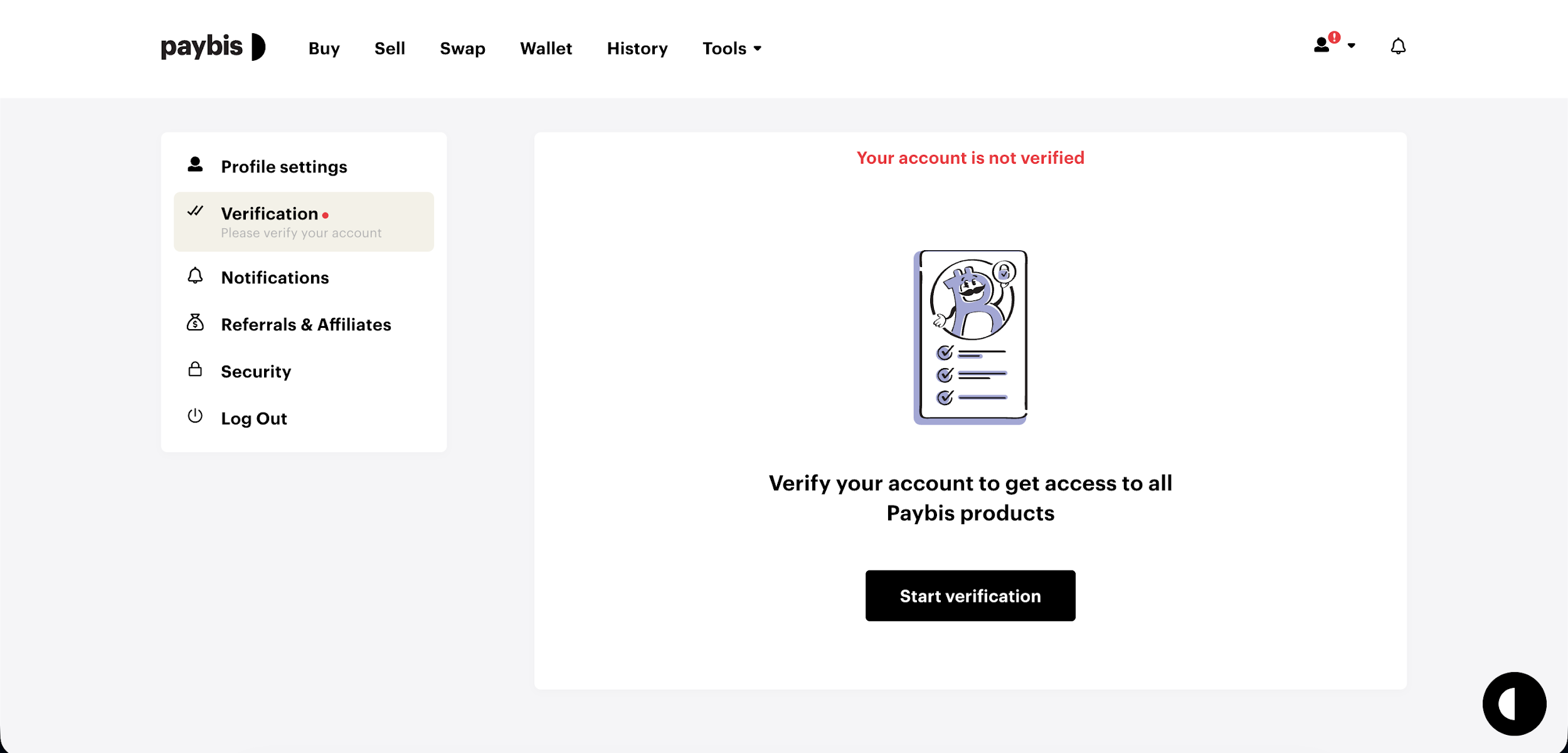
How Does Identity Verification Work for New Buyers?
Identity verification is fast and straightforward on regulated platforms. Here is what to expect.
Which IDs Are Valid for Age Verification?
Government-issued photo ID is required. Accepted documents include:
- Passport (accepted worldwide)
- National ID card
- Driver’s license
- Residence permit (in some jurisdictions)
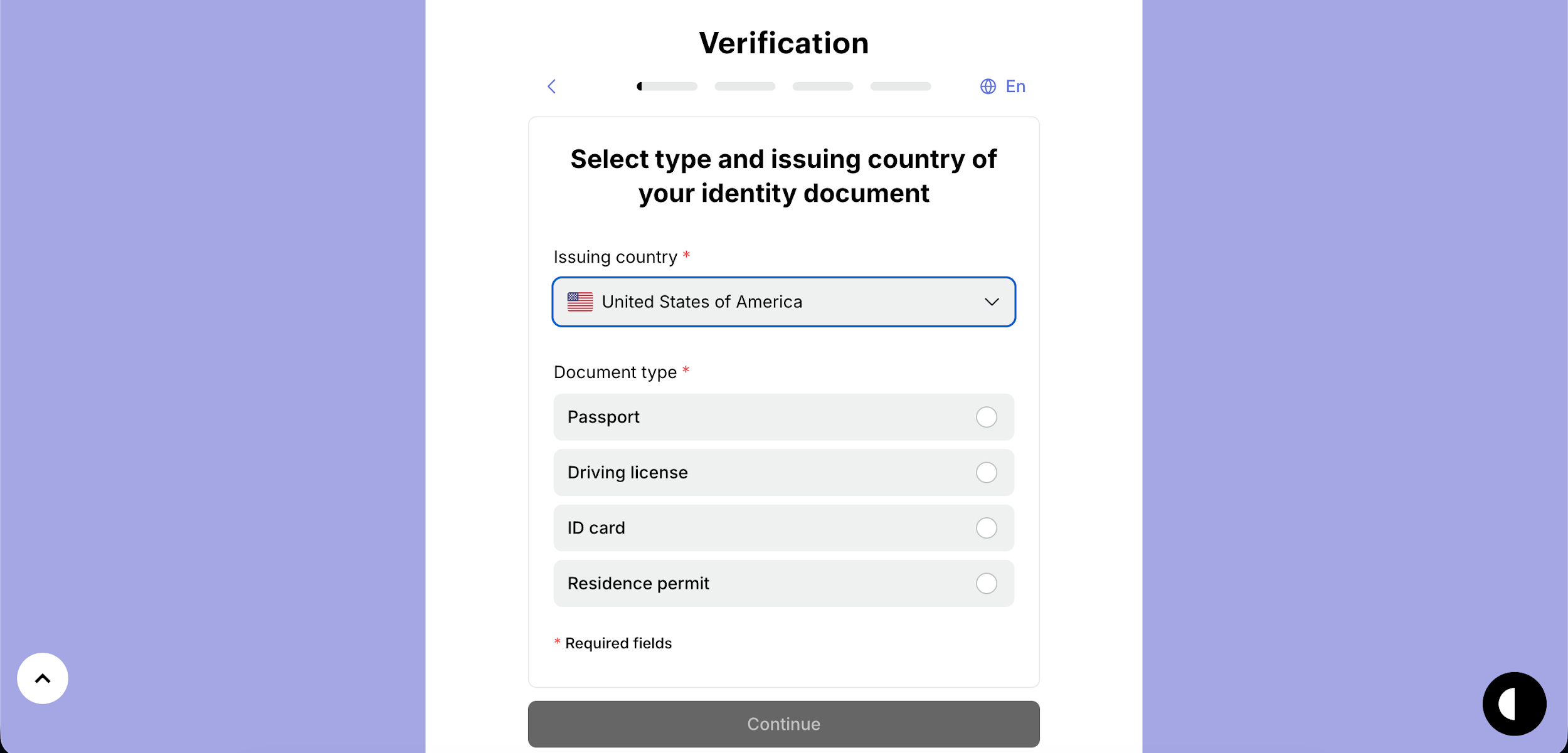
The ID must show your date of birth. Paybis accepts these documents for verification, according to the Paybis help center.
How Does Paybis Confirm Your Age and ID?
The Paybis verification process is automated. Here is how it works:
- Upload a photo of your government-issued ID.
- Take a selfie to confirm you are the person in the ID.
- The system checks the ID against global databases and confirms your age.
Paybis uses automated image recognition and database checks to verify identity in real time.
How Long Does Identity Verification Typically Take?
Paybis completes automated identity verification in about 2 minutes for most users.
Fast verification does not mean less secure. The system is designed to approve legitimate users quickly while flagging suspicious activity for manual review.
What Are the Key Rules for Minors Buying Digital Assets?
If you are a parent or guardian, here is what you need to know before buying crypto for a child.
How Do You Buy Crypto on Behalf of a Minor?
The adult buys in their own name and holds the crypto for the child. The adult owns the account and carries the legal responsibility. With a Paybis custodial wallet, Paybis holds the private keys.
Private keys are the cryptographic codes that prove ownership of crypto. Whoever controls the private keys controls the crypto. Paybis provides a custodial wallet, which means Paybis holds the private keys on the account holder’s behalf. The parent controls the account, and the child does not have independent access.
This structure protects the child. It prevents them from making irreversible mistakes, such as sending crypto to the wrong address or falling for a scam. It also ensures the adult can manage the asset responsibly until the child reaches 18.
Are Crypto Gifts Taxable for Minors?
Tax rules vary by country. In the US, the annual gift tax exclusion is $19,000 in 2026 per recipient, per year, according to the IRS gift tax FAQ. Gifts within that amount have no tax implications for the giver. If you gift more than $19,000 to one person in a year, you must file IRS Form 709.
Gifting crypto is not a taxable event for the giver. You do not realize capital gains or losses when you gift crypto. But when the minor later sells, converts, or disposes of the gifted crypto, capital gains taxes may apply. The minor is responsible for reporting gains and paying any taxes owed.
What Should You Ask Before Buying Crypto for a Child?
Before you buy crypto for a child, ask yourself these five questions:
- Do you understand the tax implications? Gifting crypto may trigger reporting requirements. Selling crypto may trigger capital gains taxes.
- Are you prepared to manage the private keys? Whoever controls the account controls the crypto. If you lose access, the crypto is gone.
- Do you know the fees? Paybis shows all fees before you confirm. Service fee starts from 1.49%, processing fee is 4.5-8.5% for card transactions over $50, and network fee varies by blockchain demand.
- Is the platform regulated? Paybis is registered with FinCEN in the US and FINTRAC in Canada. Full compliance credentials are listed in the closing section, along with its 4.2 rating across 33,438 Trustpilot reviews.
- What happens if the platform fails? Regulated platforms are required to protect customer funds. Unregulated platforms have no such obligation.
Here is what a $500 Bitcoin purchase looks like on Paybis after your first transaction:
| Fee Component | Rate | Amount |
|---|---|---|
| Service Fee | 1.49% | $7.45 |
| Processing Fee | 4.5-8.5% | $22.50-$42.50 |
| Network Fee | Variable | ~$1.50-$5.00 |
| Total | ~$531.45-$554.95 |
The first card purchase of each cryptocurrency has 0% service fee. You still pay processing and network fees. All fees are shown before you confirm, so there are no surprises.
Ready to Buy Crypto for a Child?
Paybis is a crypto payment gateway for adults who want to buy crypto with a card and see the total cost before they confirm. Paybis has operated since 2014 with no security breaches, is PCI DSS Level 1 compliant, and serves users in 180+ countries with 35 payment methods and 90+ cryptocurrencies.
Paybis is registered with FinCEN in the US (31000272911973) and FINTRAC in Canada (C100000646). As of 10 November 2026, Paybis has 33,438 Trustpilot reviews with a rating of 4.2 or “Great.”
Create a Paybis account to buy Bitcoin, complete automated identity verification, and confirm your total cost at checkout. Fees start from 1.49%.
Key Terminology
- Identity verification: The process of confirming your age and identity using a government-issued photo ID and a selfie. Regulated platforms are required by Anti-Money Laundering laws to verify identity before allowing purchases.
- Custodial account: An account where an adult (the custodian) manages crypto on behalf of a minor (the beneficiary). The adult controls the account, and with a custodial wallet the platform holds the private keys.
- Private keys: The cryptographic codes that prove ownership of crypto. Whoever controls the private keys controls the crypto.
- Network fee: The cost miners charge to process transactions on the blockchain. This fee varies based on network demand and is not controlled by Paybis.
- Wallet: A digital account where your crypto is stored. Paybis provides a custodial wallet, meaning Paybis holds the private keys on your behalf.
FAQ
Can You Buy Crypto Under 18?
No. You must be 18 to buy crypto on regulated platforms. The only lawful way for a minor to hold crypto is through a parent or guardian who buys and manages it on their behalf, or receives crypto as a gift where local law permits. Some platforms offer parent-supervised accounts, but the adult remains the legal account holder.
Can a 16 Year Old Buy Crypto?
No. A 16-year-old cannot pass identity verification on a regulated platform because the system checks date of birth. The lawful path is a parent or guardian who buys crypto in their own name and holds it for the child.
Can a Parent Buy Crypto for a Minor?
Yes. A parent can buy crypto and hold it in their own account for a minor. The adult owns the account and carries legal responsibility. The minor does not control the account until they reach 18.
Are There Apps to Buy Crypto Under 18?
Regulated platforms do not allow minors to buy crypto without identity verification. Most apps or websites that promise to let a minor buy crypto without ID are unregulated and high-risk. These platforms often steal funds or misuse identity data.
What Happens If I Lie About My Age?
If you falsify your age to bypass identity verification, regulated platforms will reject your account when they detect the discrepancy. Regulated platforms suspend or close accounts that violate the 18+ requirement. You will lose access to any funds in the account, and you may be permanently banned from the platform.
Disclaimer: Don’t invest unless you’re prepared to lose all the money you invest. This is a high‑risk investment and you should not expect to be protected if something goes wrong. Take 2 mins to learn more at: https://go.payb.is/FCA-Info