How to Choose a Regulated Crypto Exchange
- A regulated exchange holds a licence or authorisation from a financial regulator, which is a higher bar than a simple registration.
- In the EU, the credential that matters is MiCA CASP authorisation, and the grandfathering window for unlicensed platforms closes on July 1, 2026.
- You can verify any exchange’s status yourself in minutes using public registers like ESMA, FinCEN, and the FCA.
- Regulation forces an exchange to keep client funds separate from its own and to show every fee before you confirm.
- If you already want a licensed place to start, you can buy crypto on Paybis with a card or bank transfer in minutes.
Picking a crypto exchange used to come down to two things: the fees and the list of coins it carried. In 2026, a third question sits above both of them. Is this platform actually licensed to operate where you live?
For European users, that question now has a hard deadline attached. On July 1, 2026, the grandfathering window that let unlicensed crypto platforms keep serving EU clients closes for good. After that date, an exchange either holds a full licence or it has to stop serving you.
This guide walks you through how to tell a regulated exchange from one that only looks the part: which licences to look for, and how to verify them yourself in a couple of minutes. If you already know what you want and just need a licensed place to start, you can buy crypto on Paybis with a card or bank transfer.
What Makes a Crypto Exchange “Regulated”?
A regulated crypto exchange has received formal authorisation from a financial regulator to offer crypto services in a given country. To earn it, the company has to pass a full review that goes well beyond a basic registration.
People use the word “regulated” loosely, so two things often get blurred together.
- Registration usually means a company notified a regulator that it exists and meets basic anti-money laundering rules. It is a lighter touch.
- Authorisation means a regulator dug into the company’s finances and security before granting a licence to operate. It is the higher standard.
This gap has real consequences. A platform with only a legacy registration may give you none of the fund-protection guarantees that a fully authorised exchange has to provide by law. The crypto license glossary entry breaks down what a licence actually covers and who issues it.
Why Does Choosing a Regulated Exchange Matter Right Now?
The timing matters because the EU’s transitional period for unlicensed crypto platforms ends on July 1, 2026. ESMA confirmed in April 2026 that there will be no extension.
For most of the past decade, plenty of crypto platforms operated in Europe under national rules without a unified licence. MiCA ended that arrangement. Firms were given a grandfathering window to either secure a full licence or wind down, and that window is now closing.
For users, the fallout is concrete:
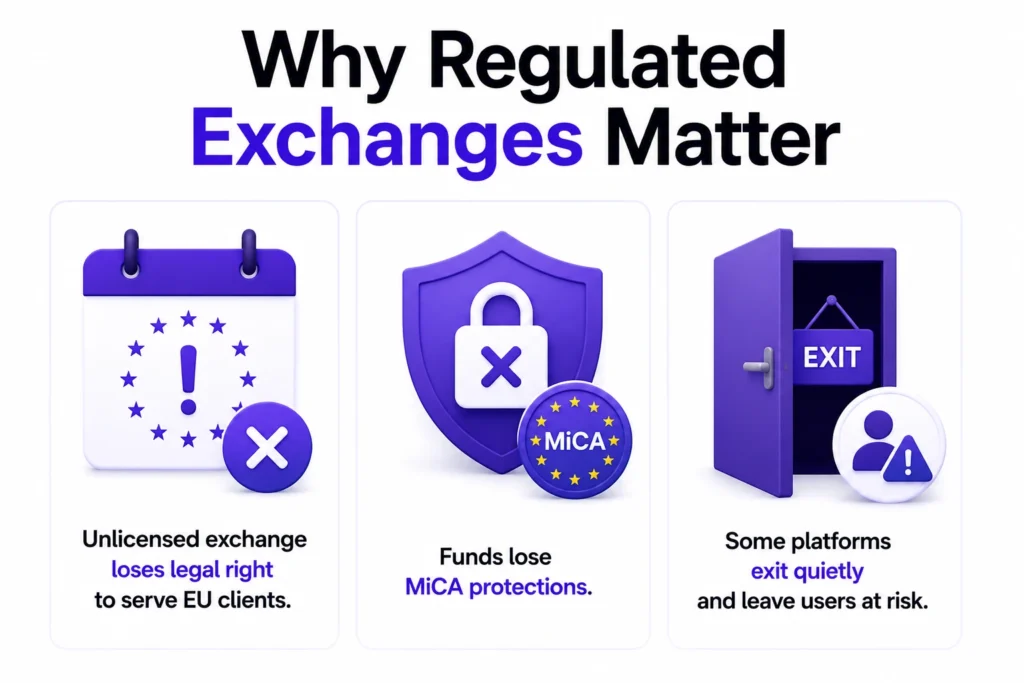
- An unlicensed exchange loses the legal right to serve EU clients once its national window closes. Several countries set earlier dates than the July backstop.
- Your funds lose MiCA protections if they sit on a platform that never obtained authorisation.
- Some platforms will exit quietly rather than complete the process, which can leave users scrambling to withdraw.
So before you deposit anything, confirm the exchange holds a current authorisation. The CASP-authorised exchanges guide and the MiCA-licensed exchanges guide both carry the running list of platforms that made the cut.
How Do You Check If an Exchange Is Actually Regulated?
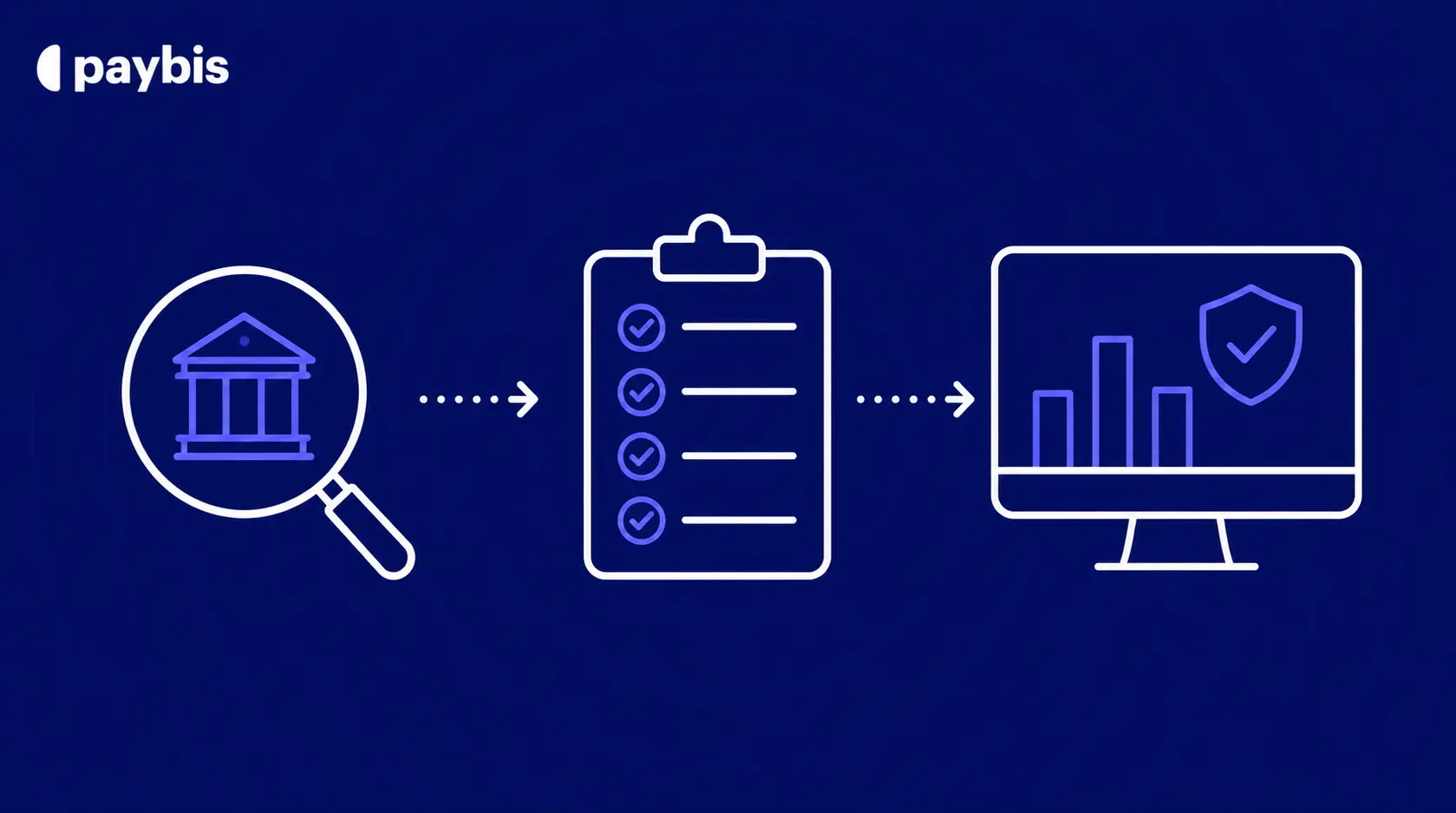
You verify an exchange by searching the public register kept by the relevant financial regulator. Every legitimate authorisation appears on an official, searchable list.
You do not have to take a platform’s word for it. Regulators publish their registers, and checking takes a couple of minutes.
- In the EU: The ESMA interim CASP register lists every exchange with full MiCA authorisation. Search by name at esma.europa.eu. If a platform claims EU authorisation and you cannot find it there, that is your cue to dig further.
- In the US: FinCEN publishes its Money Services Business register online. State-level Money Transmitter Licences are listed by each state’s banking department.
- On the exchange itself: A genuinely licensed platform shows its credentials clearly, including the regulator that issued the licence and a reference number you can look up. When that information is missing from the footer or a regulatory page, treat the absence as a warning.
A licence rarely covers everything a platform does. MiCA splits crypto services into ten separate categories, and a platform can hold one and lack another. It might run a licensed exchange and still pass your coins to a third party for storage. So check which services the licence covers before you trust it. The CASP glossary entry explains how those categories work.
What Licences Should You Look For in Your Region?
The licence that counts depends on where you live. In the EU, it is MiCA CASP authorisation. In the US, it is FinCEN registration backed by state licences, and in the UK, it is FCA registration.
Regulation is regional, so the right credential changes with your location.
- European Union: MiCA CASP authorisation is the baseline. Once a platform holds it in one member state, that authorisation passports across all 27 EU countries. The MiCA glossary entry covers how the framework fits together.
- United States: Look for FinCEN MSB registration at the federal level, backed by Money Transmitter Licences in the states where the platform operates.
- United Kingdom: The FCA maintains a register of crypto firms permitted to operate. (The UK/FCA section of this content requires compliance sign-off before publishing.)
If you want the wider picture of how these regimes compare across countries, the crypto exchange regulations guide and the MiCA content hub go into more depth.
What Protections Does a Regulated Exchange Give You?
A regulated exchange is legally bound to safeguard your money and treat you fairly. Those obligations are the entire point of choosing one.
Authorisation is worth chasing because of what it forces an exchange to do. Under MiCA, an authorised platform must:
- Keep client funds separate from the company’s own assets, so your money is not mixed with operating capital.
- Show all fees upfront before you confirm a transaction, with no surprises after the fact.
- Run a formal complaints process that the regulator oversees.
- Hold minimum capital reserves as a financial cushion.
- Submit to ongoing supervision rather than a one-off check at sign-up.
None of these are guaranteed on a platform operating without authorisation. That is the real value of the licence: it turns “trust us” into a set of enforceable rules. When you are ready to act on that, you can buy Bitcoin with a bank account on a licensed platform in a few minutes.
What Red Flags Signal a Risky Exchange?
The clearest warning signs are missing licence details and a platform you cannot find on any official register. Pressure to deposit quickly is another.
A few signals should make you stop and check.
- No verifiable licence. The platform names a regulator but cannot be found on that regulator’s register.
- Vague credentials. Phrases like “fully compliant” with no licence type or reference number behind them.
- Withdrawal friction. Stories of long holds or extra hurdles when users try to take their money out.
- Pressure tactics. Urgency around bonuses or limited-time deposits that push you to skip your own checks.
A single red flag might be innocent on its own. Either way, slow down and verify before you move any funds.
How Do Fees and Payment Methods Factor In?
Fees and payment options decide which licensed exchange suits you best. They only start to matter once you have confirmed the platform is regulated.
Once you have a shortlist of platforms that pass the licence check, the practical differences come down to cost and convenience.
- Service fee versus processing fee. Many exchanges quote a low headline fee, then add a separate card-processing charge. Read both before you commit.
- Payment methods. A card clears faster than a bank transfer, and each method carries its own cost. The right one depends on how quickly you want delivery.
- First-purchase terms. Some platforms reduce or remove their own fee on a first buy. On Paybis, the first time you buy each crypto with a card, Paybis takes nothing on top, and the standard service fee is 1.49% after that.
A regulated platform makes the comparison easier. It has to show you the full cost before you confirm, so you weigh real numbers instead of guessing.
Where Does Paybis Fit In?
Paybis is a licensed on and off-ramp. It is built for buying crypto and sending it to a wallet you control. Day trading is a different job for a different kind of platform.
If you want a licensed place to buy and move crypto, Paybis is worth a look, with credentials you can verify yourself:
- MiCA CASP authorisation from the Bank of Latvia, which passports across all 27 EU member states.
- PSD2 Payment Institution (PI) licence, also from the Bank of Latvia.
- FinCEN registration in the US. Paybis also holds FINTRAC registration and a VASP registration in Poland.
Paybis supports 90+ cryptocurrencies and 22 payment methods, and card purchases usually reach your wallet within minutes. You can buy crypto and send it straight to a wallet you control, with every fee shown before you confirm.
Paybis works best as a way to buy crypto and cash out again. If that is what you need, it fits well.
Bottom Line
Choosing a regulated crypto exchange comes down to one habit: verify before you deposit. Find the regulator, then search its register for the platform’s licence and reference number. That single check filters out most of the platforms you would not want to trust with your money.
The rest is down to preference. Once you have a shortlist of licensed options, compare them by cost and delivery speed, then pick the one that best fits how you actually use crypto. If you want a licensed on-ramp that shows every fee upfront, you can buy crypto on Paybis with a card or bank transfer in minutes.
About Paybis
Paybis is a licensed cryptocurrency exchange and on and off-ramp, operating since 2014. It holds MiCA CASP authorisation and a PSD2 Payment Institution licence from the Bank of Latvia. On top of that, it carries FinCEN registration in the US. It also holds FINTRAC registration and a VASP registration in Poland.
The platform serves 7 million users across 180+ countries and supports 90+ cryptocurrencies through 22 payment methods. To date it has handled over $5.5 billion in volume.
On Trustpilot, Paybis holds a 4/5 rating across more than 30,000 reviews. Its mobile apps score 4.6 on the Apple App Store and 4.4 on Google Play. Live chat runs 24/7 and usually replies within 1 to 2 minutes. Paybis is available on web and on mobile through iOS and Android.
FAQ
How do I know if a crypto exchange is regulated in my country?
Search the public register kept by your financial regulator. In the EU, that is the ESMA interim CASP register. In the US it is FinCEN’s MSB register, along with state Money Transmitter lists. UK users can check the FCA register. A legitimate exchange will also show its regulator and a licence reference number on its own site.
Does a regulated exchange guarantee my funds are safe?
Regulation lowers your risk, though it never removes it completely. An authorised exchange must segregate client funds and submit to oversight, which protects you against many forms of mismanagement. It cannot protect you from losing your own login details or from market price swings, so good personal security and your own wallet still matter.
What is the difference between a registered and an authorised exchange?
Registration usually means a company has notified a regulator and meets basic anti-money laundering checks. Authorisation means the regulator reviewed the company in depth and granted a licence to operate. Authorisation is the stronger standard, and it carries fund-protection obligations that a basic registration leaves out.
Why is the July 1, 2026 deadline important when choosing an EU exchange?
July 1, 2026 is the date the EU’s transitional period for unlicensed crypto platforms ends. After that, any exchange serving EU clients without full MiCA authorisation is operating outside the law and is expected to wind down. Choosing a platform that already holds authorisation avoids any disruption to your access.
Disclaimer: Don’t invest unless you’re prepared to lose all the money you invest. This is a high‑risk investment and you should not expect to be protected if something goes wrong. Take 2 mins to learn more at: https://go.payb.is/FCA-Info