How Many Shiba Inu Coins Are There?

If you’ve ever dipped your toes into the world of cryptocurrency, chances are you’ve heard of Shiba Inu. This playful, dog-themed token has captured the imagination of investors and meme-lovers, but behind its cute exterior lies a burning question: how many Shiba Inu coins are actually out there?
In this article, we’ll break it down in simple, easy-to-understand terms, so you can get a clear picture of just how big (or small) the Shiba Inu universe really is.
Key Takeaways
- Shiba Inu was originally minted with 1 quadrillion coins, but only about 500 trillion are currently in circulation, affecting scarcity and potential value.
- SHIB’s burn system removes coins from circulation over time, which can increase scarcity and potentially support price growth.
- Shiba Inu was launched as a fair launch with no pre-mine, making it accessible to a wide range of investors and encouraging decentralization.
- A small number of wallets, including early supporters, hold a significant portion of SHIB, which can affect price and volatility.
- Despite its popularity, Shiba Inu’s low price per coin is tied to its enormous supply, making extreme price targets like $1 unrealistic under current market conditions.
Table of contents
Everything You Need to Know About Shiba Inu
Shiba Inu (SHIB) is a decentralized, community-driven cryptocurrency that quickly rose to fame and popularity. Built on the Ethereum blockchain, SHIB is more than just a meme, it gives access to a growing ecosystem of DeFi and related services, allowing users to participate in decentralized finance, staking, and trading.
What truly sets Shiba Inu apart is its unusually high token supply. Despite the large number of tokens, SHIB’s market capitalization has placed it among the top meme coins, and its price continues to fluctuate in response to market trends and community activity.
How Many Shiba Inu Coins Are There: Total Supply Explained
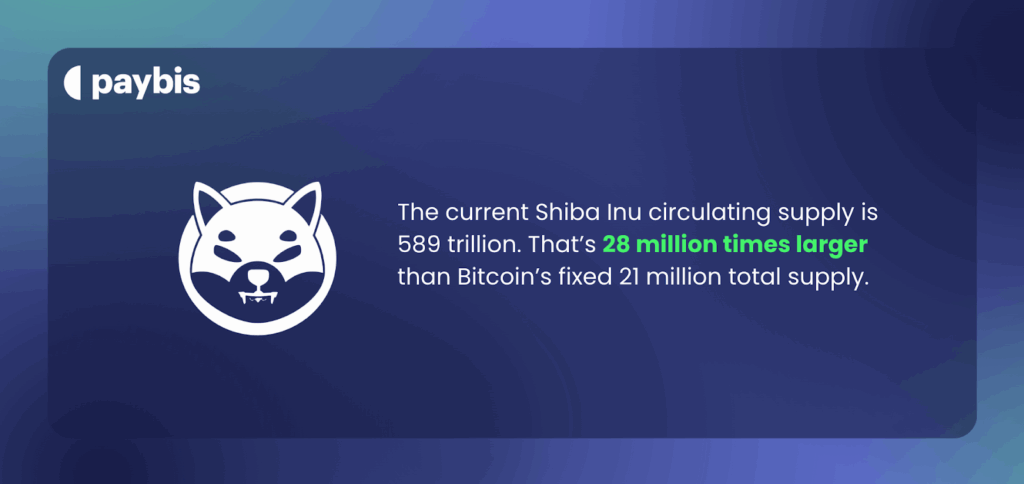
The total supply of a cryptocurrency refers to the total number of coins that will ever exist, and for Shiba Inu, this is set at 589 trillion coins. The initial supply was a mind-bending 1 quadrillion tokens, but has since been reduced.
Comparing Shiba Inu’s supply to other major cryptocurrencies helps put its tokenomics in perspective. For example, Dogecoin and Bitcoin have very different supply mechanisms and limits.
This phenomenon causes SHIB’s supply to be relatively high compared to other mainstream cryptocurrencies, which has led some investors to speculate if the coin can maintain its value over the long term.
So, how will this influence Shiba Inu price, and what drives investors to invest in the coin?
If you are wondering how other cryptocurrencies compare, here is another article.
The Role of Shiba Inu’s Burn Mechanism
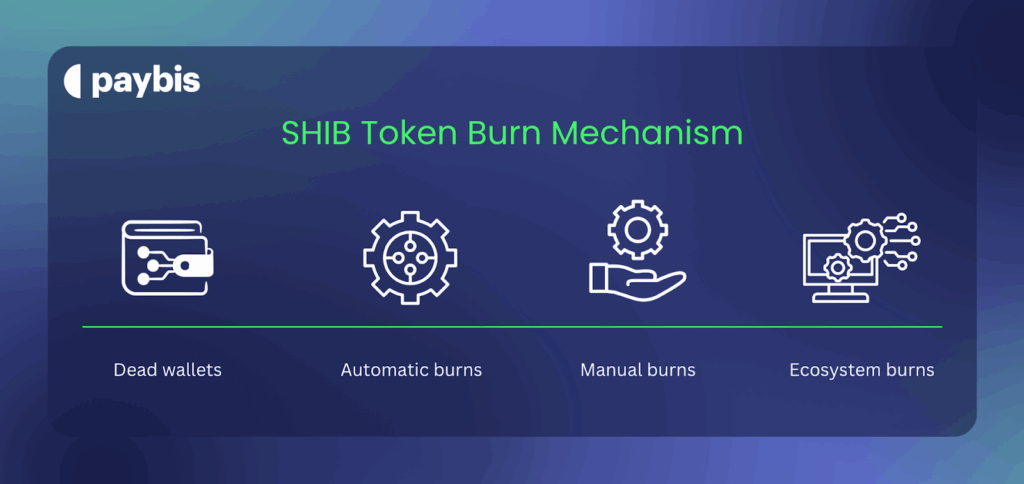
Shiba Inu also has a burn mechanism designed to remove a small percentage of coins from circulation with each transaction. This is achieved by transferring a portion of tokens to a “burn wallet” or “dead wallet,” which is essentially an address that no one has access to.
SHIB token burns are tracked online through platforms like Shibburn, providing transparency to the community and allowing real-time monitoring of supply changes.
In 2021, Vitalik Buterin sent 410 trillion SHIB tokens to a dead wallet, effectively destroying them. This burn address, associated with Vitalik Buterin, is now the largest holder of Shiba Inu, containing around 410.43 trillion SHIB, which is about 41.04% of the total supply. By burning 410 trillion SHIB tokens, Vitalik Buterin permanently removed them from circulation.
Shiba Inu has burned more than 400 trillion tokens since its launch, which has reduced the total supply by a significant amount. These burns have directly impacted the total circulating supply, decreasing the number of tokens actively available in the market. This burn mechanism is designed to create scarcity and potentially increase the value of the tokens.
Burn events are also organized, which involve community members voluntarily sending their Shiba Inu tokens to the burn wallet, which can help to reduce the total supply of the token further. The SHIB community democratically decides when to burn tokens, with those holding the most SHIB tokens having the most voting power. These community-led burns make SHIB deflationary, increasing its scarcity over time.
The Shiba developers also launched a coin-burning portal in response to requests from the community to reduce the circulating supply. Token holders are incentivized to burn their SHIB tokens and receive RYOSHI tokens as a reward.
Shiba Inu has been making headlines with the launch of its new burn mechanism – the “Bone Token Burn.” This will involve burning a portion of the newly launched BONE token, a governance token used to vote on proposals related to the ShibaSwap decentralized exchange.
Furthermore, Shiba Inu has recently announced a partnership with a leading blockchain analytics firm to monitor and analyze the burn wallet transactions.
The Role of the SHIB Community
SHIB holders are not just passive investors – they actively participate in community initiatives, organize token burns to help manage the SHIB supply, and contribute to governance decisions that influence the future of the token.
This SHIB community has also played a role in the creation of innovative projects in the Shiba Inu ecosystem, like ShibaSwap, a decentralized exchange (DEX) that allows users to trade and stake their inu coins, and Shiba Eternity, a play-to-earn game that further expands the utility of SHIB tokens.
How Many Shiba Inu Holders Are There
Shiba Inu’s distribution strategy is primarily based on a community-driven approach that emphasizes decentralization and inclusivity. The project’s creators designed it to be a “meme token” that could capture the same playful and irreverent spirit as Dogecoin, another popular cryptocurrency.
As a result, Shiba Inu was initially distributed through a process of “fair launch,” in which anyone could participate and acquire tokens without the need for a pre-mine or initial coin offering (ICO). This helped to ensure that the token was accessible and open to all rather than being controlled by insiders or a small group of early investors who would pump and dump.
Furthermore, Shiba Inu has implemented different initiatives and partnerships to support its distribution and adoption. For example, the project has launched a ShibaSwap liquidity program that incentivizes users to provide liquidity for various Shiba Inu-related token pairs.
Additionally, Shiba Inu has partnered with various projects and exchanges to enable wider exposure for the token, including on popular platforms such as Binance, BitMart, and OKEx. Shiba Inu’s ownership structure continues to evolve, shaped by ongoing community initiatives and growing exchange participation.
A significant portion of Shiba Inu’s supply remains concentrated in a few wallets. In fact, the ten largest SHIB holders control just under 62% of SHIB’s total supply. Those with the most SHIB tokens have more influence in community decisions, especially regarding token burns and supply reduction efforts, which can affect the token’s scarcity and value.
According to Etherscan, which tracks the number of unique addresses holding SHIB, there were over 1,309,717 SHIB holders as of February 2023. As of late 2025, more than 1.4 million wallet addresses hold Shiba Inu, reflecting its popularity among retail participants. It’s important to note that this number is subject to change as new holders enter or leave the market.
Who Holds the Most Shiba Inu In The World?
The identity and SHIB wallet address of the person who currently holds the most Shiba Inu tokens are difficult to trace and likely intentionally kept anonymous. It is estimated that this individual holds around 13% of the total supply of Shiba Inu, which is a significant amount considering the project’s market cap and overall popularity.
Interestingly, the person who previously held the most Shiba Inu tokens was none other than Ethereum co-founder Vitalik Buterin.
However, Buterin made headlines earlier this year when he burned 90% of his Shiba Inu tokens, worth around $6 million, which were sent to him as a gift by the Shiba Inu team. He then donated the remaining 10% to various charitable causes, including COVID-19 relief efforts in developing countries.
Conclusion
Shiba Inu is a relatively new cryptocurrency that has gained significant popularity among investors looking to invest in the digital asset market. Although Shiba Inu’s total supply of 1 quadrillion might appear to be a challenge for long-term value appreciation, its burn mechanism can potentially increase its scarcity and market value.
If you want to be part of this community-driven project, buy Shiba Inu from Paybis directly to your SHIB wallet.
However, it is important to DYOR to weigh these factors against your personal investment goals and risk appetite and stay up-to-date with current trends before investing in Shiba Inu. With Paybis, you can use the Shiba Inu calculator to instantly check how many SHIB you will get for the amount you want to invest.
FAQ
How many Shiba Inu coins are there in the world?
The current circulating supply is 589 trillion SHIB tokens. The creators initially minted one quadrillion coins, with half locked away in Uniswap. Unlike Bitcoin, the supply of SHIB is theoretically unlimited, but its rate of inflation decreases over time due to a built-in deflationary mechanism.
What is the current price of Shiba Inu Coin, and how has it performed historically?
The price of the Shiba Inu coin (SHIB) is known to be highly volatile and can fluctuate rapidly based on market demand and supply. Historically, SHIB has seen both periods of rapid growth and significant declines.
Price fluctuations and trading volume are key factors influencing the historical and current price performance of SHIB, as they reflect market sentiment, investor activity, and overall liquidity.
What impact does the circulating supply of Shiba Inu Coins have on its price and market value?
A higher circulating supply could increase selling pressure and lower the price, while a lower supply could increase demand and price. However, it’s worth noting that the price of cryptocurrencies is subject to various other factors, such as market trends, investor sentiment, and regulatory changes, which can also affect their value.
Will Shiba Inu (SHIB) reach $1?
Shiba Inu (SHIB) will not go to $1 anytime soon because, currently, it has a market cap of about 7.27 billion at a price of $0.00001. To reach $1, the price has to surge by 10,000,000%, taking the market cap all the way up to over $727 trillion, which is greater than the economy of all countries combined.
Disclaimer: Don’t invest unless you’re prepared to lose all the money you invest. This is a high‑risk investment and you should not expect to be protected if something goes wrong. Take 2 mins to learn more at: https://go.payb.is/FCA-Info