Is Bitcoin a Good Investment? An Advice-Free Analysis

- Bitcoin has delivered 100x+ returns over 10+ years but experienced six major crashes losing 77-93% of value
- Investors who bought any previous cycle top and held 4+ years made profits, but many sold at losses during crashes
- Bitcoin’s performance depends entirely on your entry point and holding period, with timing determining returns from +22,000% to -84%
- Past recovery patterns don’t guarantee future results, especially as Bitcoin matures and institutional participation changes dynamics
- The answer to “is Bitcoin a good investment” depends on your risk tolerance, timeline, and ability to hold through 80% drawdowns
You might have heard about a guy who bought Bitcoin at $3,000 in 2018 and sold it at $60,000 in 2021. Twenty times return in three years makes you think, maybe Bitcoin is the investment opportunity you missed.
Then you see the current price at $67,000, down from $126,000 just months ago. A 47% drop. Stories of people losing half their money. Now you’re not so sure.
The question “Is Bitcoin a good investment?” has no simple answer. The data shows both extraordinary gains and devastating losses, depending on when people bought and sold. Some investors made life-changing money. Others lost their savings.
Table of contents
- What Actually Defines an Investment (And Why Bitcoin Complicates This)
- Is Bitcoin Bullish? A Look at Long-Term Historical Performance
- What do Bitcoin Skeptics Say About Its Volatility and Risk?
- What Happened to People Who Bought Bitcoin at Different Times
- Why Bitcoin’s Past Performance Might Not Repeat
- What Changed Between Early Bitcoin and Today’s Bitcoin
- How Bitcoin Compares to Traditional Investment Returns
- What Percentage of Bitcoin Holders Made vs Lost Money
- Bottom Line
What Actually Defines an Investment (And Why Bitcoin Complicates This)
Technically, Bitcoin is an investment if you buy it expecting to profit from price appreciation. However, it generates no cash flows, pays no dividends, and produces nothing. Traditional investment analysis breaks down because Bitcoin’s value comes purely from what someone else will pay later.
Stocks represent ownership in companies that generate earnings. For example, bonds pay interest, and real estate produces rental income. Traditional investments create value through underlying business operations or productive use.
Bitcoin does none of this.
When you buy Bitcoin, you own digital code on a blockchain. It doesn’t produce earnings or pay you to hold it. The only way you profit is if someone pays you more than you paid for it.
This makes Bitcoin more like gold than stocks. Both derive value from scarcity, demand, and collective agreement about worth. Neither generates cash flows that justify a specific price through discounted cash flow analysis.
But Bitcoin advocates argue it does have utility. The common arguments:
- Bitcoin enables censorship-resistant transactions
- It provides an alternative to government-controlled money
- Bitcoin offers 24/7 global settlement, while maintaining absolute scarcity (21 million coin cap).
Whether those utilities justify any particular price remains debatable. The market decides daily through billions of dollars in trading volume.
If you think the recent Bitcoin crash is an opportunity to buy, you can do it with a credit card or PayPal right now.
Is Bitcoin Bullish? A Look at Long-Term Historical Performance
Bitcoin has delivered the highest returns of any major asset class over the past decade. $100 invested in 2013 grew to over $22,000 by 2021’s peak. Even buying at the 2017 top ($19,783) and holding to 2025’s peak ($126,000) returned 6.3x in 8 years.
The numbers make the Bitcoin bulls’ case simple. Let’s look at what happened so far.
Historical return examples:
- Bought at $100 in 2013 → Sold at 2021 peak ($69,000): 69,000% return
- Bought at $1,000 in 2017 → Sold at 2021 peak: 6,800% return
- Bought at 2018 bottom ($3,122) → Sold at 2021 peak: 2,100% return
- Bought at 2022 bottom ($15,476) → Sold at 2025 peak ($126,000): 714% return
No traditional investment comes close to these numbers. The S&P 500 returned roughly 200% total from 2013 to 2024. Bitcoin returned over 20,000% in the same period for someone who held.
Even people who bought at terrible times made money if they held long enough. If you bought Bitcoin at the 2013 peak of $1,163 and hold eight years until 2021, you still would have made 59 times your money.
This creates the bull case: Bitcoin might crash 80%, but it always recovers to new highs. Every bear market ended. Every person who held through the pain eventually profited.
The pattern repeated six times: parabolic rally, crash, recovery, new all-time high. Bulls argue this cycle continues because Bitcoin’s fundamental properties haven’t changed. Fixed supply, increasing awareness, growing institutional adoption.
| Purchase Time | Price Paid | Sale at 2021 Peak | Return | Years Held |
|---|---|---|---|---|
| 2013 Top | $1,163 | $69,000 | 5,833% | 8 years |
| 2017 Top | $19,783 | $69,000 | 249% | 4 years |
| 2018 Bottom | $3,122 | $69,000 | 2,109% | 3 years |
| 2020 March | $3,800 | $69,000 | 1,716% | 1.5 years |
| 2021 Summer Dip | $29,000 | $69,000 | 138% | 5 months |
Bulls point to these numbers and say Bitcoin’s track record speaks for itself.
What do Bitcoin Skeptics Say About Its Volatility and Risk?
Bitcoin’s 77-93% crashes create catastrophic losses for poorly timed buyers. Someone who bought at 2021’s peak ($69,000) and sold in panic at 2022’s bottom ($15,476) lost 78%. The volatility makes Bitcoin unsuitable for short-term capital or risk-averse investors.
Bitcoin skeptics’ case focuses on what has happened to real people in the past.
Consider Sarah, who bought $10,000 of Bitcoin in November 2021 when it was at $65,000. By December 2022, her investment was worth $2,400. Let’s say she needed money for a medical emergency and sold at a 76% loss. Bitcoin eventually recovered, but that didn’t help Sarah.
Or consider Mike, who bought Bitcoin at $19,000 in December 2017. He watched it fall to $3,200 over the next year. The paper losses mounted, and stories of Bitcoin dying flooded the news. Mike sold in March 2019 at $4,000, locking in an 80% loss. Bitcoin reached $69,000 two years later, but Mike was long gone.
These losses are real:
- 2011 crash: 93.6% drawdown ($31.50 → $2.01)
- 2013 crash: 86.9% drawdown ($1,163 → $152)
- 2017-2018 crash: 84.2% drawdown ($19,783 → $3,122)
- 2021-2022 crash: 77.6% drawdown ($69,000 → $15,476)
- 2025-2026 crash: 47%+ drawdown so far ($126,000 → $67,000)
Skeptics argue several points:
1. Most people can’t hold through crashes: Data shows most Bitcoin was sold during bear markets, not tops. Human psychology makes it nearly impossible to watch 80% losses without panicking. The theoretical gains from buying bottoms mean nothing if you sell in fear.
2. Timing matters enormously: If you go back in time and buy Bitcoin in January 2021 at $30,000, you’re up. If you buy it in November 2021 at $65,000, you’d have lost money for years. Traditional investments rarely punish your timing this severely.
3. No cash flows mean no floor: Stocks have earnings to anchor valuation, and bonds have guaranteed payments. Bitcoin’s price could theoretically go to any number, including zero, with no fundamental floor to catch it.
4. Regulatory risk remains unknown: Governments could ban Bitcoin, heavily restrict it, or tax it punitively. The regulatory environment keeps changing and creates an ongoing uncertainty.
5. The pattern might break: Bitcoin recovered from every crash so far. That doesn’t guarantee it will recover from the next one. Markets change, so patterns end.
Skeptics don’t argue that Bitcoin can’t make money. They argue it’s so volatile and risky that calling it an “investment” misleads people about the dangers involved.
It’s much harder to understand the usefulness of cryptocurrency if you’ve had the privilege of a functioning banking system and reasonable inflation rate your whole life, never needed to transfer money to family overseas and pay absurd fees and never dealt with unfair civil asset forfeiture.
TaylorR137 on Reddit
What Happened to People Who Bought Bitcoin at Different Times
Data suggests roughly 60-70% of Bitcoin holders are currently in profit at any given time during a bull market, but that percentage drops to 10-30% during bear market bottoms. The average Bitcoin holder’s experience depends entirely on when they bought and whether they held.
Let’s trace what happened to hypothetical investors who bought Bitcoin at different points.
Investor A: Bought in January 2017 at $1,000. They watched their investment rise to $19,783 by December 2017. Nineteen times their money in 11 months. Then the crash came. Bitcoin fell to $3,200 by December 2018. Their $10,000 investment was worth $32,000, still up 3x, but down 84% from peak.
If they held, Bitcoin recovered to $69,000 by November 2021. Their original $10,000 was now worth $690,000. But then came another crash. By November 2022, it was worth $154,760. Then recovery again to $126,000 in October 2025. Their $10,000 became $1.26 million.
Total gain: 12,500%. Time held: 8 years. But they endured two gut-wrenching crashes along the way.
Investor B: Bought in December 2017 at $19,000. The worst timing possible. They immediately watched their investment crash 84% over the next year. Their $10,000 became $1,600. Bitcoin then spent two years going nowhere, recovering slowly to $10,000 by late 2020.
The COVID crash in March 2020 dropped them back to $2,000. By November 2021, they finally broke even around $19,000, then saw Bitcoin reach $69,000. Their $10,000 was worth $36,000.
Then another crash. November 2022 brought them down to $8,000, below their original investment again. Recovery pushed them back to $66,000 by October 2025. Their $10,000 was worth $34,700.
Total gain: 247% over 8 years. But they spent most of that time underwater or barely profitable. The emotional toll was immense.
Investor C: Bought in November 2021 at $65,000. This investor bought near Bitcoin’s then-all-time high, after a year of media hype and institutional adoption stories. They immediately lost money. By November 2022, their $10,000 investment was worth $2,400.
They spent the next two years slowly recovering. By March 2024, they finally broke even as Bitcoin reached $65,000 again. By October 2025, they were up to $19,400 as Bitcoin hit $126,000. Then came the 2026 crash, bringing them back down to $10,300.
Total gain/loss: 3% over 4 years. They would have been better off in a savings account. And they endured massive emotional stress watching their investment lose 75% of its value.
Here is an illustrative table showing different types of Bitcoin investors, and how much their investment changed based on Bitcoin price:
| Investor | Buy Date | Price Paid | Current Value (Feb 2026) | Return | Experience |
|---|---|---|---|---|---|
| Early Bird | Jan 2015 | $200 | $335x | +33,400% | Huge gains, weathered crashes |
| Pre-Boom | Jan 2017 | $1,000 | $67x | +6,600% | Excellent returns, two major crashes |
| Peak Buyer | Dec 2017 | $19,000 | $3.5x | +252% | Long underwater period, eventual profit |
| Mid-Bull | Jul 2020 | $9,000 | $7.4x | +644% | Strong returns, one major crash |
| Top Buyer | Nov 2021 | $65,000 | $1.03x | +3% | Years underwater, barely breaking even |
| Recent Buyer | Nov 2024 | $95,000 | $0.7x | -29% | Currently losing money |
The data shows Bitcoin’s returns vary wildly based on entry timing. Early adopters saw life-changing gains, while recent buyers might be losing money for years.
Why Bitcoin’s Past Performance Might Not Repeat
Several factors suggest Bitcoin’s explosive growth phase might be ending: market maturation reduces % gain potential, institutional participation changes dynamics, regulatory environment evolves, and the base from which Bitcoin must grow is now trillions of dollars, not millions.
The past 15 years have shown that Bitcoin has risen from essentially zero to over $1 trillion market cap. But it gets exponentially harder: going from $1 to $100 is “only” 100x, but going from $10,000 to $1,000,000 is also 100x.
So the issue is, going from a $1 trillion market cap to $10 trillion requires absorbing as much new capital as going from zero to $1 trillion. And going from $10 trillion to $100 trillion would require more capital than exists in most major asset classes.
Specific reasons past patterns might not repeat:
1. Law of large numbers: Bitcoin delivered 100,000x returns because it started from a $0.01 base. A $1 trillion asset can’t deliver 100,000x returns without becoming worth more than the entire world economy. So the math doesn’t work. Future returns will likely be smaller absolute multiples.
2. Diminishing new buyer pool: Bitcoin went from 0% awareness to high awareness globally. The pool of “new money” that can discover Bitcoin and buy it shrinks as adoption increases. Explosive early growth came from a rapidly expanding user base. That expansion rate must slow.
3. Changed market structure: Early Bitcoin was dominated by retail investors and ideological believers who held through crashes. Now, institutions manage Bitcoin through ETFs and treasury positions. They have different incentives, risk management protocols, and selling triggers. This can increase volatility or prevent recoveries that worked before.
4. Regulatory risk crystallizing: Early Bitcoin operated in regulatory gray zones. Now, governments actively write Bitcoin-specific regulations. Some will be favorable. Others might restrict use, tax gains heavily, or create compliance burdens that reduce Bitcoin’s advantages.
5. Competition from other cryptocurrencies: Bitcoin’s early returns came partly from being the only cryptocurrency. Now, thousands of alternatives exist. Capital that might have flowed into Bitcoin can choose Ethereum, Solana, or other options. Market share isn’t guaranteed.
6. Potential technical limitations: Bitcoin’s 7 transactions per second limit hasn’t been solved at the base layer. Layer 2 solutions like Lightning Network help, but adoption remains limited. If Bitcoin can’t scale to handle mainstream transaction volume, its utility thesis weakens.
7. Changing macro environment: Bitcoin’s rise happened during an era of low interest rates, quantitative easing, and inflationary fears. Higher interest rates make risk-free returns more attractive. If the macro environment leans toward deflation or stable rates, Bitcoin’s monetary thesis weakens.
None of these guarantee Bitcoin won’t continue rising. But they suggest assuming past patterns repeat might be naive. The next 15 years could look very different from the last 15 years.
What Changed Between Early Bitcoin and Today’s Bitcoin
Bitcoin’s market structure changed completely. Early buyers dealt with sketchy exchanges and uncertain legality (with no institutional support). Today’s buyers access Bitcoin through regulated ETFs, custody solutions from major banks, and relative regulatory clarity. Volatility remains but infrastructure improved dramatically.
It’s no wonder that the situation has changed a lot in the last 13 years. Let’s look at the differences:
Then (2013-2017):
- Mt. Gox and small exchanges with frequent hacks
- No regulatory framework
- No institutional custody solutions
- Buying Bitcoin meant navigating complicated exchanges
- Zero mainstream financial services offered Bitcoin exposure
- Media coverage was mostly skeptical or dismissive
- Bitcoin was 100% retail-driven
- Total market cap peaked around $20-300 billion
Now (2024-2026):
- Spot Bitcoin ETFs are approved and trading on the NYSE
- Coinbase is a publicly traded NASDAQ company
- Major banks offer Bitcoin custody (Fidelity, BNY Mellon)
- Buying Bitcoin is as easy as opening a stock account
- Bitcoin is part of the treasury strategy for public companies (MicroStrategy, Tesla)
- Institutional allocations common (pension funds, endowments, beginning exposure)
- A regulatory framework exists, though still evolving
- Total market cap peaked around $2.4 trillion
| Aspect | 2013-2017 Bitcoin | 2024-2026 Bitcoin |
|---|---|---|
| Primary Buyers | Retail, tech enthusiasts | Institutions, ETFs, retail |
| Access Method | Direct exchange purchase, private keys | ETFs, custody services, exchanges |
| Regulatory Status | Uncertain, gray area | Defined, though evolving |
| Custody Solutions | DIY or risky exchanges | Bank custody, regulated options |
| Media Coverage | Skeptical, niche | Mainstream, accepted asset class |
| Market Cap | $1B – $300B | $300B – $2.4T |
| Volatility (Annualized) | 100-200% | 60-80% (still high but declining) |
| Recovery Time | 20-48 months | 24 months (trending shorter) |
I write this as somebody who already made >100x investing in BTC.
10-15 years ago BTC was a great high risk, asymmetric investment. It no longer is, and at this point I’ve significantly cut my exposure.
Another 100x, or even 10x, in BTC price would put the market cap at astronomical numbers that make no sense in comparison to other existing asset classes. There’s just no room left for hyper growth.
OKOpportunity93 on Reddit
These changes matter for several reasons:
- Easier entry, but more competition: Getting Bitcoin is simpler now, but that means prices likely reflect broader awareness. The “easy money” from being early might be over.
- Different holder behavior: Institutions managing risk through algorithms and committee decisions might sell Bitcoin faster during crashes than ideological early adopters. Or they might provide support in preventing deep crashes. The dynamics changed.
- Regulatory clarity helps and hurts: Clear rules make Bitcoin safer for large investors, potentially supporting prices. But regulations also remove some of Bitcoin’s original value proposition: operating outside government control.
- Professional management changes volatility patterns: When Bitcoin was retail-only, crashes followed pure panic psychology. Now, professional fund managers might exit based on volatility triggers or risk models, potentially creating different crash patterns.
You can see the volatility patterns in this chart, too:
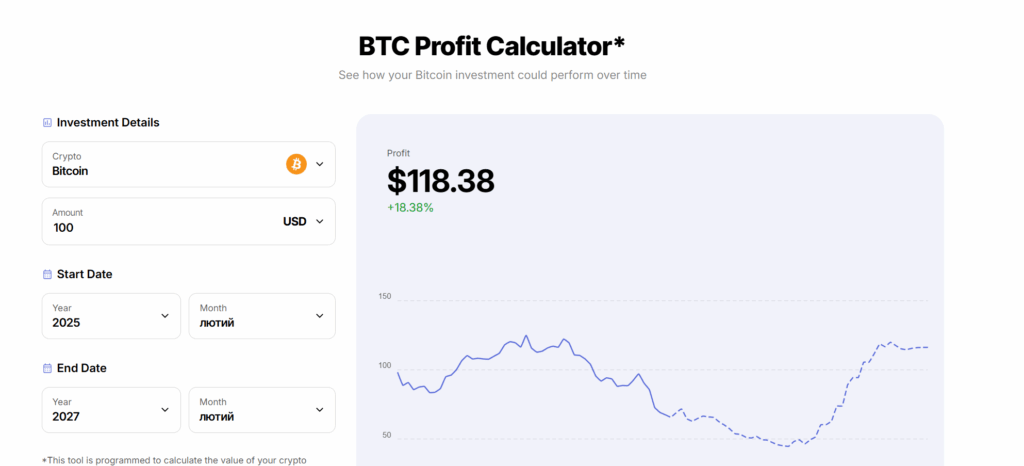
The infrastructure improvements make Bitcoin more accessible and “safer” in some ways. But they also might mean the era of 100x returns is over, replaced by more modest (but still significant) gains if Bitcoin continues growing.
How Bitcoin Compares to Traditional Investment Returns
Bitcoin vastly outperformed stocks over 10+ year periods but with dramatically higher volatility. The S&P 500 returned ~200% from 2013-2024 with 12-15% annualized volatility. Bitcoin returned over 20,000% in the same period with 100-200% annualized volatility. Risk-adjusted returns favor Bitcoin for the timeframe, but future returns likely differ.
Traditional investment benchmarks help contextualize Bitcoin’s performance.
10-Year Comparisons (2014-2024):
- S&P 500: +230% total return (12.6% annualized)
- Gold: +58% total return (4.7% annualized)
- Real Estate (US avg): +55% total return (4.5% annualized)
- Bitcoin: +22,000%+ total return (90%+ annualized)
- 10-Year Treasury: +25% total return (2.3% annualized)
Bitcoin crushed every traditional asset class. Not even close. An investor putting $10,000 into each in 2014:
- S&P 500: $33,000
- Gold: $15,800
- Real Estate: $15,500
- Bitcoin: $2,200,000+
- Bonds: $12,500
The Bitcoin investor is wealthy. The others made modest gains.
However, this oversimplifies because it ignores drawdown risk and the path taken.
Maximum drawdown comparisons:
- S&P 500: -34% (COVID crash, March 2020)
- Gold: -18% (worst decline since 2014)
- Bitcoin: -84% (2017-2018 crash)
Bitcoin investor who started in 2014 endured seeing their investment fall 84% at one point. The S&P 500 investor’s worst experience was a 34% temporary loss.
Most investors can’t psychologically handle 84% drawdowns. They sell in panic. The theoretical 22,000% return means nothing if you sold at a 70% loss during the 2018 crash.
Risk-adjusted returns (Sharpe Ratio):
- S&P 500: ~0.8
- Gold: ~0.3
- Bitcoin: ~1.5-2.0 (depending on period measured)
Surprisingly, Bitcoin’s Sharpe Ratio (return per unit of volatility risk) has been excellent over long periods despite extreme volatility. This is because the returns were so massive that they more than compensated for the risk.
But this reflects the past. Going forward:
- Bitcoin price predictions say the explosive growth phase is likely ending
- Volatility might remain high even as returns moderate
- Future Sharpe Ratios could be much lower
- Past risk-adjusted returns might not repeat
For context:
- Someone investing $10,000 per year into the S&P 500 from 2014 to 2024: ~$210,000
- Someone investing $10,000 per year into Bitcoin from 2014 to 2024: $500,000-$2M+ depending on timing
- Someone investing $10,000 once in Bitcoin in 2017 peak: $34,000 today (247% gain over 8 years)
Bitcoin delivered better returns than stocks for almost every entry point over the last decade. But “past performance doesn’t guarantee future results” applies to Bitcoin more than anything else.
What Percentage of Bitcoin Holders Made vs Lost Money
“Realized cap” analysis from blockchain data lets researchers estimate the profit/loss status of Bitcoin holders:
Current snapshot (February 2026, Bitcoin at $67,000):
- Addresses in profit: ~60%
- Addresses at loss: ~40%
- Addresses breaking even: negligible
This means about 60% of the Bitcoin held was purchased below $67,000, and 40% was purchased above $67,000. Those holding at a loss bought during the $67k-$126k range over the last few months.
Historical profit percentages:
- March 2020 (Bitcoin at $3,800): 95% of holders in loss, only 5% profitable
- April 2021 (Bitcoin at $65,000, first peak): 98% of holders in profit
- November 2022 (Bitcoin at $15,476): 85% of holders in loss
- March 2024 (Bitcoin at $70,000, recovery): 90% of holders in profit
- October 2025 (Bitcoin at $126,000, peak): 95%+ of holders in profit
- February 2026 (Bitcoin at $67,000): 60% of holders in profit
The pattern is clear: when Bitcoin rallies to new highs, almost everyone profits. When Bitcoin crashes, almost everyone loses. The percentage in profit correlates directly with Bitcoin’s position in its cycle.
But these numbers hide important details:
1. Unrealized gains aren’t realized gains: Being “in profit” on paper doesn’t mean you sold and captured that profit. Many people held through the 2021 peak, watched gains evaporate during the 2022 crash, and are back in profit now. But they never sold at the peak.
2. Tax implications matter: Selling Bitcoin triggers capital gains taxes (up to 37% short-term, 20% long-term in the US). After-tax profit is considerably less than headline profit.
3. Lost Bitcoin skews numbers: Estimates suggest 3-4 million Bitcoin (15-20% of supply) are permanently lost due to forgotten passwords or deceased owners. These “holders” show as eternally profitable if the Bitcoin was mined early, but the owners can’t access their gains.
4. The timing of buys matters enormously: Someone who bought $1,000 of Bitcoin every month for 10 years is deeply in profit. Someone who bought $120,000 once in October 2025 is down 45%. Dollar-cost averaging smooths the entry points.
Research from Glassnode suggests:
- Short-term holders (Bitcoin held <6 months): 35% in profit currently
- Long-term holders (Bitcoin held >6 months): 78% in profit currently
Long-term holders weathered crashes and benefited from lower average cost bases. Short-term buyers cluster near recent prices and are more likely to be at a loss.
For perspective:
- Someone who bought Bitcoin in any year from 2009-2020 and held: Profitable (assuming they bought at yearly average prices)
- Someone who bought Bitcoin in 2021-2022: Could be profitable or at a loss depending on exact timing
- Someone who bought Bitcoin in 2024-2026: Could be significantly in loss if bought near the $126k top
The profit percentage fluctuates wildly, but the trend shows: the longer you’ve held Bitcoin, the more likely you are to be profitable. Patience has been rewarded historically.
Bottom Line
Whether Bitcoin is a “good investment” or is it already too late to buy Bitcoin depends on questions no article can answer: Can you hold through a 75% loss without selling in panic? Do you have a 4+ year time horizon? Can you afford to lose your entire investment without it impacting your life?
If yes to all three, historical data suggests Bitcoin allocations produced strong risk-adjusted returns. If no to any of these, Bitcoin might be speculation rather than an investment for your situation.
For those looking to buy Bitcoin now, platforms like Paybis offer straightforward access with multiple payment methods. The infrastructure is better than ever. But better infrastructure doesn’t mean better returns ahead.
Disclaimer: Don’t invest unless you’re prepared to lose all the money you invest. This is a high‑risk investment, and you should not expect to be protected if something goes wrong. Take 2 mins to learn more at: https://go.payb.is/FCA-Info
FAQ
Is Bitcoin a good investment for beginners?
Bitcoin is arguably more risky for beginners due to its extreme volatility and complexity. Beginners often lack the risk tolerance to hold through 70%+ crashes and the experience to avoid common mistakes (like panic selling). Traditional investments like diversified stock index funds produce steadier returns with less drama. If beginners do buy Bitcoin, financial advisors suggest limiting it to 1-5% of portfolio value and only using money they can afford to lose completely.
Is Bitcoin a better investment than gold?
Bitcoin has vastly outperformed gold over the past decade (22,000%+ vs 58%) but with dramatically higher volatility (80% crashes vs gold’s maximum 20% decline). Gold’s 5,000-year history as a store of value provides precedent Bitcoin lacks. Bitcoin offers advantages like easier storage and transfer, absolute scarcity, and 24/7 markets. Gold offers stability, liquidity in crisis, and no technological risk. The “better” choice depends on whether you prioritize explosive growth potential (Bitcoin) or stability with modest gains (gold).
How much money do you need to invest in Bitcoin?
Technically, you can buy fractions of Bitcoin for as little as $1 on most platforms. However, Bitcoin’s volatility makes very small investments impractical. A $100 investment that doubles is only $100 profit, barely worth the mental energy of tracking it. Most financial advisors suggest treating Bitcoin as a 1-5% portfolio allocation. For someone with a $100,000 portfolio, that would be $1,000-$5,000 in Bitcoin. The amount should be money you can afford to lose completely without impacting your financial security.
Disclaimer: Don’t invest unless you’re prepared to lose all the money you invest. This is a high‑risk investment and you should not expect to be protected if something goes wrong. Take 2 mins to learn more at: https://go.payb.is/FCA-Info