TXID
TXID is a unique, 64-character number used in cryptocurrency transactions. It assigns automatically to every crypto transaction, and it is consists of random numbers and letters.
How will you know if a digital currency transaction went through or not? In the cryptocurrency world, this is possible through recording transactions on the blockchain.
Table of contents
What is a TXID?
TXID meaning – the TXID or transaction identification is a unique, 64-character number used in cryptocurrency transactions. It assigns automatically to every crypto transaction, and it is consists of random numbers and letters.
For example, this is how a typical Bitcoin TXID looks like:
54fe6f6b7c9b619c2a10bd81a6e0abad76a1bab1d65bd7627097d20f1a8d1dee
Why is it important to know your TXID?
In cases where there is a delay in a transaction, such as in online purchases, you can track the status of the transaction using the TXID. This is considered to be one of the fastest ways to check on the status of your transaction.
Also, the TXID can serve as proof that funds have been transferred to another public address. By typing the TXID in blockchain transaction services, you can verify whether the funds were successfully sent or not.
The Blockchain Explorer also shows you the transaction fees. You can get more information with regards to transaction fees.
Adding to that, it is safe to share the TXID as it won’t disclose any personal information.
Thanks to the relative anonymity of blockchain transactions, the only public information is the amount transferred, the date of the transfer, and the addresses involved in the transaction.
How to check the TXID of your Bitcoin transactions
Here are the steps you need to follow to check your TXID over the web.
1st Step: Open your web browser and go to the Blockchain Explorer.

2nd Step: Click on the search box and type in the sender’s wallet address.
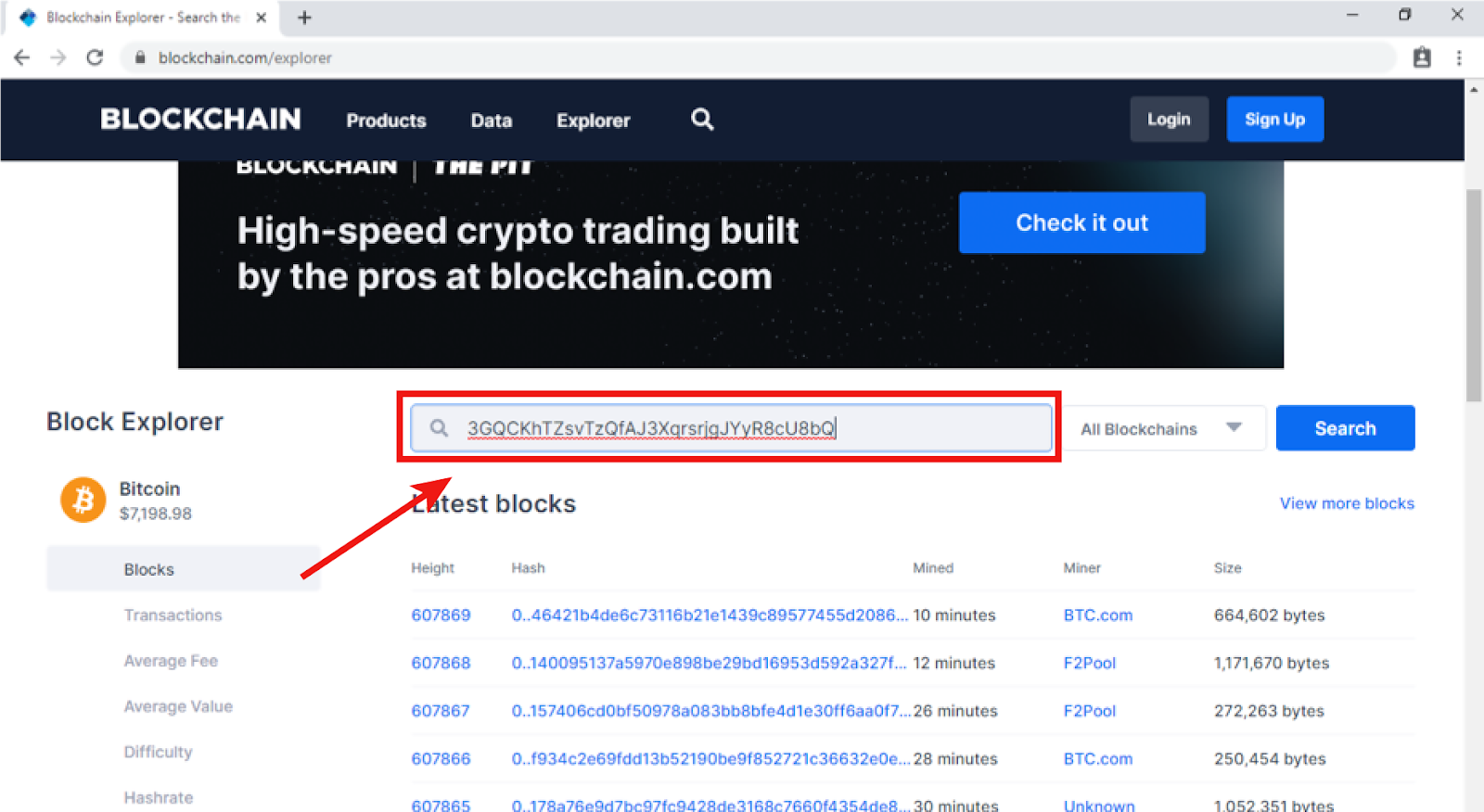
3rd Step: Click on ‘All Blockchains’ next to the search box and select Bitcoin. You also have the option to select Ethereum and Bitcoin Cash.
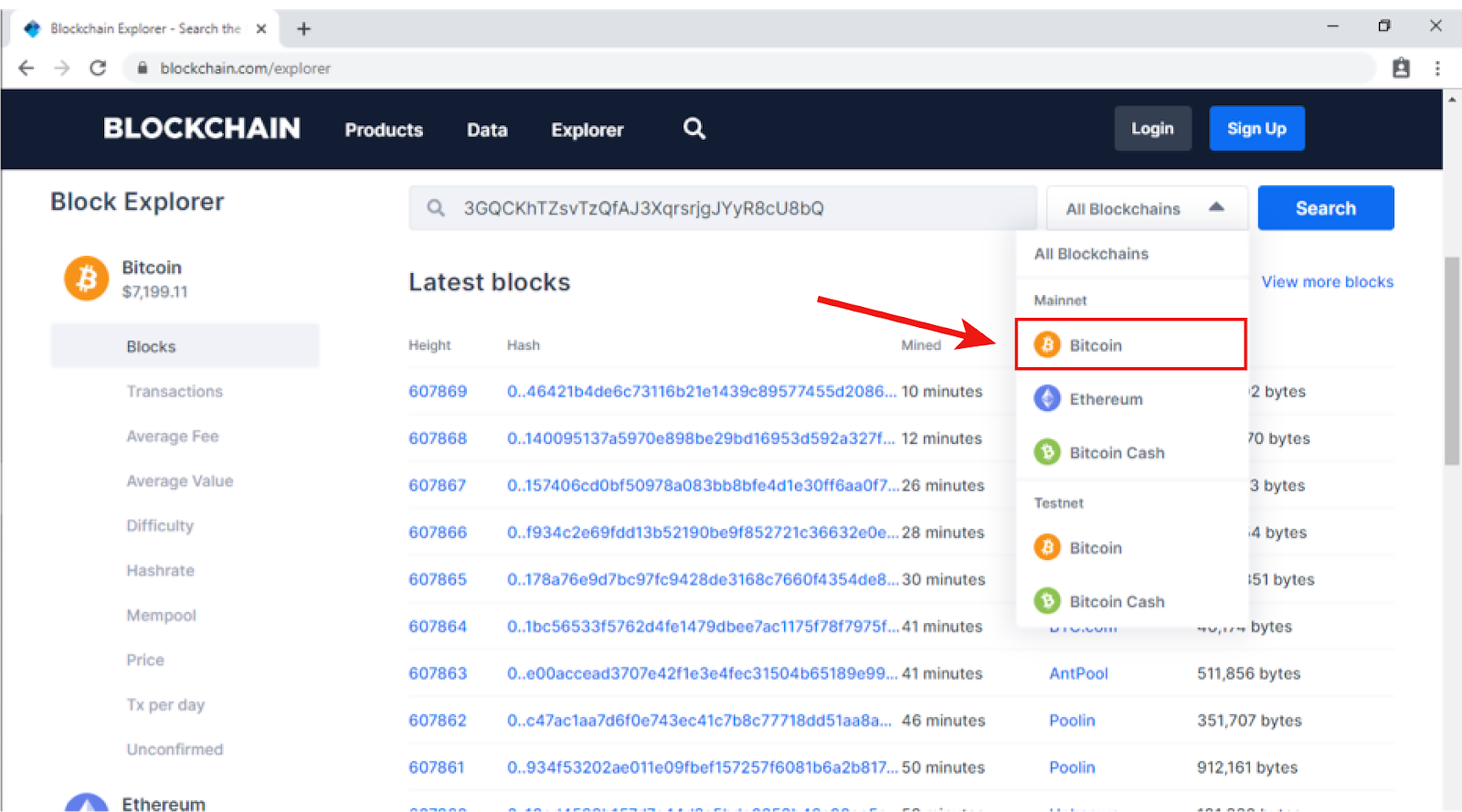
4th Step: Click on ‘Search’ on the upper right.
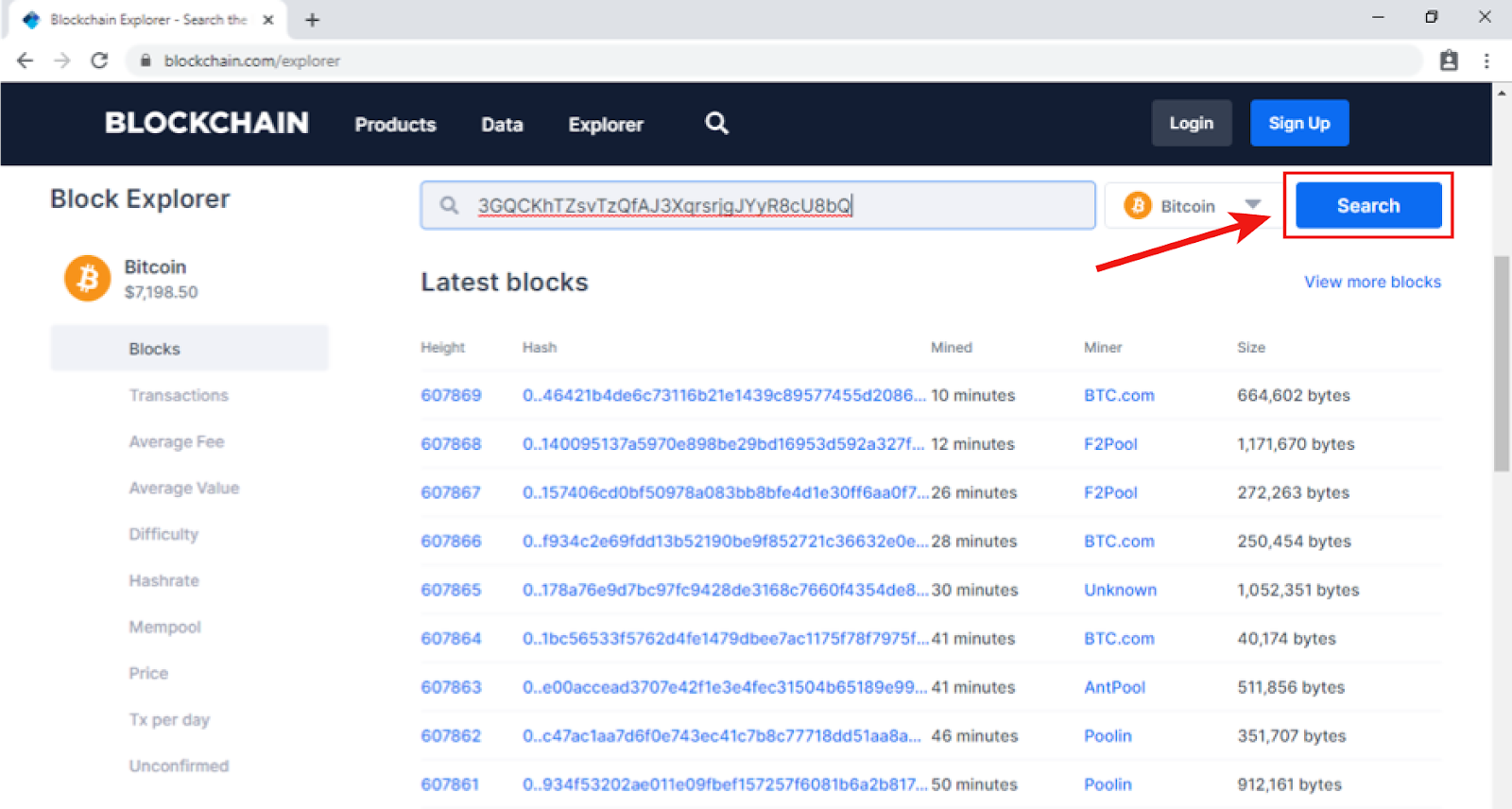
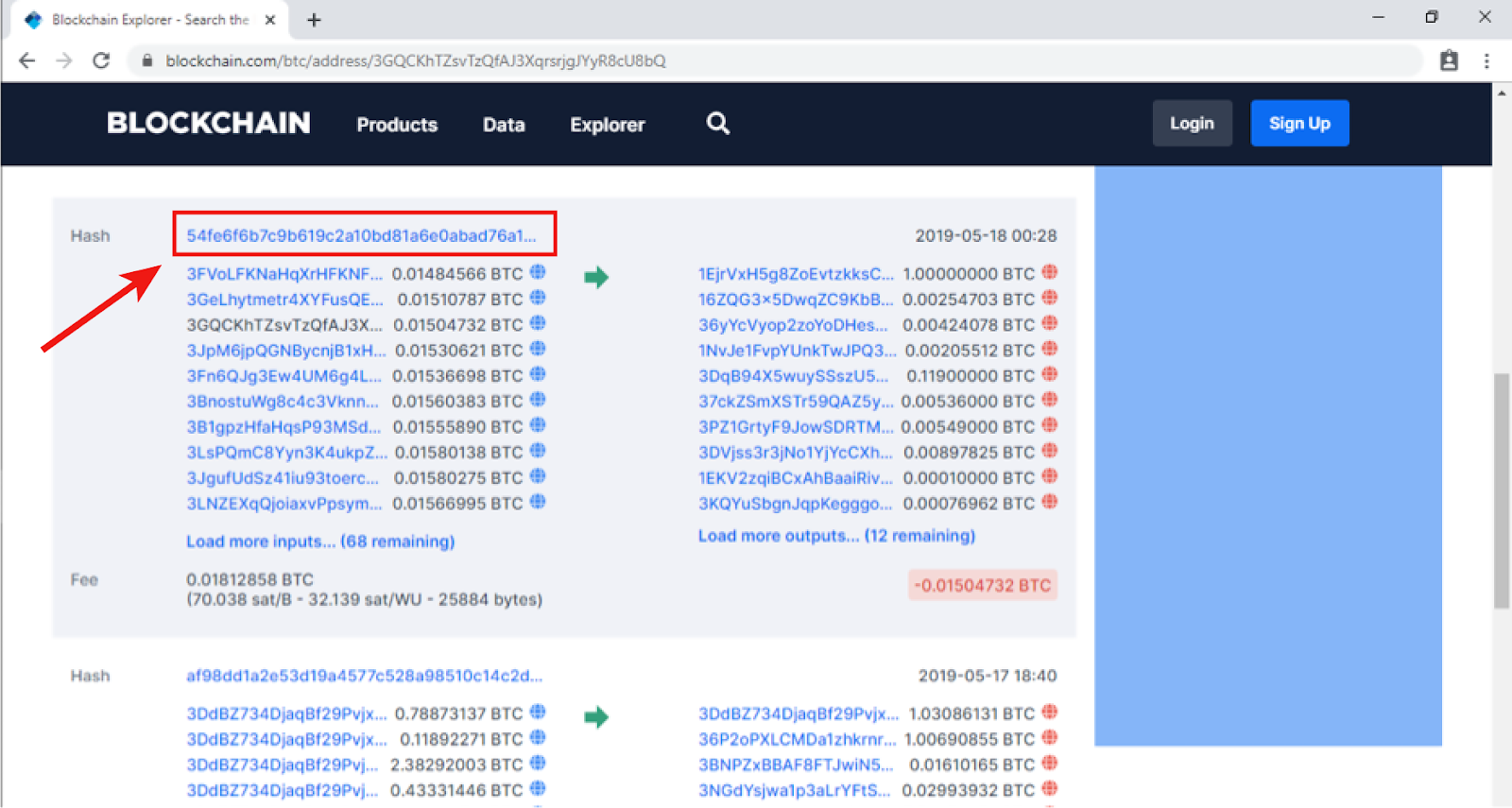
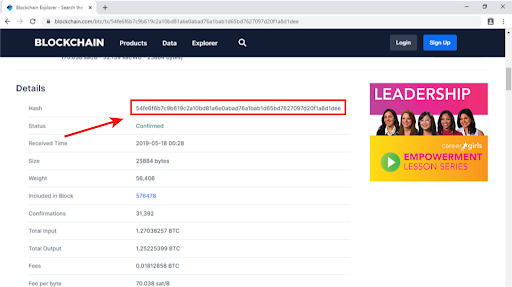
5th Step: A list of digital transactions will show up. You will see the hash or the TXID, as well as the date and time of the transaction. Click on the string of numbers and letters under the hash.
Common TXID Troubleshooting Scenarios
Understanding how to read and interpret your TXID helps you solve most transaction issues without waiting for customer support. Every TXID is permanently recorded on the blockchain technology, creating an immutable record that anyone can verify at any time. This transparency means you can diagnose problems yourself by checking the transaction status directly on the blockchain.
The most common issue people encounter is a transaction stuck in “pending” status. This usually happens when network congestion is high or when the fee you paid was too low, making miners unwilling to prioritize your transaction. You can verify this by checking the TXID in a blockchain explorer, which shows you exactly where your transaction sits in the queue and how many confirmations it has received.
Another frequent scenario is when your TXID shows “confirmed,” but the recipient hasn’t received the funds. This often happens when someone sends crypto on the wrong network. For example, sending USDT via TRC20 when the recipient’s wallet expects ERC20. The transaction succeeded on the blockchain you selected, but it went to an address on a different network than intended. Always double-check which network the recipient expects before sending. When your TXID shows as ‘confirmed,’ it means the blockchain network reached consensus that your transaction is valid and permanent. This consensus mechanism is what makes TXIDs trustworthy proof of transfer.
Just like Bitcoin, every Ethereum transaction generates a unique TXID that you can track on the blockchain. If you’re working with ETH, having a secure Ethereum wallet ensures you can easily access and verify all your transaction IDs.
To receive Bitcoin and get your first TXID, you’ll need a secure Bitcoin wallet where you can store your funds and view all transaction IDs. Your wallet automatically generates a new TXID for every transaction you make, and you can track all of them in your transaction history. Modern wallets display TXIDs immediately after you send or receive funds, making it easy to verify transactions the moment they occur.
Whether you’re receiving Bitcoin from a purchase or when you sell Bitcoin, each transaction will generate a unique TXID that you can track on the blockchain. The TXID serves as your receipt, proving that the transfer happened and showing exactly when the blockchain recorded it. While TXID doesn’t reveal personal information, Bitcoin transactions are traceable on the public blockchain, which is why the TXID serves as a transparent proof of transfer.
After tracking your transaction with the TXID, you can check the current value using a BTC to USD converter to see exactly how much your Bitcoin is worth. This is particularly useful when you’re verifying that the correct amount arrived, since blockchain explorers typically display amounts in BTC rather than fiat currency. Converting the amount helps you confirm the transaction matched what you expected to receive.
Bottom Line
Once you understand how to track your TXID, you’re ready to start making your own transactions. You can buy crypto easily and track every transaction using its unique TXID. The TXID system ensures that every transfer is transparent, verifiable, and permanent, giving you complete confidence in the security of your cryptocurrency transactions.
FAQ
Can I cancel a transaction using the TXID?
No, once a transaction receives blockchain confirmation and generates a TXID, it cannot be canceled or reversed. Blockchain transactions are permanent by design, which is what makes them trustworthy and tamper-proof. The TXID serves as proof that the transaction happened and was recorded in a block. However, if your transaction is still unconfirmed and stuck in the mempool (showing as “pending”), some wallets offer a “Replace-by-Fee” (RBF) feature for Bitcoin or the ability to speed up Ethereum transactions by paying higher gas fees. These methods don’t cancel the original transaction but instead create a new transaction with a higher fee that miners prioritize, effectively replacing the stuck one. Once you’ve verified your transaction is complete using the TXID, you can withdraw Bitcoin to your bank account if you need to convert your crypto to fiat currency.
What does it mean if my TXID shows "pending"?
A “pending” status means your transaction has been broadcast to the network but hasn’t been included in a confirmed block yet. Think of it like your transaction sitting in a waiting room. Miners or validators haven’t processed it because either the network is congested with higher-priority transactions or the fee you paid was too low to attract their attention. Bitcoin transactions typically confirm within 10-60 minutes, but during busy periods with low fees, they can remain pending for hours or even days. You can check how many transactions are ahead of yours by looking at the mempool size in a blockchain explorer. If your transaction stays pending too long, you can either wait it out or use transaction acceleration features if your wallet supports them.
Why would my TXID show confirmed but I haven't received my crypto?
If the blockchain explorer shows your TXID as confirmed but you haven’t received your crypto, the most common cause is that you or the sender used the wrong network. For example, if someone sent USDT on the Binance Smart Chain but your wallet only supports Ethereum, the transaction succeeded on BSC, but your Ethereum wallet can’t see it because it’s looking at a different blockchain. Another possibility is that your wallet needs to rescan the blockchain or update to show the transaction. Some wallets have a “refresh” or “rescan” feature that forces them to check for new transactions. Finally, verify that the sender used the correct wallet address. If they are sent to the wrong address, the transaction will complete successfully, but to the wrong recipient, and there’s no way to reverse it.
Is it safe to share my TXID with others?
Yes, sharing your TXID is completely safe because it doesn’t contain any sensitive information that could compromise your wallet security. The TXID only reveals public information already visible on the blockchain: the sending address, receiving address, amount transferred, transaction fee, and timestamp. It doesn’t expose your private keys, password, or any data that would let someone access your funds. In fact, you often need to share your TXID with customer support teams when troubleshooting transaction issues. However, be aware that sharing a TXID does allow others to see your transaction history if they explore the addresses involved. If privacy is a concern, you might not want to publicly link your TXID to your identity, but the TXID itself poses no security risk to your wallet.
Disclaimer: Don’t invest unless you’re prepared to lose all the money you invest. This is a high‑risk investment and you should not expect to be protected if something goes wrong. Take 2 mins to learn more at: https://go.payb.is/FCA-Info