5 Best Crypto Wallet Comparison Guide for 2026
Keeping your digital currencies safe is crucial for any use. A growing number of crypto-focused attacks and millions of new beginner-level users are losing their wallets due to improper handling. That’s why knowing how to choose a crypto wallet that suits your needs and experience level is crucial.
In this guide, we’ll cover our top crypto wallet picks, their key use cases, storage, features, and discuss what you should be looking for when choosing the best crypto wallet for you.
Key Takeaways:
- Crypto wallets don’t store your coins – they store the keys that give access to your assets on the blockchain.
- Hot wallets offer convenience for daily use, while cold wallets provide maximum security for long-term storage.
- The choice between custodial and non-custodial wallets depends on whether you prefer ease of use or full control.
- Each wallet serves a specific use case – from Paybis for quick access to Sparrow for advanced Bitcoin control
- The safest strategy for most users is to combine a hot wallet for transactions and a cold wallet for long-term holdings.
Table of contents
What Is a Crypto Wallet and How Does It Work?
While we won’t be getting too deep into everything there is to know about crypto wallets, it’s still important to cover the basics before we dive into the actual list of wallets.
On a basic level, a crypto wallet is a tool for storing and managing digital assets like Bitcoin, Ethereum, stablecoins, NFTs, and other tokens. To be more precise, crypto wallets don’t actually hold your cryptocurrencies – rather, these wallets have special keys which give you full control over the amount of crypto you own on a blockchain.
Public vs Private Keys
- Public key: Similar to bank account numbers or email addresses, allows you to share the key when buying or selling digital assets.
- Private key: Similar to a password with a signature. These must always be kept secure – otherwise, access to your funds could be lost without any recovery.
Types of Crypto Wallets
Crypto wallets generally fall into four main categories, each with a different balance of convenience and security:
- Hot wallets: Connected to the internet and probably the most popular crypto wallet type, great for frequent transactions and everyday trading, swapping, and interacting with decentralized apps.
- Cold wallets: Offline tools, like hardware or paper wallets, never connect to the internet, and are most commonly used for long-term storage for large balances. Due to cold wallets being disconnected, they offer a higher level of protection against hacks and other threats.
- Mobile & desktop wallets: Software-based wallets specifically designed for modern smartphones and computers. They’re similar to hot wallets, with the key difference being that software wallets specifically focus on mobile and desktop devices.
- Web wallets: Accessed directly via a browser, often provided by centralized platforms like crypto exchanges. Typically, web wallets are mostly custodial, with the platform controlling your private keys for convenience.
Custodial vs Non-Custodial Wallets
- Custodial wallet: Controlled by a centralized entity that’s responsible for your private keys, backups, and recovery, offering additional security.
- Non-custodial wallet: Controlled entirely by the user, giving full control over your funds and how they’re stored. However, if you lose your keys or seed phrase, you won’t be able to recover your crypto holdings.
Best Crypto Wallets by Use Case
The best wallet is the one that fits your needs most. That’s why, in this section of the article, we’ll be focusing on use cases when diving into each crypto wallet. If you’re a business owner, we also have a detailed guide on how to choose the best wallet for your business.
1. Paybis Wallet – Best for Quick and Safe Crypto Access
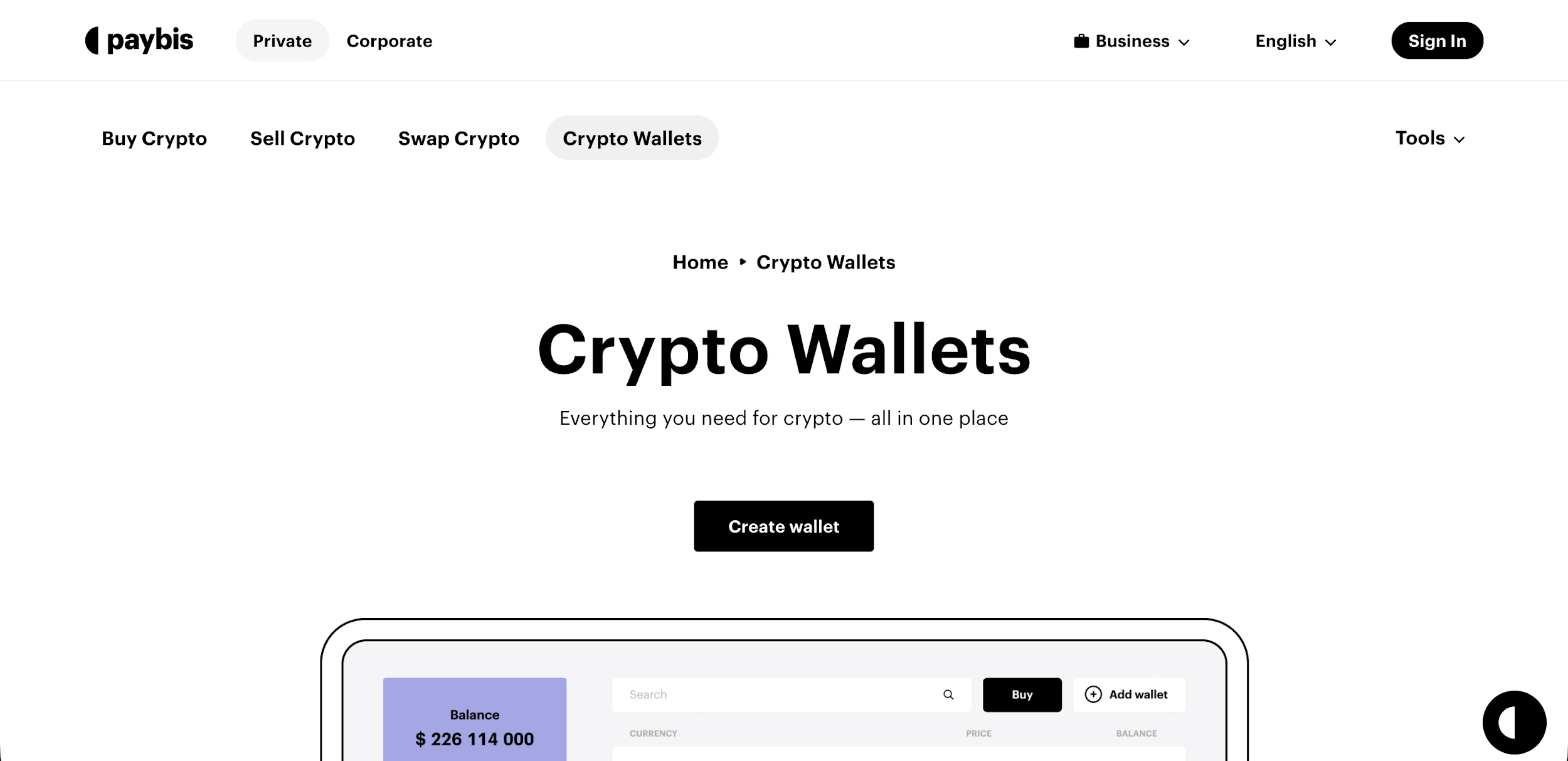
Paybis is a global crypto exchange platform and mobile app, offering a vast list of cryptocurrencies and payment methods, making it one of the most popular places to buy, sell, swap, sell, and manage crypto at low transaction fees.
To make crypto transactions that much more convenient, Paybis also has an in-built crypto wallet available to any user who registers on the platform. It’s a custodial MPC wallet that fragments your private key for enhanced security without the complexity.
The registration process is completely free of charge and straightforward – though we do require identity verification to ensure the safety of all our users.
2. Trust Wallet – Best Mobile Wallet for Multi-Chain Support
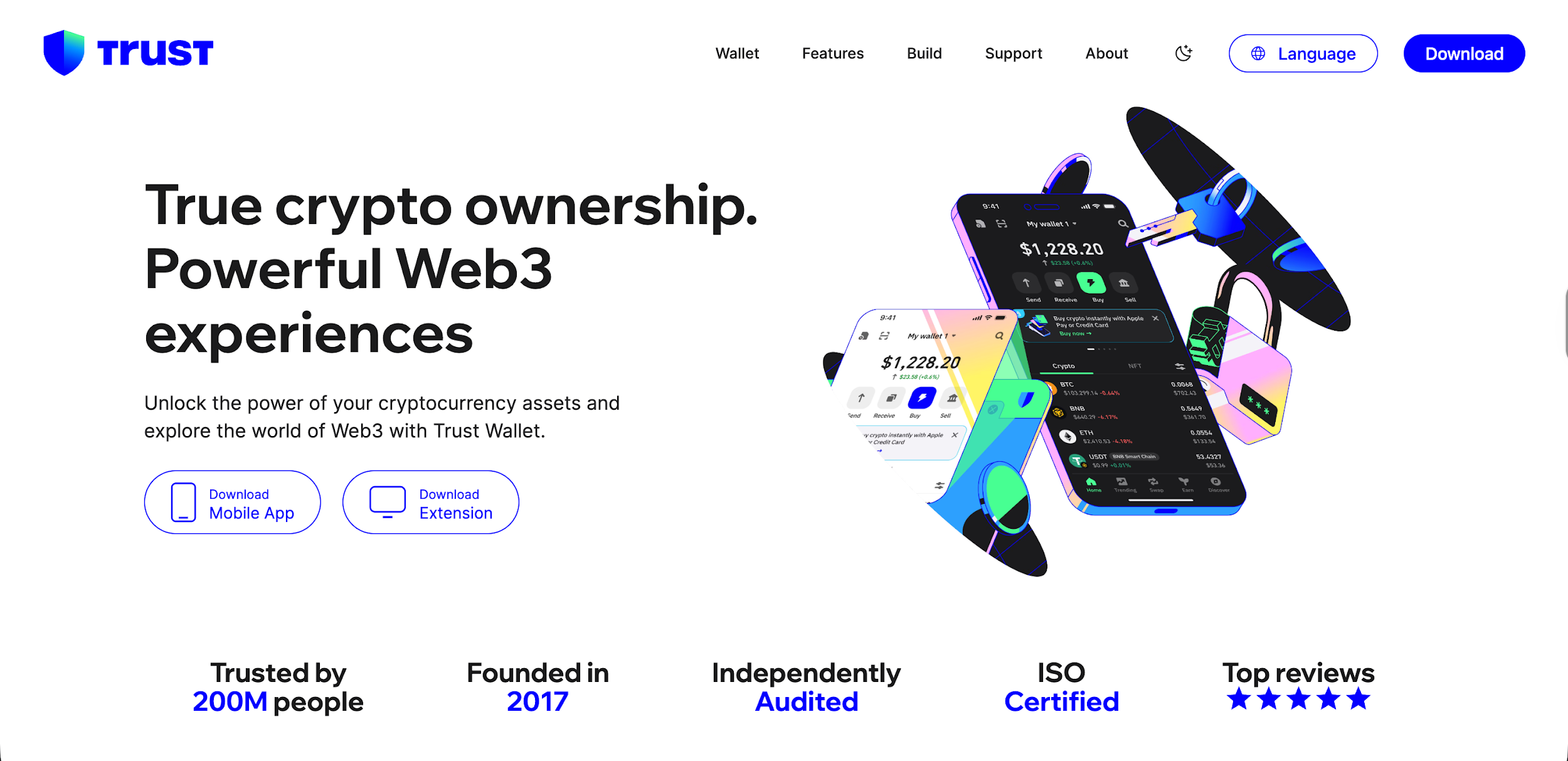
Trust Wallet is another popular choice among non-custodial hot wallets, giving users total access to control their private keys. This tool also supports multiple cryptocurrencies across different blockchains and is available on mobile and browser.
As with virtually any other wallet, Trust Wallet allows users to easily store, send, receive, swap, stake, manage NFTs, and interact with DeFi and Web3 applications directly from one interface. All in all, it’s a great choice for nearly anyone.
3. MetaMask – Best Web3 Wallet for Ethereum Users

MetaMask is also a non-custodial hot wallet mobile app and browser extension. The key difference between MetaMask and other wallets is that it gives direct access to the Ethereum blockchain and other EVM-compatible networks.
MetaMask is widely used for interacting with DeFi platforms, NFT marketplaces, and Web3 applications, allowing you to store tokens, connect to decentralized apps, swap assets, and manage multiple networks from one interface.
Since it’s always online and frequently used with third-party dApps, MetaMask offers convenience and flexibility, but requires careful security practices to avoid phishing attacks and malicious contracts.
4. Exodus – Best for Desktop and Multi-Platform Use
Next on our list, we have Exodus, a non-custodial software-based crypto wallet, available on both desktop and mobile. Exodus supports an extensive list of cryptocurrencies and offers the most popular features of storing, sending, receiving, staking, and swapping digital assets.
Moreover, users can also use the built-in portfolio tracking and optional integrations with hardware wallets for increased security. In short, Exodus is designed for simplicity and accessibility, providing a well-balanced all-in-one wallet experience.
5. Sparrow – Best Bitcoin-Only Wallet
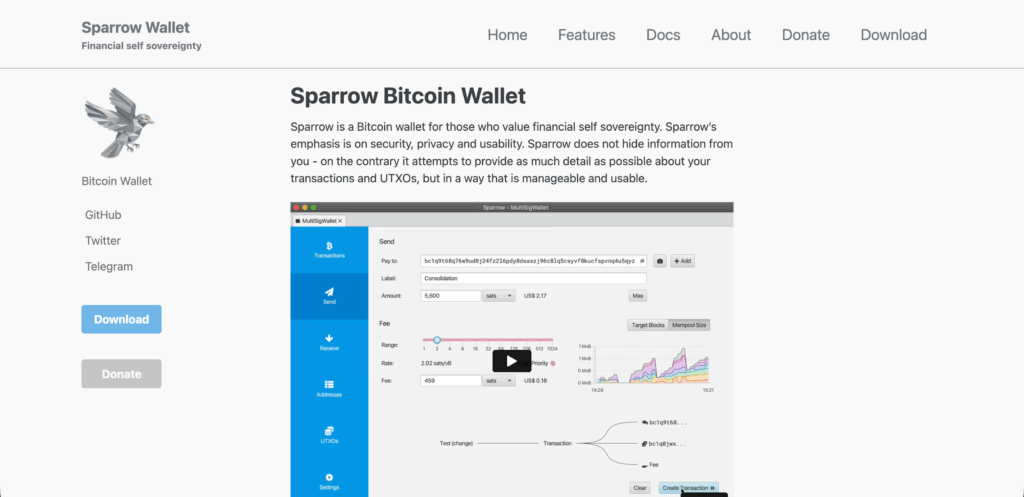
Last but not least, we have Sparrow. It’s favored and cited as one of the best non-custodial and desktop-based wallets for Bitcoin. Sparrow is built specifically for advanced users who want to have maximum control, privacy, and security.
This Bitcoin wallet has coin control, Unspent Transaction Output (UTXO) management, fee customization, and seamless integration with hardware wallets for offline key storage. Additionally, for more security measures, Sparrow supports multisig and its transaction editor that doubles as a blockchain explorer.
Security and Recovery Considerations
Securing digital assets shouldn’t just be the responsibility of your crypto wallet. Any user has to be aware of the key safety measures and what actions to take when faced with the most common crypto wallet risks.
- Seed phrase vs keyless recovery: Traditional crypto wallets rely on a 12–24 word seed phrase, which has to be stored safely – otherwise, your funds are at risk. In contrast, keyless wallets use Multi-Party Computation (MPC) to split access between you and the encrypted storage.
- Two-factor authentication and biometric access: Passwords work best with additional layers of security, like uthenticator apps, hardware keys, and biometric checks like fingerprints or face ID.
- Backup and restore options for cold wallets: Hardware wallets are extremely secure, but they need to be stored very carefully. If you choose to go with this type of wallet, research offline recovery tools like PIN-protected cards.
- CER, CertiK, and audit reports: Ratings from companies like CertiK assess code quality and resistance to attacks. It’s always advised to go with a wallet that undergoes regular updates and audits.
More Resources on Crypto Wallets
There are many crypto wallets, and each one suits a specific use case. Here are some additional resources, covering both software and hardware options.
Wrapping Up
No matter how you look at it, there’s no such thing as a one-size-fits-all when it comes to choosing the right wallet for you. As with handling any fund, having the right tools, particularly a crypto wallet, is essential. For most users, especially beginners, combining a hot wallet for daily use with a cold wallet for long-term storage offers the best balance between convenience and security.
FAQ
What security features should I look for in a crypto wallet?
The most important security measures to look for in a crypto wallet, especially if you’re just getting started with cryptocurrencies, are: Multi-Party Computation (MPC) technology, PIN protection, biometric access, and open-source code. Additionally, you could also benefit from two-factor authentication.
What's the best free wallet for crypto management?
Nearly all crypto wallets listed in this article are free, excluding Ledger and Trezor. So, if you want to know which free wallet to go with, you should first consider what your main requirements are.
If you’re an experienced and seasoned trader, Sparrow might just be for you, but if you’re just stepping into the crypto world, online custodial wallets like Paybis offer a great mix of security, usability, and easy access to trade different cryptocurrencies.
Is it possible to recover a lost or old Bitcoin wallet?
Yes, it’s indeed possible, but locating your old Bitcoin wallet depends on several factors. Simply put, if you still have access to your seed phrase, private key, or backup file, your wallet can be restored using a new device.
However, if you’ve lost all three, the chances of getting access to your Bitcoin wallet are close to none.
Disclaimer: Don’t invest unless you’re prepared to lose all the money you invest. This is a high‑risk investment and you should not expect to be protected if something goes wrong. Take 2 mins to learn more at: https://go.payb.is/FCA-Info