Swapping Crypto for International Remittances: Cheaper and Faster than Western Union
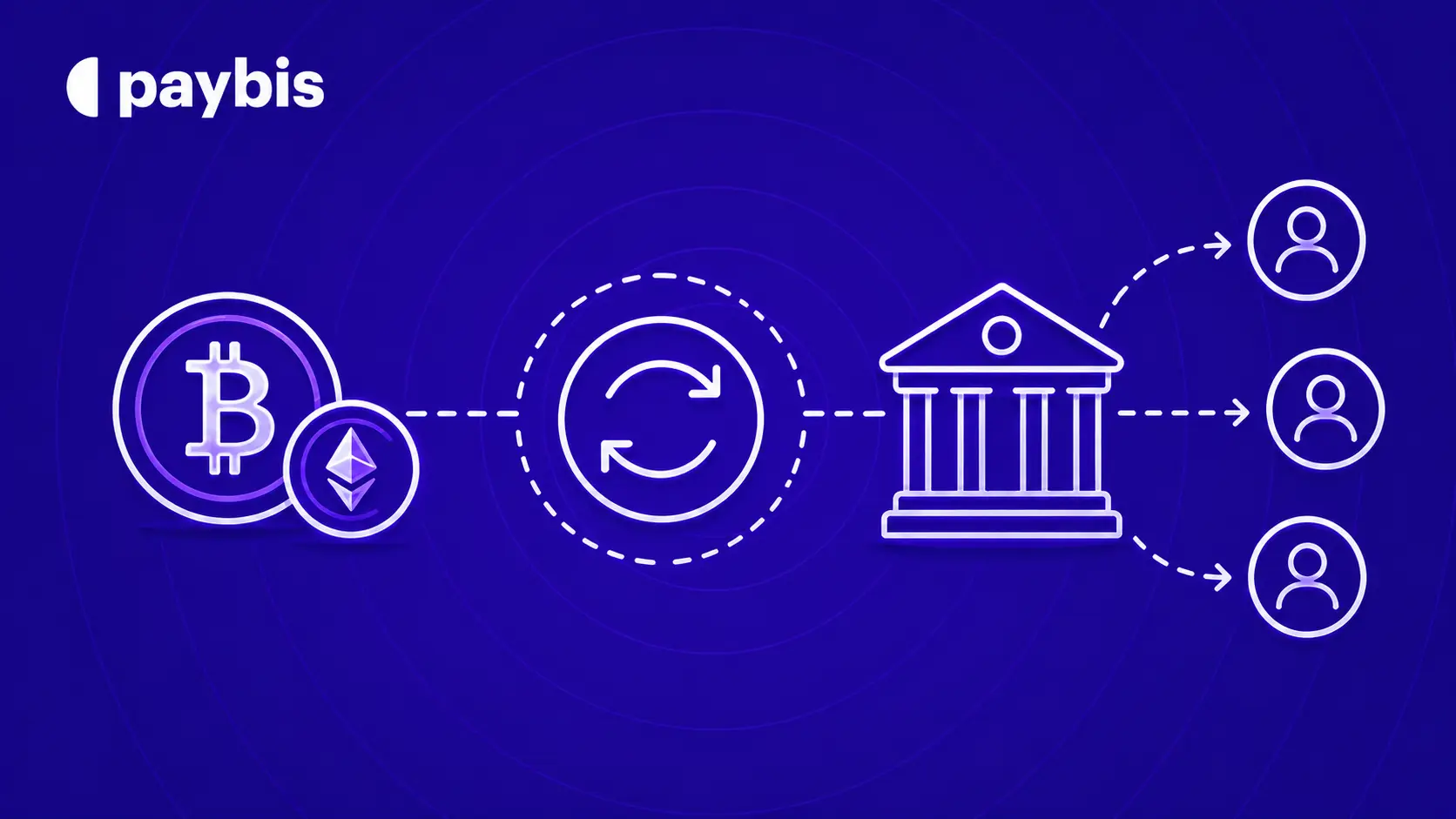
Key Takeaways:Cash-to-stablecoin-to-cash model: Buy USDC (a digital coin pegged 1:1 to the US dollar) locally, send it across borders in minutes, and the recipient converts back to local cash. Identity verification in 2-5 minutes with 20+ payment methods including PIX in Brazil. All fees visible before you confirm. Service fees start from 1.49%, with no hidden charges at checkout. You can also withdraw crypto to your bank account or buy crypto with ACH transfer depending on your preferred method. Not sure what Bitcoin dominance means for your transfer decisions? Our glossary has you covered.
Sending $300 to family abroad shouldn’t be slow or loaded with hidden costs. Traditional remittance services drain funds through flat fees and exchange rate markups, leaving recipients with less than expected. By swapping local currency for stablecoins (crypto pegged to the US dollar, like USDC), you can cut transfer costs significantly and deliver funds almost instantly. Here is the exact step-by-step process to send money abroad using crypto, with no trading experience required.
Why Traditional Remittances Are Expensive and Slow
The global remittance market reached an estimated $905 billion in 2024, according to World Bank data. Traditional providers extract a meaningful portion of that volume through two compounding cost layers that many senders don’t see until after confirming.
The Real Cost of a Wire Transfer
The fee listed at checkout covers only part of what you pay. Western Union’s bank-to-bank transfer fee for a $300 transfer can run from $1.94 to $11.28 depending on destination and payment method, but cash pickup or credit card payments push that higher, and every transfer also includes an exchange rate markup. According to MoneyTransfers.com, exchange rate markups can reach up to 7% above the mid-market rate. On a $300 transfer, a 5% markup costs another $15 before the stated fee applies. The headline price and the real price are rarely the same number.
Beyond cost, the architecture is slow. SWIFT wire transfers route through up to three correspondent banks, each running its own compliance checks. Bank holidays and weekends pause the entire chain. When a family member needs rent money today, a 1-5 business day timeline isn’t acceptable. For a broader look at how crypto payment methods compare to traditional options, see our guide to top payment methods for buying crypto.
How Crypto Swaps Work for Remittances
The crypto remittance model removes the intermediaries. A sender buys a stablecoin locally, transfers it directly to the recipient’s digital wallet address, and the recipient converts it to local currency at their end. No correspondent banks. No batch processing windows. No weekend delays.
Stablecoins: The Right Tool for Global Payments
Crypto volatility is a real concern for investing, but stablecoins solve it for remittances. USDC is designed to maintain a 1:1 peg with the US dollar. In normal market conditions, $300 worth of USDC sent today arrives as approximately $300 worth of USDC, regardless of Bitcoin’s price. Brief deviations from the peg can occur in extreme market events, but for routine remittances, stablecoins have held within fractions of a cent of $1 under normal conditions.
If you’re new to the space and wondering how to spend Bitcoin or other crypto assets after acquiring them, our blog covers practical options in detail.
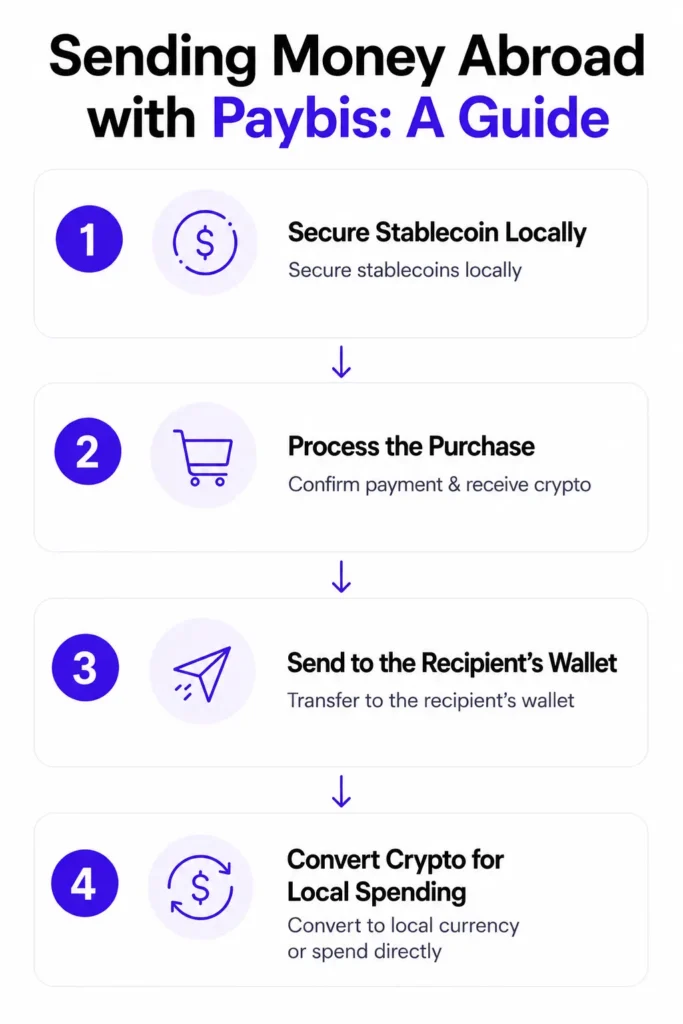
Sending Money Abroad with Paybis: A Guide
We operate in 180+ countries and support 20+ payment methods, including PIX in Brazil, Webpay in Chile, and FPS in the UK, across 90+ cryptocurrencies. The platform is built for users who want to buy and send crypto, not for traders navigating order books. Watch the official Paybis crypto calculator guide to see the interface in action before signing up.
Step 1: Secure Stablecoin Locally
Create a Paybis account at paybis.com and complete identity verification. The process requires a government-issued ID (passport or driver’s license) and a selfie. Our automated system cross-references your photo against the ID in real time, with most accounts approved automatically within approximately 2-5 minutes.
Once verified, open the fee calculator on the homepage. Select USDC and enter your transfer amount in local currency. The calculator shows you the total cost breakdown, including service fee, processing fee, and network fee, before you confirm. Your first card transaction carries a 0% Paybis service fee. You see the total before confirming, with no surprises added at checkout.
Step 2: Process the Purchase
After payment, we process your purchase and deliver USDC to your Paybis wallet or external wallet address. Processing time is instant (less than 1 minute). Settlement time is almost instant, with exact timing depending on the blockchain. The TRON network confirms transactions within seconds under normal conditions, though wallets typically require a few additional block confirmations before displaying the final balance.
If you need to convert between cryptocurrencies before sending, our in-wallet swap guide walks through the process step by step. You can also swap using an external wallet if you prefer to hold funds outside the platform. Financify’s Paybis crypto swap tutorial shows each click for users doing this for the first time. For those wondering about the full range of off-ramp options, our guide on how to cash out Bitcoin explains the landscape clearly.
Step 3: Send to the Recipient’s Wallet
Open your Paybis wallet, select “Send,” and enter the recipient’s wallet address. This is a string of letters and numbers that functions like a bank account number. Copy and paste it directly and never type it manually, as a single character error sends funds to an unreachable address with no recovery option.
Before confirming, check that the network matches. Confirm the recipient’s wallet supports TRC-20 before initiating the transfer. Our general transfer warnings article covers this in detail.
Step 4: Convert Crypto for Local Spending
Once USDC arrives in the recipient’s wallet, they can hold it as a stable savings asset, use a local exchange to convert it to local currency and withdraw via bank transfer or PIX, or spend it directly via a crypto-linked debit card where available. In Brazil, local exchanges support PIX withdrawals. In Nigeria, platforms like Yellow Card allow conversion to local bank accounts with near-instant settlement. For a broader picture of merchants and services that accept crypto, see our overview of companies that accept Bitcoin.
Cut Remittance Fees: Paybis vs. Western Union
A $300 Transfer: What You Actually Pay
On Paybis, a $300 transfer using a bank-type payment method like PIX carries a service fee starting from 0.99% and a TRC-20 network fee of approximately $1.95-$3.90. Exact costs depend on payment method, currency, and network congestion, but all fees are shown in the calculator before you confirm. Use the fee calculator on the homepage to see your exact total for any amount and payment method.
A comparable $300 Western Union transfer includes the stated fee plus an exchange rate markup that can reach up to 7% above the mid-market rate. Combined, a cash pickup or credit card-funded transfer carries an effective total cost of $25-$45 or more depending on corridor and delivery method. Over a year of monthly transfers, those savings add up to the cost of an extra transfer. For a deeper comparison of fee structures across crypto payment platforms, our BitPay fees vs. competitors analysis provides useful context.
What Is Your Total Crypto Transfer Cost?
Our fee structure has three components, and all three are visible before you confirm.
- Service fee: Starts from 1.49% (0% on your first card transaction; 0.99% for PIX/bank transfers)
- Processing fee: 4.5-8.5% for card transactions over $50 (depending on currency). Bank transfers and local payment methods like PIX carry lower processing fees, shown at checkout
- Network fee: Varies by blockchain and congestion, updated automatically at the time of the transaction
All costs are itemized transparently before you confirm. No surprise charges or hidden fees at checkout. What you see is what you pay.
How Savings Scale With Transfer Size
The efficiency of crypto remittances grows with transfer frequency and size, not just the single transaction.
For small transfers of $100-$300, percentage-based crypto fees work in the sender’s favor. The World Bank’s global average remittance cost is 6.49% for a $200 transfer, with bank-initiated transfers averaging 14.55% and the most expensive corridors exceeding 15%. A crypto transfer using a bank-type payment method on Paybis will typically cost less than these averages.
For transfers of $300-$1,000, the absolute dollar savings compound. FXEmpire’s independent Paybis review confirms our fee structure remains transparent and consistent at this range, making the cost comparison easy to verify before committing.
For transfers above $1,000, we may request additional documentation such as proof of address or source of funds. This is a standard legal requirement under anti-money-laundering rules. For larger transactions beyond standard limits, our OTC Desk offers customized pricing.
Speed Advantages of Crypto Remittances
Crypto Transfers Work 24/7/365
A first-time user goes from account creation to USDC arriving in the recipient’s wallet in under 10 minutes: approximately 2-5 minutes for identity verification, under 1 minute for purchase processing, and seconds to a few minutes for blockchain settlement depending on network confirmation requirements.
The TRON digital ledger operates 24/7/365. There are no bank holidays, no Friday cutoffs, and no “next business day” delays. A transfer initiated at 11:45 PM on a Sunday settles at the same speed as one initiated at 9:00 AM on a Tuesday. When a family emergency requires money today, that matters.
“Paybis is so quick and easy to send bitcoin to an external wallet without any hassles” – Maureen on Trustpilot
“Paybis offers transactions in a quick and easy format with thorough security measures. I’ve been using their app for quite some time and have had no issues.” – Verified user review of Paybis
Keep Your Funds Safe: Crypto Security
Is Paybis Secure, and What Happens If Something Goes Wrong?
We’ve operated since 2014 with no major security breaches on record, according to Coin Bureau’s independent review. We hold FinCEN registration as a Money Services Business in the US (registration number 31000224635628) and FINTRAC registration in Canada (M22061209), both verifiable through government databases. We also maintain PCI DSS Level 1 compliance, the highest payment security certification for card processing. Paybis has 30,780+ Trustpilot reviews with a rating of 4.1 as of March 2026.
If a transaction fails for security reasons, we don’t charge the sender and funds return automatically. If your bank blocks a card purchase, switching to a bank transfer can bypass card-specific blocks, since bank transfers process through a different payment rail that is less commonly flagged for crypto transactions. If you need help, we offer 24/7 live chat support with an average chat response time of under 1 minute in 9+ languages, including Portuguese and Spanish. That’s a direct contrast to traditional bank support, where crypto queries often require calling during business hours and explaining blockchain to a representative unfamiliar with it.
“I found PayBis by accident and so glad I did. Their platform is so easy to use and straightforward. Their support team are extremely helpful and prompt in their replies and assistance.” – Jennifer on Trustpilot
Send Your First Crypto Remittance
Traditional remittance fees compound every time you send money home. The crypto route cuts those costs to 2-3% of the principal, settles in minutes instead of days, and works on weekends and holidays. Visit paybis.com, use the fee calculator to see your exact costs before signing up, complete the 2-5 minute identity verification, and send your first transfer today.
Key Terminology
- Stablecoin: A cryptocurrency designed to maintain a fixed value relative to the US dollar. USDC target a 1:1 dollar peg, which means transfer amounts stay stable rather than fluctuating with the broader crypto market. Brief deviations can occur in extreme market events but are rare under normal conditions.
- Digital ledger: A secure, publicly visible online network that records and verifies every transaction automatically without requiring a bank or intermediary. On the TRON network, new blocks are added every 3 seconds.
- Network fee: The cost charged by the blockchain network itself to process and record a transaction. On TRON (TRC-20), this runs approximately $1.95-$3.90. On Ethereum (ERC-20), it typically ranges from $3 to $15 or higher depending on network congestion.
- Processing fee: The fee charged by the payment processor handling your card or bank transfer. On Paybis, card transactions over $50 carry a 4.5-8.5% processing fee depending on currency. Bank transfers and local payment methods carry lower processing fees, shown at checkout.
FAQ
What Is the Best Stablecoin for Remittances?
USDC on Solana offers lower fees (under $0.01 per transaction) where the recipient’s wallet supports it.
How Do I Avoid My Bank Blocking the Crypto Purchase?
Switch from a card payment to a bank transfer, since bank transfers process through a different payment rail that is less commonly flagged for crypto transactions. In Brazil, PIX is also available as an alternative. If you need to use a card, call your bank’s customer service line before attempting the purchase and ask them to approve crypto transactions on your account.
How Quickly Does Identity Verification Complete?
We complete identity verification in approximately 2-5 minutes for most users using automated photo recognition. Upload a government-issued ID, take a selfie, and our system cross-references both in real time with an approximately 80% first-check approval rate.
Is the Crypto Exchange Rate Locked During the Transfer?
We lock the displayed price for 15 minutes during checkout, giving you time to complete your 3DS payment approval without the rate shifting. For USDC, which is designed to maintain a 1:1 peg with the US dollar, the rate lock has minimal impact under normal market conditions, though brief deviations from the peg can occur in extreme events.
Disclaimer: Don’t invest unless you’re prepared to lose all the money you invest. This is a high‑risk investment and you should not expect to be protected if something goes wrong. Take 2 mins to learn more at: https://go.payb.is/FCA-Info